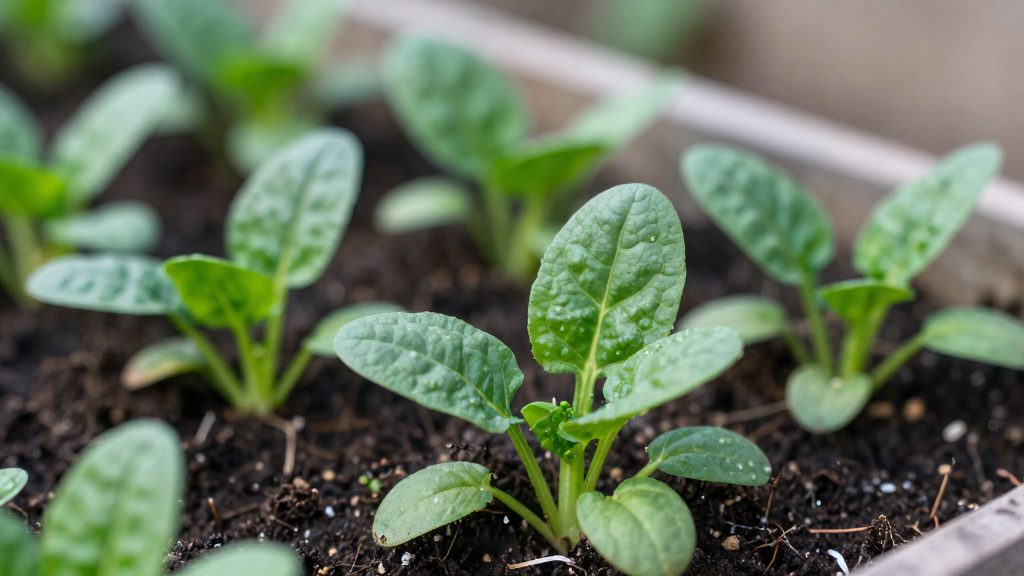
Spinach grows best in cool spring weather because its seeds germinate most reliably when the soil is roughly 7–20°C (45–68°F), and the plant begins to bolt, or send up a flower stalk, once temperatures approach 27°C (80°F). According to Penn State Extension, spring sowing takes place about 4 to 8 weeks before the average last frost, so the crop matures before summer heat arrives. Cool conditions protect both germination and leaf quality.
Why does spinach prefer cool spring weather?
Temperature sets the timing for each stage of the crop. Germination comes first, and the soil range above marks the window where sowing gives an even stand. Johnny’s Selected Seeds notes that sowing in soil above 85°F (30°C) gives weak or irregular germination, so the practical approach is to sow as soon as the soil can be worked in early spring.
| Stage | Condition | Source |
|---|---|---|
| Germination | Soil about 45–68°F (7–20°C) | Penn State Extension |
| Spring sowing | 4 to 8 weeks before the average last frost | Penn State Extension |
| Bolting onset | Around 80°F (27°C) | Penn State Extension |
| Germination in warm soil | Weak or irregular above 85°F (30°C) | Johnny’s Selected Seeds |
Bolting is the main risk when the season warms. Spinach also responds to day length, and it can bolt in June even when the weather stays cool. Penn State Extension reports that dry soil can trigger bolting, so the bed should be kept evenly moist through late spring.
Preparing the bed for a cool-season crop
Spinach has a long taproot, so the soil needs depth. According to Penn State Extension, work rich compost or aged manure into the bed and loosen the soil to 30–45 cm (12–18 in) before sowing. Johnny’s Selected Seeds lists a minimum soil pH of 6.0, with an ideal range of 6.5 to 7.5, because spinach is sensitive to acidity.
Sowing and spacing
- Sow seeds about 1.3 cm (½ in) deep, spaced about 5 cm (2 in) apart.
- Set rows 30–45 cm (12–18 in) apart.
- Thin plants to 10–15 cm (4–6 in) when they reach about 5 cm (2 in) tall.
Organic pest management
Aphids and leafminers are the typical pests. Penn State Extension notes that weeding reduces their populations, and a floating row cover helps control them without synthetic pesticides. This is an organic alternative that also protects young plants in cool, changeable spring weather.
When to sow spinach in Canada
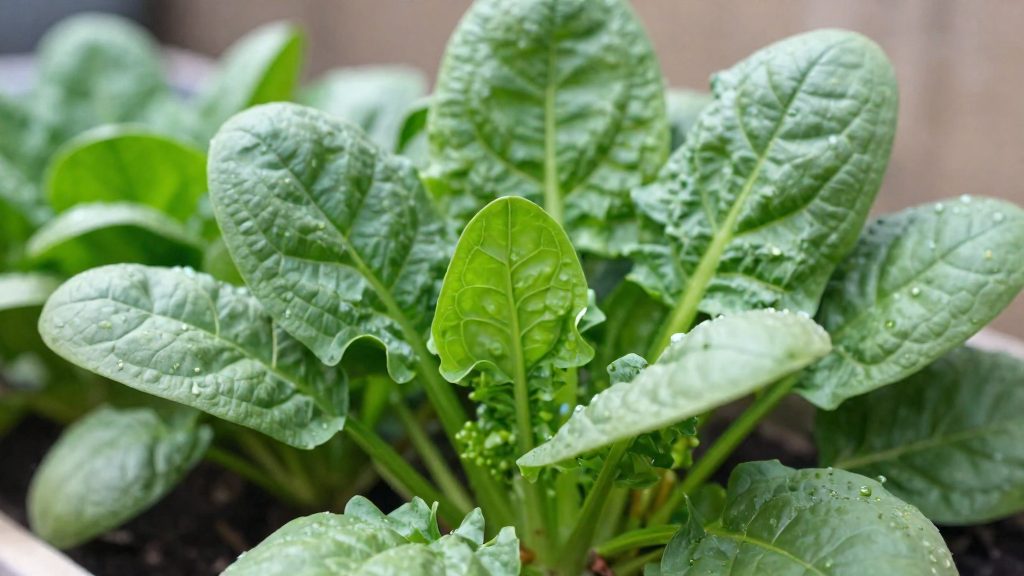
Spinach is sown according to soil temperature and the local frost calendar, not a fixed date. In cool Canadian springs, sow as soon as the soil can be worked, and check the soil’s temperature before you start. The sources consulted do not give frost dates for specific Canadian regions, so use your local weather records for the last average frost (spring) and the first average frost (autumn).
| Timing | Rule | Notes |
|---|---|---|
| Spring sowing | About 4 to 8 weeks before the last average frost | Earliest option once the soil can be worked |
| Autumn sowing | About 6 to 8 weeks before the first average frost | Plants grow in cooler days with less bolting risk |
| Germination range | Soil at about 45 to 68 °F (7 to 20 °C) | Seeds germinate best in this range (Penn State Extension) |
| Heat limit | Soil above 85 °F (30 °C) | Germination is weak or irregular (Johnny’s Selected Seeds) |
| Protected structures | Late summer through winter | Growth is much slower (Johnny’s Selected Seeds) |
Bolting (premature flowering) begins around 80 °F (27 °C). Spinach also responds to day length, so it can bolt in June even in cool weather. Dry soil can trigger it too, so keep the bed evenly moist from sowing to harvest.
To sow, prepare the bed first. Work compost or aged manure into the soil to a depth of 12 to 18 inches (30 to 45 cm), since spinach develops a long taproot. Sow seeds about ½ inch (1.3 cm) deep, spaced about 2 inches (5 cm) apart, in rows 12 to 18 inches (30 to 45 cm) apart. Thin plants to 4 to 6 inches (10 to 15 cm) once they reach about 2 inches (5 cm) tall. Choose a sunny spot with soil pH of at least 6.0, ideally 6.5 to 7.5, as spinach is sensitive to acidity.
Preparing rich, well-drained soil
Spinach grows best in loose, fertile soil that drains well but stays consistently moist. Because the crop has a long taproot, the bed needs deep preparation before sowing, and the soil should be worked as soon as it can be tilled in early spring. Compost and aged manure should be incorporated in advance so the nutrients are available from the first sowing.
Loosen the soil to taproot depth
Work the bed to a depth of 30–45 cm (12–18 in) before planting, according to Penn State Extension. Loosening the full root zone gives the taproot room to grow without meeting compacted layers, which is especially important in heavy or compacted soils.
Add compost or aged manure
Before sowing, mix in rich compost or well-aged manure, as recommended by Penn State Extension. Spread it evenly through the loosened layer rather than placing it in pockets, so every row receives a similar supply of organic matter.
Check and adjust pH
Spinach is sensitive to acidity. Johnny’s Selected Seeds states that the soil should have a pH of at least 6.0, ideally between 6.5 and 7.5. A simple soil test before planting shows whether the bed meets this range. The official sources consulted do not specify which organic amendment to use if the pH is too low, so a local soil testing service is the best place to get a recommendation for your site.
Keep drainage balanced with moisture
Good drainage prevents water from standing on the bed, but the soil must not dry out. According to Penn State Extension, dry soil can trigger bolting (premature flowering), so the bed should be kept moist throughout the season. Water at the base of the plants and avoid saturating the surface.
| Parameter | Target | Source |
|---|---|---|
| Loosening depth | 30–45 cm (12–18 in) | Penn State Extension |
| Soil pH | At least 6.0; ideally 6.5–7.5 | Johnny’s Selected Seeds |
| Organic matter | Rich compost or aged manure, worked in before sowing | Penn State Extension |
| Germination soil temperature | About 45–68 °F (7–20 °C) | Penn State Extension |
Sowing, thinning and watering
Spinach seed germinates best when the soil is between 7 and 20 °C (45 to 68 °F), according to Penn State Extension. In a cool Canadian spring, that range can arrive later than the calendar suggests, so check the soil temperature by hand or with a thermometer before sowing. Penn State Extension recommends sowing about 4 to 8 weeks before the average last frost. The official sources consulted do not specify frost dates for individual Canadian regions, so use your local climate records for that date.
Preparing and sowing the bed
- Before sowing, work in rich compost or aged manure. Penn State Extension notes that spinach has a long taproot, so loosen the soil to 30 to 45 cm (12 to 18 in) deep.
- Choose a sunny spot. According to Johnny’s Selected Seeds, spinach is sensitive to acidity and needs a soil pH of at least 6.0, ideally between 6.5 and 7.5.
- Sow the seeds about 1.3 cm (½ in) deep, roughly 5 cm (2 in) apart, in rows 30 to 45 cm (12 to 18 in) apart.
| Parameter | Value |
|---|---|
| Sowing depth | About 1.3 cm (½ in) |
| Seed spacing in the row | About 5 cm (2 in) |
| Row spacing | 30 to 45 cm (12 to 18 in) |
| Soil pH | 6.0 minimum, 6.5 to 7.5 ideal |
| Germination soil temperature | 7 to 20 °C (45 to 68 °F) |
Johnny’s Selected Seeds reports that sowing into soil warmer than 30 °C (85 °F) gives poor or uneven germination, so avoid sowing into a hot bed.
Thinning
Once the plants reach about 5 cm (2 in) tall, thin them to 10 to 15 cm (4 to 6 in) apart, as recommended by Penn State Extension. Cut the extra seedlings at soil level rather than pulling them, so the roots of the plants you keep are not disturbed.
Watering and keeping pests in check
Keep the soil evenly moist. Penn State Extension notes that dry soil can trigger bolting (flowering and seed production), and that spinach can bolt in June even in cool weather because it responds to day length. Water at the base of the plants and avoid waterlogging the bed.
Penn State Extension identifies aphids and leafminers as typical pests. Weeding reduces their populations, and a floating row cover helps control them, which makes both practical organic options.
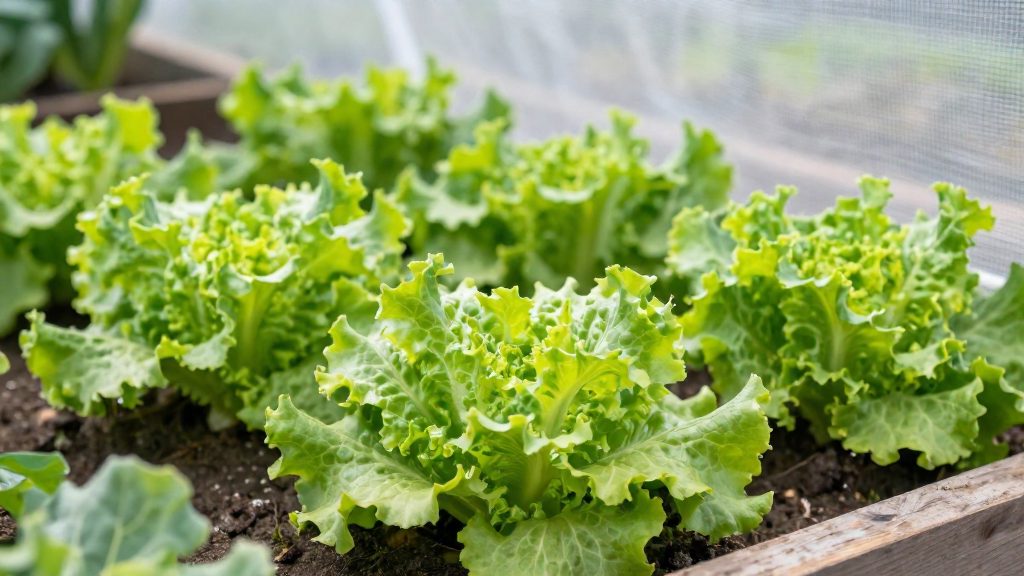
Extending the Season with Tunnels and Floating Row Covers
In a cool spring, the main gain from a protective structure is an earlier and longer sowing window. Spinach germinates best when the soil sits between about 45 and 68 °F (7 to 20 °C), and cold, wet ground in April or May slows emergence. A tunnel or floating cover warms the soil and shelters young plants, so you can start sowing sooner. Penn State Extension recommends sowing spring spinach about 4 to 8 weeks before the average last frost date, so check the local date for your region.
Key Reference Values
| Stage | Reference value | Source |
|---|---|---|
| Spring sowing | About 4 to 8 weeks before the average last frost | Penn State Extension |
| Autumn sowing | About 6 to 8 weeks before the first frost | Penn State Extension |
| Germination soil temperature | About 45 to 68 °F (7 to 20 °C) | Penn State Extension |
| Poor or erratic germination | Soil above 85 °F (30 °C) | Johnny’s Selected Seeds |
| Onset of bolting | Around 80 °F (27 °C) | Penn State Extension |
Using Covers Without Overheating
A floating row cover is the simplest tool. It lets light and water through, protects seedlings from cold, and also helps control pests. Penn State Extension notes that a floating cover helps manage aphids and leafminers, two typical spinach pests, and weeding reduces their populations. Lay the fabric loosely over the row and secure the edges so that wind does not lift it.
A tunnel or protected structure works differently because it traps heat. Warm air can push soil temperature above the germination range, and Johnny’s Selected Seeds reports that soil above 85 °F (30 °C) gives weak or irregular germination. On sunny days, ventilate the structure. Spinach grown under cover also needs the same moisture care as outdoor crops. Penn State Extension warns that dry soil can trigger bolting, so keep the bed evenly moist without waterlogging it.
Extending the Season Into Autumn
Protected structures also allow sowing from late summer into winter. Johnny’s Selected Seeds states that growth under these conditions is much slower than in spring, so plan for longer harvest intervals. The official sources consulted do not specify exact harvest timing under tunnels in Canadian conditions, so track growth in your own bed before relying on a fixed schedule.
Aphids and leaf miners: natural protection
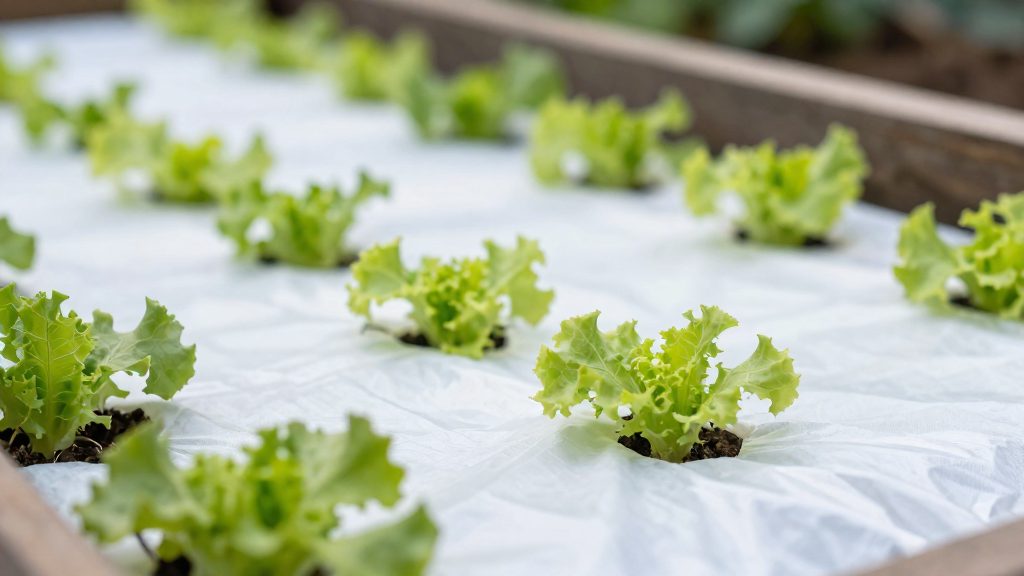
Aphids and leaf miners are the typical pests of spinach. According to Penn State Extension, weeding reduces their populations and a floating row cover helps control them. Both measures are organic alternatives to chemical insecticides, and both work best as preventive steps applied from sowing onward.
The main lever is keeping the bed clean. Clear weeds before sowing and keep the bed weeded through the whole cycle. Penn State Extension links weeding directly to lower pest populations, so this is the first habit to build into the routine.
Next, cover the bed. A floating row cover placed over the sown rows acts as a physical barrier. Lay it loosely so the leaves have room to grow, and secure the edges so that it stays in place.
Soil moisture also matters. Penn State Extension notes that a dry soil can trigger bolting, so keep the bed evenly moist. Water without waterlogging the soil, and check the bed regularly so you can catch pest activity early.
| Practice | Purpose | When to apply |
|---|---|---|
| Weeding | Reduces aphid and leaf miner populations | Before sowing, then throughout the cycle |
| Floating row cover | Helps control pests | Right after sowing |
| Even soil moisture | Limits the risk of bolting triggered by dry soil | Throughout the cycle |
How to Prevent Bolting
Spinach begins to bolt, meaning it sends up a flower stalk and turns bitter, at about 80 °F (≈27 °C) according to Penn State Extension. It also responds to day length, so it can bolt in June even when the weather is cool. For a cool-spring crop, the main levers are sowing time, consistent soil moisture, and a well-prepared bed.
Time the Sowing to Your Frost Dates
Penn State Extension gives these sowing windows, measured against local frost dates:
| Season | Sow | Reference frost |
|---|---|---|
| Spring | About 4 to 8 weeks before | Average last frost |
| Autumn | About 6 to 8 weeks before | First frost |
Sowing too late in spring pushes the plants into the longer days of early summer, when bolting risk rises. Check your local average last frost date in your regional climate records, then sow as early as the soil allows. Seed germinates best when the soil is about 45 to 68 °F (≈7 to 20 °C), according to Penn State Extension. Johnny’s Selected Seeds notes that soil above 85 °F (30 °C) gives poor or uneven germination, so avoid sowing into a hot bed.
Keep the Soil Consistently Moist
A dry soil can trigger bolting, according to Penn State Extension. Water the bed evenly so the root zone does not dry out between irrigations. Avoid soaking it, which can compact the soil and reduce air around the roots. Check moisture by pushing a finger into the soil a few centimetres deep before watering.
Prepare a Deep, Fertile Bed
Spinach has a long taproot, so loosen the soil to a depth of 30 to 45 cm (about 12 to 18 inches) before sowing. Penn State Extension recommends working in rich compost or well-aged manure at this stage. Deep, loose soil lets roots reach moisture more easily, which helps the plants stay steady through dry spells.
Maintain the Right Soil pH
Spinach is sensitive to acidity. Johnny’s Selected Seeds gives these targets:
| Parameter | Target |
|---|---|
| Minimum pH | 6.0 |
| Ideal pH range | 6.5 to 7.5 |
A soil test shows whether the bed meets this range. The sources consulted do not specify which organic amendment to use if the pH is too low, so ask a local soil testing service for a recommendation.
Keep Weeds Down
Weeding reduces populations of leaf miners and aphids, according to Penn State Extension. Fewer pests mean less stress on the plants, which supports a steady harvest before the bolting window arrives.
Harvesting and Succession Planting
Spinach is ready to pick when the leaves are large enough to use, and the timing of each sowing decides how long the harvest lasts. Because spinach bolts (sends up a flower stalk and turns bitter) once conditions shift, the goal is to sow in small batches and harvest before the plants reach that stage. In a cool Canadian spring, the window is set by soil temperature and frost dates rather than by the calendar. The Penn State Extension and Johnny’s Selected Seeds both give the timing rules below, but frost dates vary by location, so check the local average last and first frost dates for your area before you plan.
Key timing rules for succession planning:
| Season | Sowing timing | Key limit |
|---|---|---|
| Spring | About 4 to 8 weeks before the average last frost | Sow once the soil can be worked |
| Autumn | About 6 to 8 weeks before the first frost | Growth slows as days shorten |
| Protected structures | Late summer through winter | Growth is much slower |
Soil temperature is the most useful check in spring. Seeds germinate best when the soil is roughly 7 to 20 °C (45 to 68 °F). Sowing into soil above 30 °C (85 °F) gives poor or uneven germination, which is rarely a problem in a cool spring but matters during a warm summer spell.
Bolting starts around 27 °C (80 °F). Spinach also responds to day length, so it can bolt in June even when the weather is cool. A dry soil can trigger bolting, which makes steady moisture part of the harvest plan.
Thinning is the first harvest step. When plants reach about 5 cm (2 in) tall, thin them to 10 to 15 cm (4 to 6 in) apart. The thinnings can be eaten, which gives an early yield without losing the main crop.
Practical succession method:
- Sow a small batch every few weeks during the spring window, rather than one large sowing.
- Harvest once the leaves are large enough to use, and finish picking before temperatures approach 27°C (80°F) or before the long days of June trigger bolting.
- Time the last spring sowing so that harvest finishes before the weather turns warm.
- Plan the autumn sowing from your local first-frost date, counting back the 6 to 8 weeks noted above.
Organic pest control supports the harvest. Aphids and leaf miners are the typical pests. Regular weeding reduces their numbers, and floating row cover helps keep them under control without chemical treatments.
Frequently asked questions
When should I sow spinach in a cool Canadian spring?
Sow as soon as the soil can be worked, because seeds germinate most reliably when the soil temperature is about 7–20°C (45–68°F). Penn State Extension places spring sowing roughly 4 to 8 weeks before the average last frost, so check that date in your local climate records.
Why does my spinach bolt, and how can I prevent it?
Bolting, when the plant sends up a flower stalk, begins once temperatures approach 27°C (80°F). Penn State Extension also reports that dry soil can trigger it, so keep the bed evenly moist through late spring. Day length is a separate trigger, which is why plants can bolt in June even in cool weather.
When should I stop harvesting my spinach?
Pick the leaves once they are large enough to use, and finish before temperatures approach 27°C (80°F) or before the long days of June start to trigger bolting. The official sources consulted do not specify how many days the crop takes to reach harvest size.