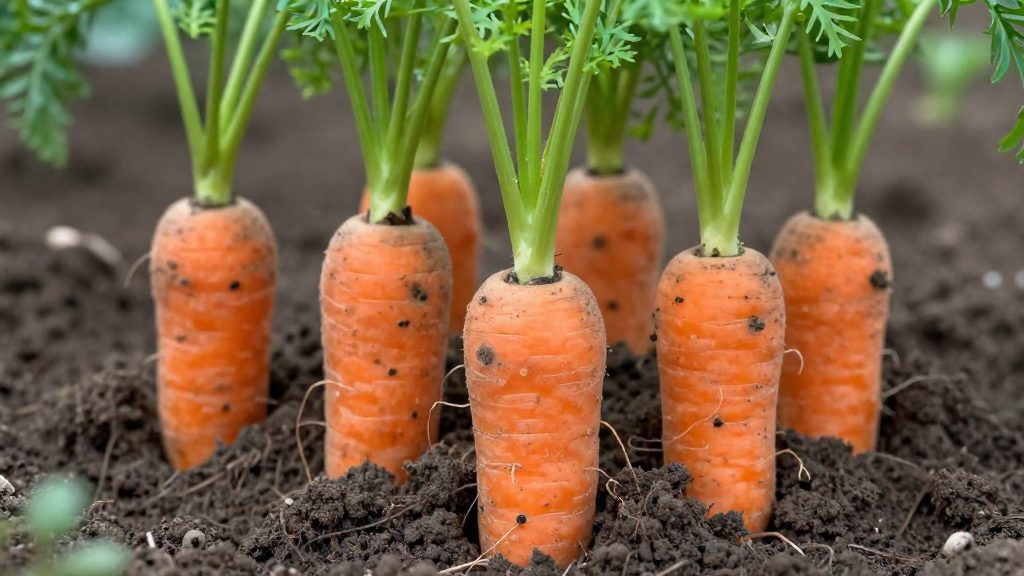
Why is heavy clay hard on carrots?
Heavy clay is hard on carrots because its very fine particles pack tightly, forming dense layers and surface crusts that a growing taproot struggles to penetrate. According to the University of Saskatchewan (2025), heavy clay soils call for shorter varieties. Clay also holds water for long periods and compacts further when worked wet, so the root zone stays firm and resistant. These physical properties explain the deformities gardeners often see: bent, branched or stunted roots.
Why is heavy clay hard on carrots?
A carrot grows as a taproot, pushing its tip downward between soil particles. The force needed to do this depends on how loose the soil is. In compacted clay, particles are pressed together and the pore spaces that allow root growth shrink, so the tip meets resistance it cannot easily pass.
How compaction deforms carrot roots
When the tip hits a dense layer or a hard clod, growth slows or changes direction. According to the University of Saskatchewan (2025), compacted soil can cause crooked carrots. A root that bends around an obstacle or is pressed sideways ends up curved rather than straight, which reduces the uniformity of the harvest.
Stunting follows when the root cannot expand. A dense profile limits the volume a carrot can explore, so the root stays short and thin.
The official sources consulted do not specify how forked roots form in clay, and no frequency is given for this problem. In general practice, a root split by an obstruction may branch, but this should be treated as an observation rather than a documented rate.
Fine particles, crusting and blocked penetration
Clay particles are the smallest in the soil texture range. Their small size and large surface area let them bind tightly, and when the surface dries after rain or watering, they can form a hard crust. Seedlings may struggle to emerge through that crust.
Particle size and why clay holds water
Because clay particles are so fine, they retain water in tiny pores and drain slowly. Clay also swells when wet and shrinks as it dries. Working it while wet compresses the particles, which is a common way clay becomes compacted in the first place.
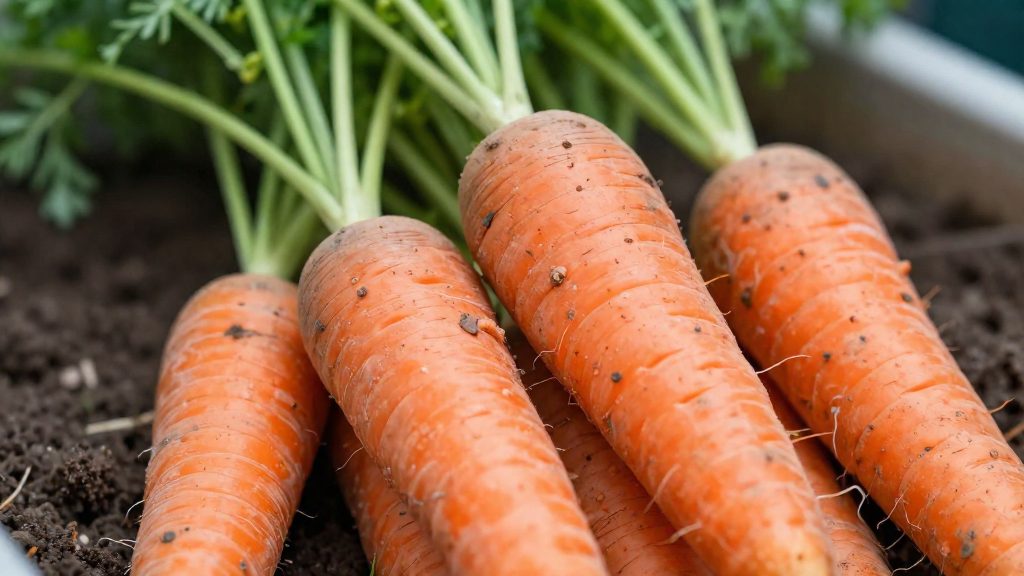
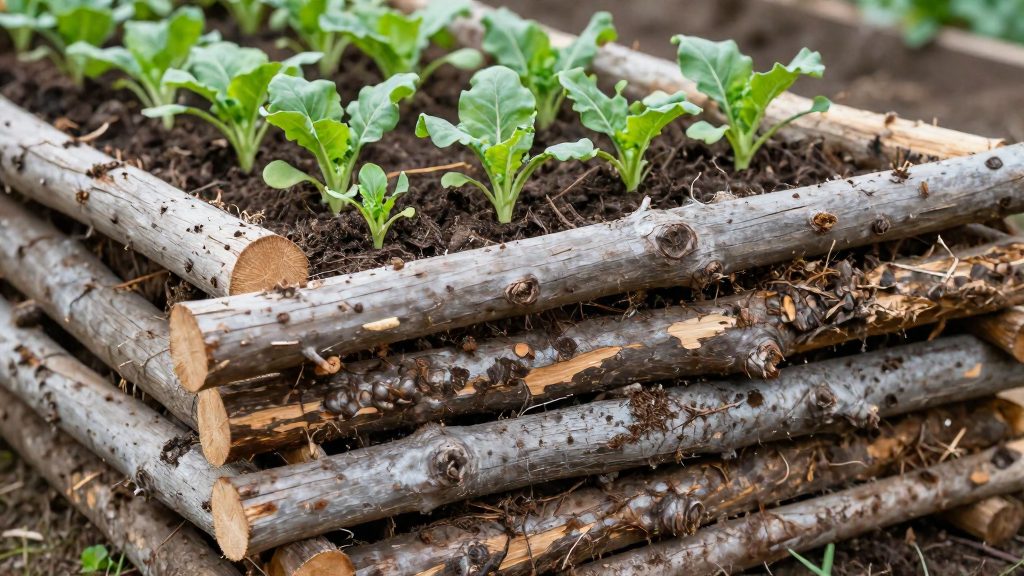
Build raised beds for clay soil
Raised beds let you grow carrots in a loose, controlled growing medium above heavy clay. According to the University of Georgia Extension (CAES Field Report), in clay soil raised beds or containers at least 8 to 12 inches (about 20 to 30 cm) tall are the better choice. The bed sits above the compacted layer, so carrot roots grow into the new fill rather than pushing through dense clay.
Bed height
- Build beds at least 20 cm high, and up to about 30 cm if you have room for the extra fill.
- Frame the bed with untreated wood, stone, or another material that holds its shape under the weight of the soil.
- Keep the bed width narrow enough to reach the centre from both sides without stepping on the soil, which would re-compact it.
Fill mix
Fill the bed with a mixture of compost, manure and topsoil, as the same extension source recommends. The official sources consulted do not specify exact proportions, so the mix should be adjusted by feel:
- Compost adds organic matter and improves structure.
- Well-rotted manure adds nutrients and body to the mix.
- Topsoil provides a fine base that carrots can grow through.
Choose a fill that drains freely, and water the bed evenly rather than letting it stay soggy.
Containers when raised beds are impractical
If you lack space or cannot build a frame, use containers at least 20 cm deep, filled with the same compost, manure and topsoil mix. Containers suit balconies, patios, and sites where the ground is unusable. Choose a container with drainage holes so the medium does not hold standing water.
Which carrot varieties suit heavy clay?
Variety choice matters as much as bed construction in heavy clay. According to the University of Saskatchewan (2025), shorter carrot varieties are the recommended choice in heavy clay soils. The same source suggests two groups: Nantes types and Danvers types. Both are workable options, but they differ in root shape and in how their seedlings handle competition from weeds.
Nantes types
Nantes types are the shorter carrots in this comparison. The University of Saskatchewan (2025) names YaYa, Napoli and Bolero as suggested examples. The University of Georgia Extension lists Scarlet Nantes and Nantes among the shorter or half-long types that do best in heavy soil. Choose a Nantes type when the root length of a bed is limited by compacted or dense clay.
Danvers types
Danvers types are the vigorous group. The University of Saskatchewan (2025) names Achieve, Big Sur, Cordoba and Danvers Half Long, and notes that Danvers seedlings are vigorous and compete better with weeds. This is useful in a plot where weed pressure is high during the early weeks. The University of Georgia Extension also lists Danvers 126 among the shorter or half-long types suited to heavy soil.
Comparison
| Type | Examples named in the sources | Key point |
|---|---|---|
| Nantes | YaYa, Napoli, Bolero, Scarlet Nantes, Nantes | Shorter types recommended for heavy soil |
| Danvers | Achieve, Big Sur, Cordoba, Danvers Half Long, Danvers 126 | Vigorous seedlings that compete better with weeds |
Practical selection
- Read the seed packet or catalogue description and look for “short”, “half-long” or “Nantes” wording.
- Avoid long-rooted types in dense clay, since the University of Georgia Extension states that longer varieties prefer sandy soil.
- Where weeds are a regular problem, a Danvers type gives the seedlings a competitive start.
How do you improve clay soil organically?
Clay soil is dense, holds water, and drains slowly, which makes it hard for carrot roots to grow straight. The main organic approach is to add organic matter that loosens the structure over time, keep the surface covered, and bring soil pH into the range carrots tolerate. Changes in soil life build up gradually, so expect results over several seasons rather than one.
The University of Georgia Extension (CAES Field Report) gives a target soil pH of 5.5 to 6.5 for growing carrots in clay. Test the soil before amending it, then correct the pH slowly with organic amendments. Avoid large one-time changes, because a soil test only shows the reading at the moment it was taken.
The main organic methods are:
| Method | What it does | When to apply it |
|---|---|---|
| Cover crops | Add plant residue to the soil and protect it between crops | Off-season, after harvest |
| Organic mulch | Shades the surface, reduces crusting, and breaks down into organic matter | Season-round, once beds are established |
| Soil pH test | Shows whether the soil falls within the 5.5 to 6.5 range | Before planting and periodically |
| Organic matter additions | Improve structure and feed soil organisms | Before each cycle, repeated over years |
Cover crops left in place or cut and laid on the bed return organic material to the soil. Cut them at the base before they set seed, and leave the residue on the surface to decompose.
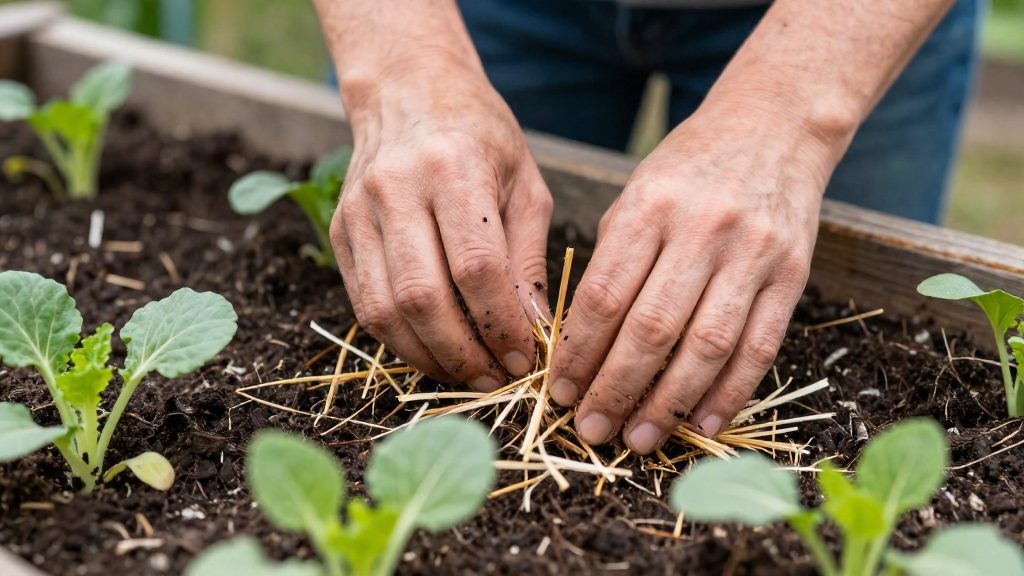
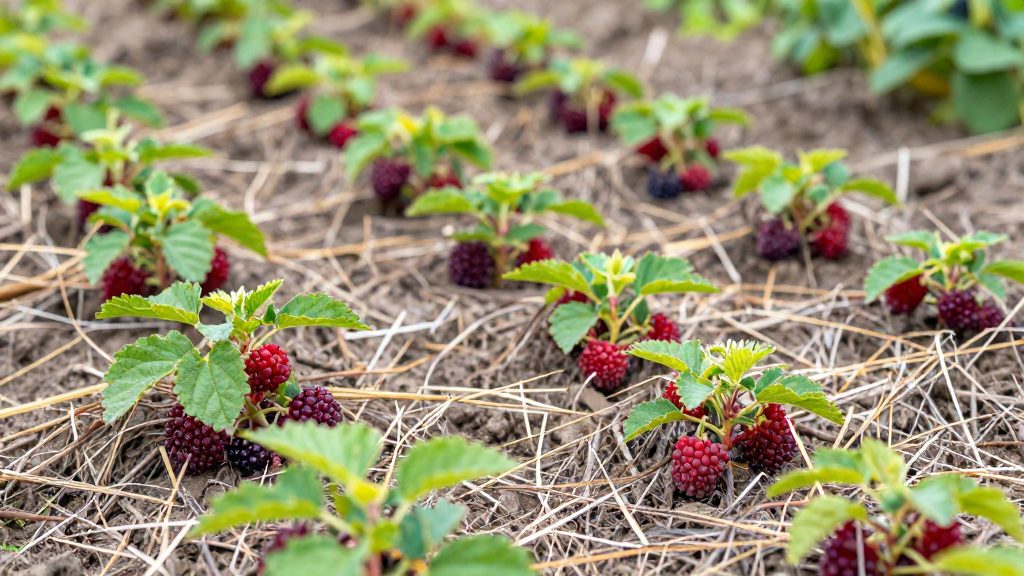
Mulch protects the soil surface and gradually breaks down. Use a light layer of plant material, keep it away from the carrot crowns, and renew it as it decomposes.
Soil biology such as earthworms becomes more active as organic matter accumulates. The official sources consulted do not specify a timeline for these gains, so track them by checking soil texture and worm activity each season.
Sowing and keeping the seedbed moist
Carrot seed in clay is sown shallow, in tight and regular rows, and the seedbed is kept evenly damp until the seedlings emerge. According to the University of Saskatchewan, Gardening in Saskatchewan (2025), carrots need good soil contact and consistently moist but not wet soil during germination. The spacing figures below are the standard ones given for this crop by the same source.
Spacing at sowing and thinning
| Stage | Distance | How to apply it |
|---|---|---|
| Seed spacing at sowing | About 2 cm apart | Sow thinly along the row so the thinning step is lighter |
| Row spacing in clay beds | About 8 cm apart | Keep rows at this interval for the full bed |
| Final plant spacing after thinning | About 8 cm | Once seedlings are established, remove the weakest ones to reach this gap |
Thinning is done after emergence, not at sowing. Pulling seedlings to the final spacing gives each remaining carrot room to form a root without crowding its neighbours.
Seed-to-soil contact and surface moisture
- Soil contact: The seed must sit against moist soil to germinate. After sowing, firm the surface lightly with the flat of a hand or a board so the seed is not left loose on top.
- Consistently moist surface: Keep the top layer evenly damp throughout germination. Check it by touch each day, and water lightly when it begins to dry. The aim is damp, not soaked.
- Avoid compaction: Do not walk on the sown bed. Work from the path side and reach across only as far as needed.
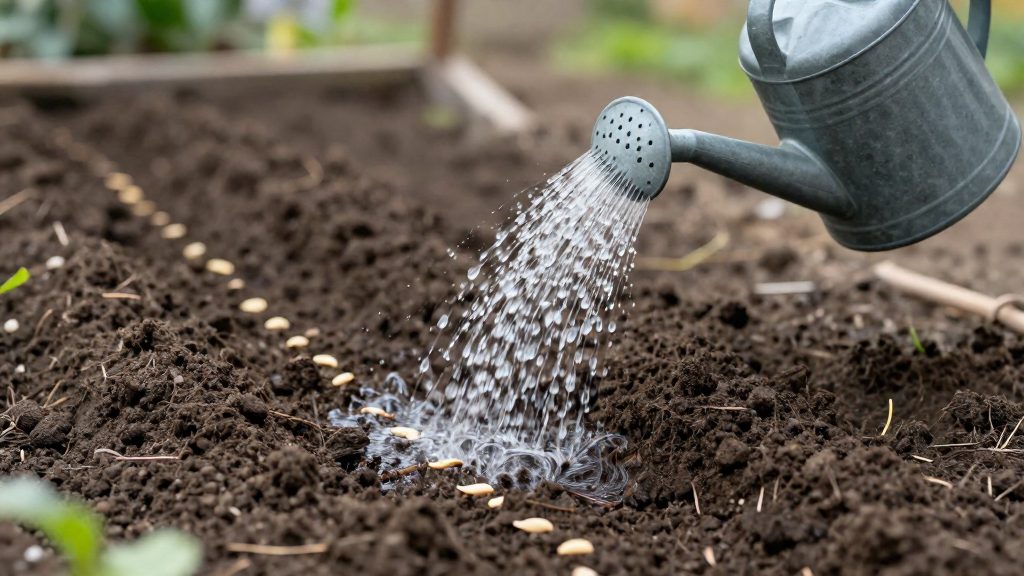
Water without causing rot
According to the University of Saskatchewan’s Gardening in Saskatchewan (2025), carrots need about 2.5 cm of moisture per week, but that figure applies to well-drained soil. Heavy clay drains slowly, so the same weekly total can saturate the root zone if it arrives in one or two heavy sessions. The goal is a bed that stays evenly moist through the root zone without staying waterlogged, since the same source notes that excess moisture promotes root rot in carrots.
Weekly water target
- Use about 2.5 cm of moisture per week, counting rainfall, as a reference figure. It applies to well-drained soil, so in clay check the root zone before each watering and reduce the amount if it stays wet.
- Measure with a rain gauge or a straight-sided container placed on the bed. A reading of 2.5 cm means the weekly target is met.
- On clay, apply the weekly total as several lighter waterings rather than one long soak. Water then soaks in instead of pooling on the surface.
Adjust frequency to rain and season
Set watering frequency by what the bed has already received, not by the calendar.
- After substantial rain, skip the scheduled watering and check the soil before the next session.
- During hot, dry spells, moisture leaves the bed faster, so check more often.
- As temperatures fall and evaporation slows, reduce the amount you apply. The weekly target stays the same, but the bed needs less top-up.
To check moisture, push a trowel or finger a few centimetres into the soil. The soil should feel moist and crumbly, not muddy or sticky, and it should not have a crust on the surface.
Rot-prevention habits
- Do not let water stand on the bed after rain. If puddles persist, the bed is holding too much water for the current conditions, so reduce the next application.
- Water at the soil surface along the rows rather than spraying foliage for long periods.
- Keep watering records for a few weeks. Noting rainfall and the amount applied makes it easier to spot patterns and adjust.
Pests and rotation in a Canadian garden
According to the University of Saskatchewan (Gardening in Saskatchewan, 2025), the leafhopper is the most common carrot pest, and it can spread disease to the crop. In a Canadian home garden, pest control for carrots starts with where and how you plant, before any damage appears. The sources consulted do not describe chemical treatments for leafhoppers, so the measures below are the non-chemical options they recommend.
Leafhoppers as the main carrot pest
Leafhoppers deserve the closest attention in a carrot bed. Because they can spread disease, check the carrot foliage regularly during the growing season. Check the carrot foliage regularly during the growing season and act early rather than waiting for visible damage.
Keeping carrots away from clover and alfalfa
Forage legumes such as clover and alfalfa should not be planted near carrots. The same source advises avoiding planting carrots near weeds in general. Keep the carrot plot clear of these plants and weed the edges of the bed, so that no clover, alfalfa or weed grows directly beside the row.
Row covers as a physical barrier
Row covers are a physical barrier worth considering against leafhoppers. Lay the fabric over the bed and secure its edges so that insects cannot reach the foliage underneath. The sources consulted do not specify the fabric type or the dates for installing and removing the covers, so follow the product instructions and adjust timing to your local conditions.
Rotation practice
The sources consulted do not specify a crop rotation interval for carrots. The practical rule drawn from them is to keep carrots apart from clover and alfalfa, both as neighbouring plants and in the surrounding plots. Combined with weed control and row covers, this approach offers an organic way to limit leafhopper risk without relying on chemical products.
Can you grow carrots directly in clay?
Yes, but only under specific conditions. Direct in-ground sowing in heavy clay works when the bed is loosened to depth, mixed with a lighter layer, and planted with a variety suited to dense soil. According to the University of Georgia Extension (CAES Field Report), in-ground planting in clay means tilling to about 10 inches (roughly 25 cm) and working in about 6 inches (roughly 15 cm) of sandy topsoil or another organic amendment. The goal is to give the taproot loose soil to grow into. The official sources consulted do not give a single depth that applies to every clay type, so check the texture of your own soil before tilling.
Tilling steps before sowing
| Step | Target | Source |
|---|---|---|
| Till the bed | About 25 cm (10 inches) deep | University of Georgia Extension (CAES Field Report) |
| Work in sandy topsoil or an organic amendment | About 15 cm (6 inches) layer | University of Georgia Extension (CAES Field Report) |
| Check soil pH before sowing | 5.5 to 6.5 | University of Georgia Extension (CAES Field Report) |
Till when the soil is workable and not sticky. Clay that is worked wet forms clods and compacted layers that defeat the purpose of the operation.
Choosing varieties for in-ground clay
For in-ground sowing in clay, choose shorter or half-long types such as Nantes or Danvers, as both universities advise. Saskatchewan pairs shorter varieties with raised beds, so prepare the soil as described above.
Conditions for successful sowing
- Water volume: The University of Saskatchewan (2025) cites about 2.5 cm of moisture per week in well-drained soil.
- Spacing: Sow about 2 cm apart, thin to about 8 cm, and space rows about 8 cm apart.
Frequently asked questions
Do I need raised beds to grow carrots in heavy clay?
Raised beds or containers at least 20 to 30 cm tall are the better choice in clay, filled with compost, manure and topsoil, according to the University of Georgia Extension (CAES Field Report, undated). If you plant in the ground instead, the same source suggests tilling to about 25 cm and working in organic amendment, with a target soil pH of 5.5 to 6.5. Raised beds give you more control over the root zone than tilling existing clay does.
Which carrot varieties handle clay best?
Shorter and half-long types perform best in heavy soil, and the University of Georgia Extension (CAES Field Report, undated) names Danvers 126, Scarlet Nantes, Nantes and Chantenay Red Core as examples. The University of Saskatchewan (2025) also recommends Nantes types such as ‘YaYa’, ‘Napoli’ and ‘Bolero’, and Danvers types such as ‘Achieve’, ‘Big Sur’, ‘Cordoba’ and ‘Danvers Half Long’. Choose shorter varieties over long, tapered carrots, which need a deep, loose profile.
How much water do carrots need in clay, and how do I prevent rot?
According to the University of Saskatchewan (2025), growing carrots need about 2.5 cm of moisture per week in well-drained soil, and the soil should stay consistently moist but not wet during germination. Clay drains slowly and holds water for long periods, so the risk of waterlogging is higher than in sandy soil. Watering in measured amounts and improving drainage with organic matter helps limit root rot.