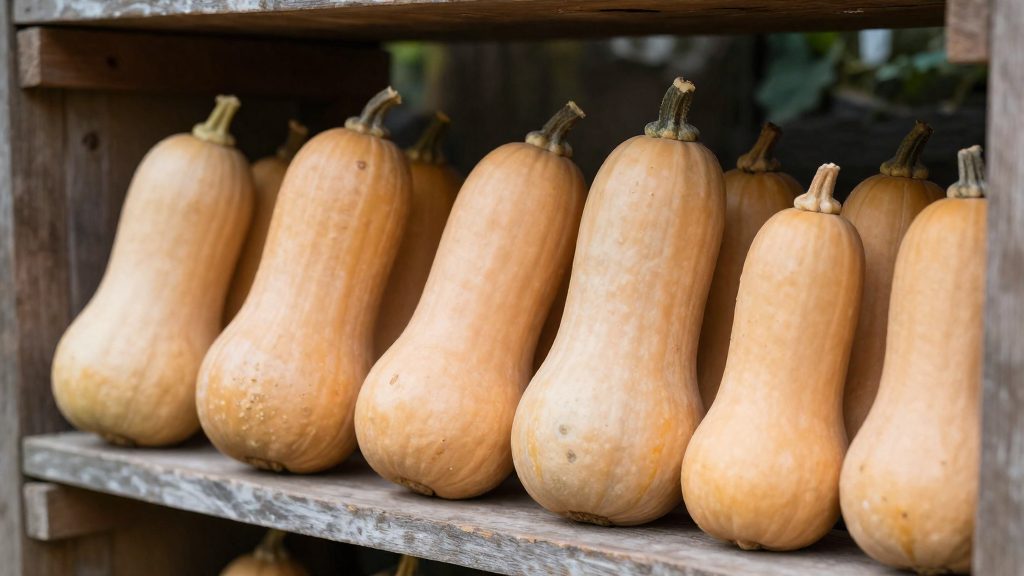
Winter squash is ready to harvest when its rind is hard enough that a thumbnail cannot pierce it and its surface has turned dull. According to Toronto Master Gardeners (2026-10-01), winter squash is picked after a light frost, which makes the flesh sweeter but shortens how long it keeps. Cut each fruit with pruners, leaving a short stem, then cure it in a sunny spot for about one week before storage.
When to harvest winter squash?
Signs of ripeness
Check two things before cutting: rind hardness and the appearance of the skin. According to Iowa State University Extension and Outreach, a winter squash is mature when its skin is too hard for a thumbnail to pierce and its surface has lost its shine. Shiny, soft-skinned fruit is not yet ready.
Check the maturity of each fruit before cutting it.
Harvesting after a light frost
According to Toronto Master Gardeners (2026-10-01), winter squash is harvested after a light frost. The frost makes the flesh sweeter, but it also reduces storage duration. Gardeners therefore face a trade-off: waiting for frost improves taste, while harvesting earlier may extend storage.
The sources consulted do not give a frost temperature, a calendar date or regional timing for Canada. Watch your local forecast and adapt harvest timing to your region.
Cutting the stem
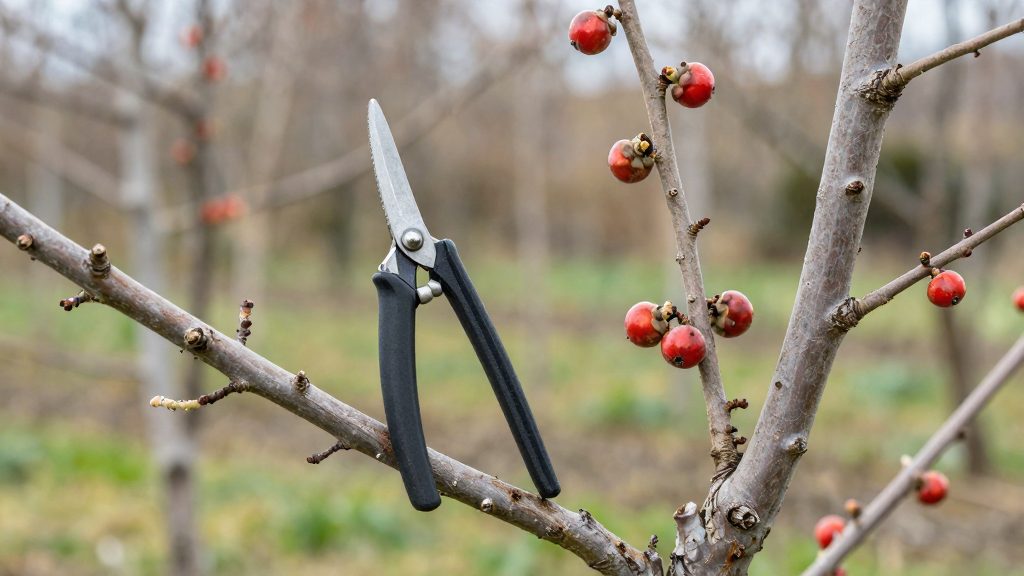
Use pruners to cut each fruit from the vine. Leave a stem stub of about 2.5 cm (1 inch), as recommended by Iowa State University Extension and Outreach, and avoid cuts and bruises on the skin. Toronto Master Gardeners (2026-10-01) advises leaving 2 to 4 cm of stem, which helps the squash keep better.
| Harvest step | Recommended figure | Source |
|---|---|---|
| Stem left on fruit | About 2.5 cm (1 inch); range 2 to 4 cm | Iowa State University Extension and Outreach; Toronto Master Gardeners (2026-10-01) |
Curing
Curing is the warm drying step that follows harvest. It hardens the rind and closes small wounds. Toronto Master Gardeners (2026-10-01) describes it as placing squash in a sunny spot for about one week.
| Curing parameter | Value | Source |
|---|---|---|
| Duration | About one week | Toronto Master Gardeners (2026-10-01) |
| Temperature | 27–29 °C (80–85 °F) | Iowa State University Extension and Outreach |
| Relative humidity | 80–85% | Iowa State University Extension and Outreach |
The official sources consulted do not specify how to reproduce the 27–29 °C and 80–85% humidity conditions outdoors, so a sunny spot may not match them exactly.
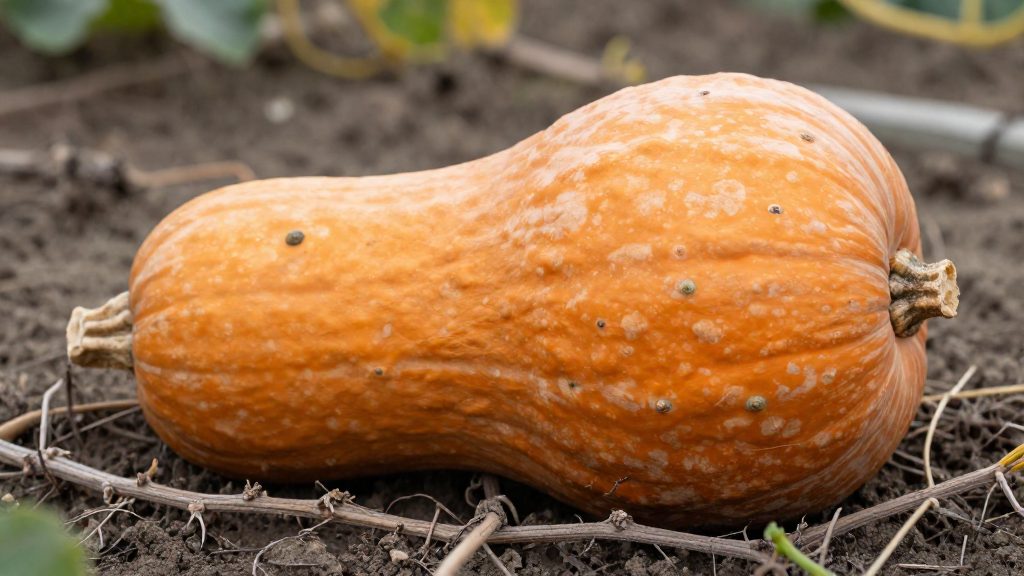
Recognizing a Ripe Winter Squash
A winter squash is ready to harvest when its skin is hard enough that the thumbnail cannot pierce it and its surface has lost its shine. According to Iowa State University Extension and Outreach, a ripe squash has a dull surface and a skin that resists pressure, so both checks should be done together. Check the skin hardness and the dull surface together.
The thumbnail test
Press a thumbnail firmly into the skin in a spot that is not bruised or scratched. If the nail leaves a mark or breaks the surface, the squash needs more time in the garden. A squash that resists the nail is mature enough to pick.
Checking the surface
- Look for a matte, non-glossy skin. A shiny skin usually means the fruit is still developing.
- Check that the skin has no soft spots, cracks, or damp patches.
- Pick squash that has been on the vine long enough to show the mature signs above.
Timing relative to frost
According to Toronto Master Gardeners (2026), winter squash is often harvested after a light frost. The cold makes the flesh sweeter, but it also shortens storage life. Toronto Master Gardeners says winter squash is picked after a light frost. The sources consulted give no frost temperature or date.
Cutting the stem
Use pruning shears to cut the fruit from the vine. Iowa State University Extension and Outreach recommends leaving about 2.5 cm (1 inch) of stem. Toronto Master Gardeners (2026) gives a range of 2 to 4 cm, and a longer stem helps the squash keep better. Handle each fruit carefully to avoid cuts and bruises.
How to cut and handle the fruit
Winter squash harvesting depends on timing, cutting technique and careful handling. According to the Toronto Master Gardeners (2026-10-01), squash can be picked after a light frost, which makes the flesh sweeter but shortens its storage life. Cutting and handling come next, and each step affects how long the fruit keeps.
Check maturity before cutting
Iowa State University Extension and Outreach describes a mature squash as one with a skin hard enough that a thumbnail cannot pierce it, and a dull rather than glossy surface. Press the rind with your thumbnail before cutting.
Cut the stem
- Use pruners to cut the fruit from the vine.
- Leave a stem length of 2 to 4 cm. The Toronto Master Gardeners (2026-10-01) say this helps the squash keep, and Iowa State University Extension and Outreach gives about 2.5 cm (1 inch) as the target.
- Avoid cuts and bruises on the body of the fruit, since small wounds are what the curing process is meant to close.
Curing
Curing hardens the skin. The Toronto Master Gardeners (2026-10-01) recommend placing squash in a sunny spot for about one week.
Iowa State University Extension and Outreach gives more precise conditions: 27 to 29 °C (80 to 85 °F) and 80 to 85% relative humidity for all winter squash except acorn. This warm, humid curing also seals small wounds.
Storage
After curing, store squash in a cool, dry, well-ventilated place at 10 to 13 °C (50 to 55 °F), according to Iowa State University Extension and Outreach. Keep it away from apples, pears and other ripening fruit, because their ethylene shortens storage life.
If the storage area needs cleaning beforehand, use water and a brush rather than synthetic disinfectants.
| Squash type | Approximate storage life (well cured and well stored) |
|---|---|
| Acorn | 5 to 8 weeks |
| Butternut | 2 to 3 months |
| Hubbard | 5 to 6 months |
Source: Iowa State University Extension and Outreach.
Curing: the step you cannot skip
Curing, also called hardening, is the stage between harvest and storage that toughens the skin of winter squash. According to Toronto Master Gardeners (2026), placing the squash in a sunny spot for about one week hardens the skin. Iowa State University Extension and Outreach gives more precise conditions for most types: 27–29 °C (80–85 °F) and 80–85 % relative humidity. In that environment the skin hardens and small cuts and bruises heal over.
Harvest before curing
Winter squash is harvested after a light frost. Toronto Master Gardeners (2026) notes that frost makes the fruit sweeter but shortens how long it keeps. A squash is ready when its skin is too hard for a thumbnail to puncture and its surface looks dull rather than glossy.
To cut the fruit, use pruning shears and leave the stem attached. Iowa State University Extension and Outreach recommends about 2.5 cm (1 inch) of stem, while Toronto Master Gardeners (2026) suggests 2 to 4 cm. Toronto Master Gardeners adds that leaving 2 to 4 cm of stem helps the squash keep better. Avoid cuts and bruises during handling, since damaged skin is more prone to rot.
Curing by variety
Most winter squash can follow the warm, humid cure described above. The exception is acorn squash, which Iowa State University Extension and Outreach says should not be cured this way, because heat and moisture reduce its quality and storage life.
| Variety | Warm, humid curing | Approximate storage life |
|---|---|---|
| Acorn | No | 5 to 8 weeks |
| Butternut | Yes | 2 to 3 months |
| Hubbard | Yes | 5 to 6 months |
Storage after curing
Once cured, store winter squash in a cool, dry, well-ventilated place at 10–13 °C (50–55 °F). Keep it away from apples, pears, and other fruit that is still ripening. These give off ethylene, a gas that shortens storage life. Curing as described in the sources uses sun and warmth rather than chemical treatments.
Where and at what temperature to store them?
Winter squash keeps longest when it is cured first and then stored in a cool, dry, well-ventilated place. According to Iowa State University Extension and Outreach, curing is done at 27–29 °C (80–85 °F) and 80–85 % relative humidity for all winter squash except acorn. After curing, the squash goes into storage at 10–13 °C (50–55 °F). Acorn squash should not be cured under these heat and humidity conditions, because they reduce its quality and storage life.
Curing before storage
Curing hardens the skin and seals small wounds, which reduces rot during storage. Toronto Master Gardeners advise placing the squash in a sunny spot for about one week to harden the skin. Iowa State University Extension and Outreach recommends 27–29 °C (80–85 °F) and 80–85 % relative humidity for most varieties, with acorn squash excluded from that warm, humid step. The official sources consulted do not specify how to reproduce these conditions at home.
Storage conditions
The storage area should meet three conditions:
- Cool: around 10–13 °C (50–55 °F). Choose a spot that stays steadily within this range, and avoid places that get colder or warmer.
- Dry: avoid damp floors and basements prone to condensation.
- Ventilated: keep air moving around the fruit so that surface moisture evaporates.
Check the squash regularly and remove any that show soft spots or mould.
Approximate storage life
Well-cured and well-stored squash lasts for different periods depending on the variety, according to Iowa State University Extension and Outreach:
| Variety | Approximate storage life |
|---|---|
| Acorn | 5 to 8 weeks |
| Butternut | 2 to 3 months |
| Hubbard | 5 to 6 months |
Harvest timing also matters. According to Toronto Master Gardeners (2026-10-01), squash picked after a light frost becomes sweeter but stores for a shorter time. Leave 2 to 4 cm of stem attached when cutting the fruit from the vine, as this helps it keep better.
How long do winter squash keep?
Storage life depends on the variety, how the fruit was harvested and cured, and where it is kept. According to Iowa State University Extension and Outreach, well-matured winter squash stored under suitable conditions keeps for the approximate periods below. Acorn squash is the most perishable of the three.
| Variety | Approximate storage time |
|---|---|
| Acorn | 5 to 8 weeks |
| Butternut | 2 to 3 months |
| Hubbard | 5 to 6 months |
Harvest timing affects how long the fruit lasts. According to Toronto Master Gardeners (2026-10-01), harvesting after a light frost makes winter squash sweeter but shortens its storage life, so growers have to weigh flavor against keeping time. Before storage, cut each fruit with 2 to 4 cm of stem left attached, which helps it keep. Iowa State University Extension and Outreach recommends about 2.5 cm (1 inch) of stem and careful handling to avoid cuts and bruises. A ripe squash has skin too hard for a thumbnail to pierce and a dull surface.
Curing hardens the skin and heals small wounds. Toronto Master Gardeners (2026-10-01) describes placing the squash in a sunny spot for about one week. Iowa State University Extension and Outreach gives more precise conditions: most winter squash is cured at 27 to 29 °C (80 to 85 °F) and 80 to 85 percent relative humidity.
Storage conditions matter as much as the cure. After curing, keep winter squash in a cool, dry, well-ventilated place at 10 to 13 °C (50 to 55 °F). Store it away from apples, pears, and other ripening fruit, because their ethylene gas shortens storage life. Separating squash from these fruits is a simple, non-chemical measure that protects the harvest.
Common Mistakes to Avoid
Most storage problems with winter squash start at harvest, not in the pantry. Check each fruit before it goes into storage, and handle it as carefully as you would a bruised apple you do not want to rot.
- Harvesting before the skin is ready. A squash is ready when its skin is too hard for a thumbnail to pierce and its surface has lost its shine. Squash picked while the skin is still soft will not store well.
- Cutting the stem too short or tearing it. Cut with pruners, leaving about 2.5 cm (1 inch) of stem, according to Iowa State University Extension and Outreach. The Toronto Master Gardeners (2026-10-01) recommend 2 to 4 cm, which helps the fruit keep longer. Avoid cuts and bruises on the fruit body, and never carry a squash by its stem.
- Skipping or mishandling the curing step. Curing (hardening) means placing squash in a sunny spot for about one week, which toughens the skin, per the Toronto Master Gardeners (2026-10-01). Iowa State University Extension and Outreach describes a warmer, humid curing at 27–29 °C (80–85 °F) and 80–85% relative humidity for most types, and acorn squash is excluded from that warm, humid step.
- Curing acorn squash at full curing heat and humidity. Acorn squash should not be cured at the 27–29 °C and 80–85% humidity used for other winter squash, because heat and humidity lower its quality and storage life. The sources consulted do not describe an alternative cure.
- Storing squash near ripening fruit. Apples, pears and other ripening fruit release ethylene, which shortens storage life. Keep squash away from them.
- Storing in a warm or damp room. After curing, store squash in a cool, dry, well-ventilated place at 10–13 °C (50–55 °F), according to Iowa State University Extension and Outreach.
- Expecting the same shelf life from every type. Well-cured and well-stored acorn squash keeps about 5 to 8 weeks, butternut about 2 to 3 months, and hubbard about 5 to 6 months, per Iowa State University Extension and Outreach. Plan to eat the acorn squash first.
Frequently asked questions
How do I know when my winter squash is ready to pick?
According to Iowa State University Extension and Outreach, a winter squash is ready when its rind resists a thumbnail and its surface has lost its shine. Toronto Master Gardeners (2026-10-01) advises picking after a light frost, which sweetens the flesh but shortens storage life. The official sources consulted do not give a frost temperature or a calendar date.
Can acorn squash be cured the same way as butternut or hubbard?
No. Iowa State University Extension and Outreach states that most winter squash should be cured at 27–29 °C (80–85 °F) and 80–85 % relative humidity, but acorn squash must not be treated this way, because heat and humidity lower its quality and keeping. The sources consulted do not describe an alternative curing method for acorn squash.
Where should I store winter squash, and how long will it keep?
Iowa State University Extension and Outreach recommends storing cured fruit at 10–13 °C (50–55 °F) in a cool, dry, well-ventilated place, away from apples, pears and other ripening fruit, since their ethylene shortens storage. Expected storage life is 5 to 8 weeks for acorn, 2 to 3 months for butternut and 5 to 6 months for hubbard. Toronto Master Gardeners (2026-10-01) adds that leaving 2 to 4 cm of stem helps the squash keep better.