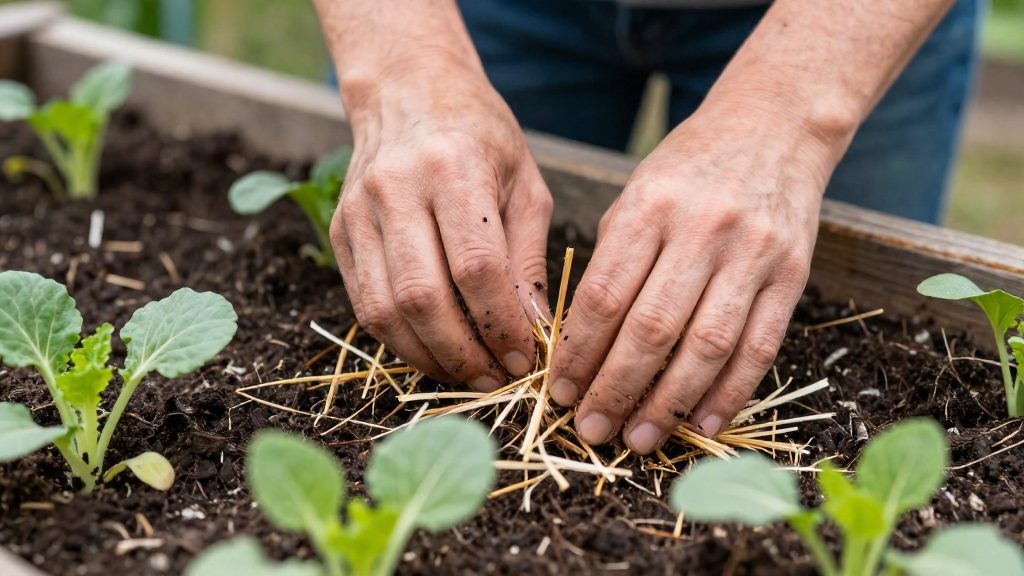
No-dig gardening is a method in which the soil is not turned over. Compost or well-rotted manure is spread on the surface, and soil organisms gradually work it into the ground. According to BBC Gardeners’ World (2026), no-dig is used mostly by organic vegetable growers, and it relies on a thick layer of organic matter rather than on digging to prepare beds.
What is no-dig gardening?
How the method works
No-dig gardening replaces digging with layering. Instead of loosening the soil with a fork or spade and burying amendments, the gardener adds a surface layer and lets the soil’s own organisms distribute it. Over time, earthworms and other soil life move the organic matter downward, improving the structure of the upper soil.
Maintenance follows the same logic. BBC Gardeners’ World (2026) recommends topping up vegetable beds with 3-5 cm of compost each year, ideally in late autumn, so the material has time to break down before spring sowing.
Starting a new bed
The starting method depends on how weedy the plot is. The table below summarises the three approaches described by the sources consulted.
| Situation | Method | Key steps |
|---|---|---|
| Bed with no heavy weeds | Compost on bare soil | Spread about 5 cm of well-rotted compost directly on the soil (BBC Gardeners’ World, 2026) |
| Existing bed to convert | Newspaper layer | Cut back vegetation, water the soil, cover with 5-10 layers of newspaper (about 20 for hardier weeds), then add compost, leaves or mulch. The newspaper breaks down within a season (Garden Culture Magazine) |
| Plot with many established weeds | Cardboard under compost | Dig out perennial weeds such as brambles and docks first, lay cardboard, then add the compost mulch (BBC Gardeners’ World, 2026) |
Cutting back vegetation is the first step in the newspaper method; on heavily weeded plots, perennial weeds such as brambles and docks may need digging out first.
Reported benefits and trade-offs
BBC Gardeners’ World (2026) lists the following reported benefits:
- Bigger vegetable harvests in trials
- Less weeding and watering
- Better drainage
- Earlier planting, because undug soil warms sooner
- Preserved mycorrhizal fungi
The same source notes that potatoes often yield more in dug soil, so the method is not a universal improvement for every crop.
The main constraint is material. BBC Gardeners’ World (2026) identifies sourcing or making enough compost as the most labour-intensive part of no-dig. Mulches that have not decomposed, such as straw, can attract slugs and snails, so favour well-rotted material. Garden Culture Magazine, citing Statistics Canada, reports that the area planted using no-till rose from 7% to 46% between 1991 and 2006. This concerns cropland and no-till farming, not home no-dig gardens.
Why no-dig suits organic vegetable gardening
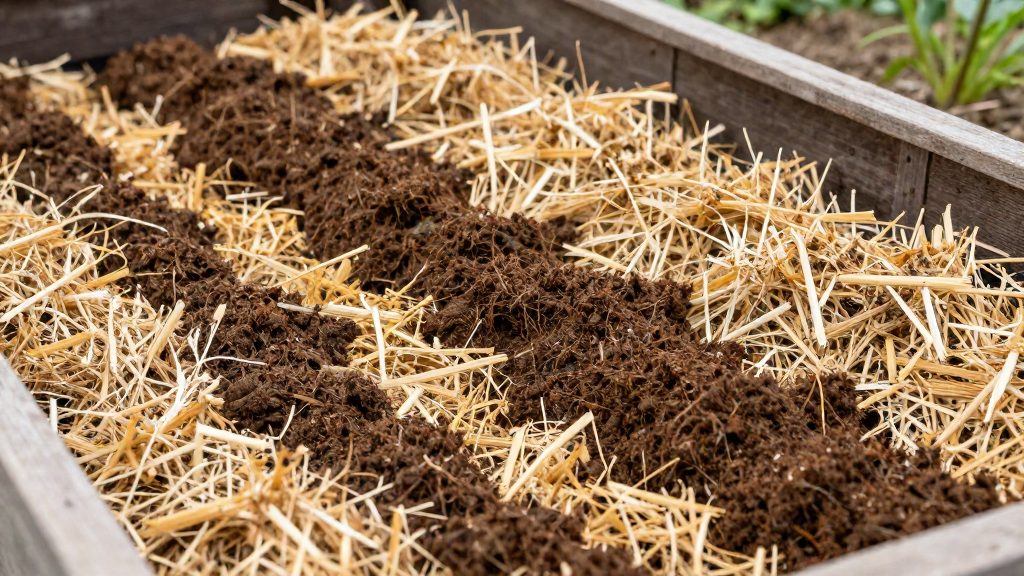
No-dig is used mostly by organic vegetable growers. According to BBC Gardeners’ World (2026), compost or well-rotted manure is spread on the soil surface, and soil organisms work it into the soil over time. The soil is never turned, so its structure and living community stay largely in place. Fertility comes from organic matter added to the surface, which matches the principles of organic growing. Fertility comes from organic matter added to the surface and weeds are suppressed by mulch, which fits organic growing in principle.
How to set up a no-dig bed
- New bed on weed-free ground: put about 5 cm of well-rotted compost directly on the soil (BBC Gardeners’ World, 2026).
- Annual top-up: add 3 to 5 cm of compost to vegetable beds each year, ideally in late autumn (BBC Gardeners’ World, 2026).
- Heavily weeded plot: lay cardboard under the compost mulch. Perennial weeds such as brambles and docks may need to be dug out first (BBC Gardeners’ World, 2026).
- Converting an existing bed (newspaper method): cut back the vegetation, water the soil, then cover it with 5 to 10 layers of newspaper, or about 20 layers for hardier weeds. Add compost, leaves or mulch on top. The newspaper breaks down within a season (Garden Culture Magazine).
Reported benefits and limits
| Aspect | What the sources report |
|---|---|
| Harvest | Bigger vegetable harvests in trials (BBC Gardeners’ World, 2026) |
| Maintenance | Less weeding and watering (BBC Gardeners’ World, 2026) |
| Soil | Better drainage and preserved mycorrhizal fungi (BBC Gardeners’ World, 2026) |
| Timing | Earlier planting, because undug soil warms sooner (BBC Gardeners’ World, 2026) |
| Potatoes | Often higher yields in dug soil (BBC Gardeners’ World, 2026) |
| Labour | Sourcing or making enough compost is the most labour-intensive part of the method (BBC Gardeners’ World, 2026) |
How to start a no-dig bed?
No-dig gardening builds the bed from the surface down. Instead of turning the soil, you lay organic material on top and leave soil organisms to work it in over time. According to BBC Gardeners’ World (2026), the method is used mostly by organic vegetable growers. For a new bed without heavy weed cover, the starting point is about 5 cm of well-rotted compost spread directly on the soil.
Choosing a starting method
The right method depends on the weeds already on the plot:
| Starting situation | Method | Key figures or conditions |
|---|---|---|
| Few heavy weeds | Compost laid directly on the soil | About 5 cm of well-rotted compost |
| Many established weeds | Cardboard under compost mulch | Perennial weeds such as brambles and docks may need digging out first |
| Existing bed to convert | Newspaper layer under organic material | 5-10 layers of newspaper, about 20 for hardier weeds |
Starting a bed on lightly weedy ground
Mark out the bed and spread about 5 cm of compost across the soil surface without digging. Keep the layer even. Each year after that, top up vegetable beds with 3-5 cm of compost, ideally in late autumn, according to BBC Gardeners’ World (2026).
Starting a bed on heavily weedy ground
Where many weeds are established, lay cardboard on the soil and cover it with compost mulch. BBC Gardeners’ World (2026) notes that perennial weeds such as brambles and docks may need to be dug out before you begin.
Converting an existing bed with the newspaper method
- Cut back the existing vegetation.
- Water the soil so it is moist before covering it.
- Cover the soil with 5-10 layers of newspaper, or about 20 layers for hardier weeds.
- Add compost, leaves or mulch on top.
According to Garden Culture Magazine, the newspaper breaks down within a season.
Points to check
Reported benefits of the method include better drainage, less weeding and watering, and earlier planting, because undug soil warms sooner. BBC Gardeners’ World (2026) also reports that potatoes often yield more in dug soil. Sourcing or making enough compost is the most labour-intensive part of the method, according to the same source.
Cardboard, newspaper or mulch: which to choose?
The right starting material depends mainly on how many weeds already occupy the plot. For a bed with no heavy weeds, BBC Gardeners’ World (2026) advises putting about 5 cm of well-rotted compost directly on the soil. Where many established weeds are present, the same guide suggests laying cardboard under the compost mulch. To convert an existing bed, Garden Culture Magazine describes the newspaper method. The table compares the three materials discussed in the consulted sources.
| Material | Where it fits | Points to watch |
|---|---|---|
| Cardboard under compost mulch | Plots with many established weeds | Perennial weeds such as brambles and docks may need digging out first (BBC Gardeners’ World, 2026) |
| Newspaper, 5-10 layers (about 20 for hardier weeds) | Converting an existing bed | Cut back vegetation and water the soil first; add compost, leaves or mulch on top; the newspaper breaks down within a season (Garden Culture Magazine) |
| Straw or other un-decomposed mulch | The consulted sources do not specify a use case | Can attract slugs and snails (BBC Gardeners’ World, 2026) |
Converting an existing bed with newspaper
- Cut back the existing vegetation.
- Water the soil thoroughly.
- Cover the soil with 5-10 layers of newspaper, or about 20 layers if the weeds are hardier.
- Add compost, leaves or mulch on top.
Maintaining the bed
Once the bed is established, BBC Gardeners’ World (2026) recommends topping up vegetable beds with 3-5 cm of compost each year, ideally in late autumn. The same source reports less weeding and watering, better drainage, earlier planting because undug soil warms sooner, and preserved mycorrhizal fungi. It also notes that potatoes often yield more in dug soil, so no-dig is not a universal fit for every crop.
The most labour-intensive part of the method is sourcing or making enough compost, according to BBC Gardeners’ World (2026). It is sensible to secure that supply before converting a large plot.
Which compost to use and how thick to spread it
No-dig beds are built by spreading well-rotted compost or well-rotted manure over the soil surface and letting soil organisms work it in over time. According to BBC Gardeners’ World (2026), a bed with no heavy weed problem starts with about 5 cm of well-rotted compost placed directly on the soil, then gets topped up with 3-5 cm each year, ideally in late autumn.
| Situation | Layer to apply | Source |
|---|---|---|
| New bed with no heavy weeds | About 5 cm of well-rotted compost, placed directly on the soil | BBC Gardeners’ World (2026) |
| Annual maintenance | Top up with 3-5 cm, ideally in late autumn | BBC Gardeners’ World (2026) |
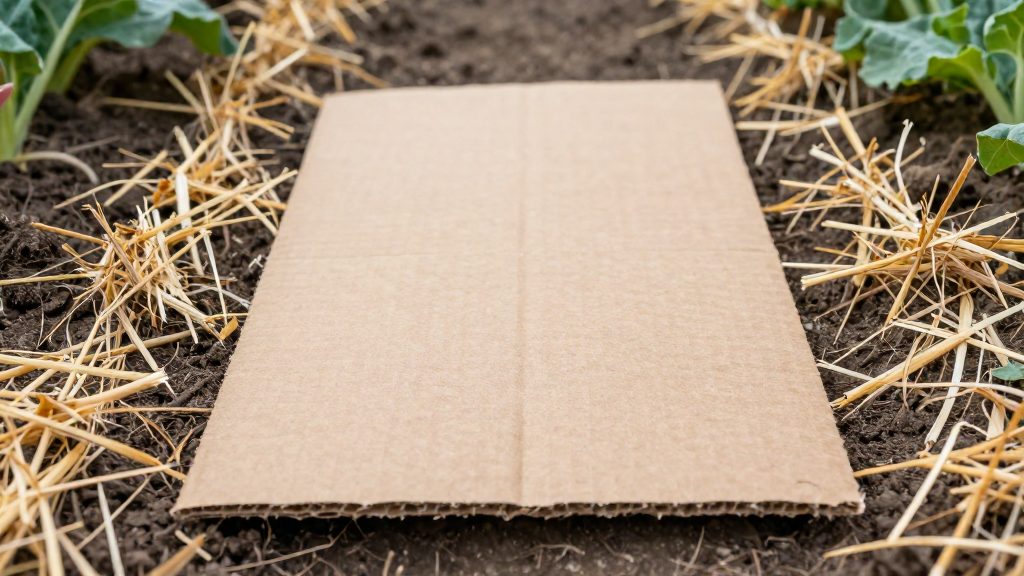
| Plot with many established weeds | Lay cardboard, then the compost mulch on top | BBC Gardeners’ World (2026) |
| Converting an existing bed | 5-10 layers of newspaper (about 20 for hardier weeds), then compost, leaves or mulch | Garden Culture Magazine |
Well-rotted material matters. Un-decomposed mulches such as straw can attract slugs and snails, so the compost should be fully broken down before it goes on the bed.
Preparing a weedy plot
On plots with many established weeds, cardboard placed under the compost mulch helps block weed growth. BBC Gardeners’ World (2026) notes that perennial weeds such as brambles and docks may need to be dug out before the cardboard goes down.
To convert an existing bed, Garden Culture Magazine describes this method:
- Cut back the existing vegetation.
- Water the soil.
- Cover it with 5-10 layers of newspaper, or about 20 layers for hardier weeds.
- Add compost, leaves or another mulch on top.
The newspaper breaks down within a season, according to Garden Culture Magazine.
Sourcing enough compost
Making your own compost is one way to cover the yearly 3-5 cm layer. The official sources consulted do not specify exact volumes per square metre, so measure your beds and adjust the layer thickness to the material you have.
No-dig basics to check for your local conditions
The official sources consulted do not specify how no-dig performs under Canadian winters, frost depths or growing seasons, so this section covers the method and the points to check locally. In no-dig gardening, compost or well-rotted manure is spread on the soil surface, and soil organisms work it into the soil over time, according to BBC Gardeners’ World (2026). Reported benefits include less weeding and watering, better drainage, and earlier planting, because undug soil warms sooner. Whether these gains apply to a given garden depends on local soil, rainfall and season length, so test the method on one bed before converting a whole plot.
Preparing a bed
The starting method depends on how weedy the ground is:
| Situation | Method | Source |
|---|---|---|
| New bed with no heavy weeds | Place about 5 cm of well-rotted compost directly on the soil | BBC Gardeners’ World (2026) |
| Plot with many established weeds | Lay cardboard under the compost mulch; dig out perennial weeds such as brambles and docks first | BBC Gardeners’ World (2026) |
| Converting an existing bed | Cut back the vegetation, water the soil, then cover with 5-10 layers of newspaper (about 20 for hardier weeds); add compost, leaves or mulch on top | Garden Culture Magazine |
The newspaper method breaks down within a season, according to Garden Culture Magazine, so it works as a temporary smothering layer rather than a permanent barrier.
Ongoing maintenance
- Top up vegetable beds with 3-5 cm of compost each year, ideally in late autumn (BBC Gardeners’ World, 2026).
- Plan for compost supply. Sourcing or making enough compost is the most labour-intensive part of no-dig (BBC Gardeners’ World, 2026).
- Potatoes often yield more in dug soil, so consider growing them in dug soil if yield matters most (BBC Gardeners’ World, 2026).
- Observe how the bed drains and warms in your own garden before extending the method, since drainage and earlier planting are reported gains.
Statistics context
Garden Culture Magazine, citing Statistics Canada, reports that the area planted using no-till rose from 7% to 46% between 1991 and 2006. These figures concern cropland, not home gardens, and they measure no-till rather than no-dig. They show a trend in farming, not the results of no-dig vegetable beds in a backyard.
Mistakes to avoid: slugs, perennial weeds and potatoes
Most no-dig problems come from three errors: using the wrong mulch, covering perennial weeds without removing them, and treating every crop the same way. According to BBC Gardeners’ World (2026), undecomposed mulches such as straw can attract slugs and snails, so the compost you spread should be well rotted. Sourcing or making enough of it is also the most labour-intensive part of no-dig, so plan your compost supply before you start a bed.
Perennial weeds need attention before any layering. BBC Gardeners’ World (2026) notes that on plots with many established weeds, you should lay cardboard under the compost mulch. Perennials such as brambles and docks may need to be dug out first. Garden Culture Magazine describes an alternative for converting an existing bed: cut back the vegetation, water the soil, then cover it with 5-10 layers of newspaper (about 20 for hardier weeds), and add compost, leaves or mulch on top. The newspaper breaks down within a season.
Another common error is applying no-dig to every crop. BBC Gardeners’ World (2026) reports that potatoes often yield more in dug soil, so grow them in a dug area and keep the no-dig method for the other beds.
Finally, the compost layer needs maintenance. A new bed starts with about 5 cm of well-rotted compost, and vegetable beds are topped up with 3-5 cm each year, ideally in late autumn (BBC Gardeners’ World, 2026). The sources recommend an annual top-up of 3-5 cm of compost, ideally in late autumn.
| Mistake | What the sources report | Organic fix |
|---|---|---|
| Mulching with straw or other undecomposed material | Can attract slugs and snails | Use well-rotted compost |
| Layering compost directly over perennial weeds | Brambles and docks may need digging out first | Dig out perennials, then add cardboard under the compost on heavily weedy plots |
| Using no-dig for potatoes | Potatoes often yield more in dug soil | Dig the potato area |
| Not topping up the compost each year | Beds are topped up with 3-5 cm yearly | Add 3-5 cm of compost in late autumn |
Frequently asked questions
Do I have to dig my vegetable beds to grow organic vegetables?
No. A no-dig bed is built by layering rather than turning the soil: according to BBC Gardeners’ World (2026), about 5 cm of well-rotted compost is spread directly on bare soil when the plot has few weeds, and soil organisms gradually work it down. Each year, vegetable beds are topped up with 3-5 cm of compost, ideally in late autumn.
What if my plot is already full of weeds?
Start by digging out perennial weeds such as brambles and docks, which may need removing before anything else. Then lay cardboard, add a compost mulch on top, as BBC Gardeners’ World (2026) describes. For an existing bed you want to convert, Garden Culture Magazine suggests covering the cut-back vegetation with 5-10 layers of newspaper (about 20 for hardier weeds), then adding compost, leaves or mulch, since the newspaper breaks down within a season.
Are there drawbacks I should know about, such as with potatoes or slugs?
Yes, two points are noted by the sources. BBC Gardeners’ World (2026) reports that potatoes often yield more in dug soil, so they may be better grown in a separate plot if yield matters most. Also, un-decomposed mulch such as straw can attract slugs and snails, so well-rotted material is the safer choice for the surface layer.