Why do cover crops feed the soil?
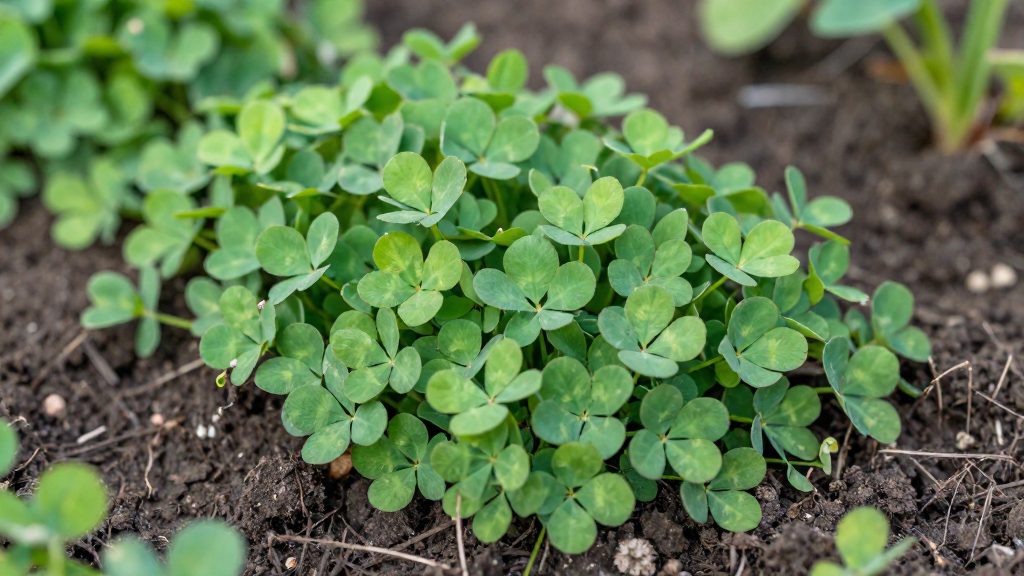
Cover crops feed the soil by keeping living roots in the ground for more of the year, supporting soil biodiversity and microorganisms, and raising organic matter. OMAFRA (2021) recommends planting cover crops to increase soil biodiversity and to encourage living roots year-round. Legumes such as clover or alfalfa also add nitrogen, and cover crops can scavenge excess nutrients from the soil, according to the Prairie Conservation and Cover Crop Alliance.
Keeping living roots in the ground year-round is one of the goals OMAFRA (2021) sets for cover crops, alongside increasing soil biodiversity.
Organic matter is the second mechanism. The Prairie Conservation and Cover Crop Alliance reports that in Western Canada, cover crops can raise organic matter and support soil microorganisms. The same source names erosion control as a benefit, with cover crops protecting against both water and wind erosion, which keeps the topsoil in place.
| Soil function | What the sources report | Source |
|---|---|---|
| Biodiversity | Increases soil biodiversity | OMAFRA (2021) |
| Organic matter | Can be raised in Western Canada | Prairie Conservation and Cover Crop Alliance |
| Soil microorganisms | Supported by cover crops | Prairie Conservation and Cover Crop Alliance |
| Nutrient scavenging | Excess nutrients can be taken up | Prairie Conservation and Cover Crop Alliance |
| Nitrogen | Added by legumes such as clover or alfalfa | Prairie Conservation and Cover Crop Alliance |
| Erosion | Water and wind erosion control | OMAFRA (2021); Prairie Conservation and Cover Crop Alliance |
When to sow
According to OMAFRA (2021), cover crops can be seeded after harvest, before spring crops, or between rows during the growing season. The official sources consulted do not specify exact seeding dates, which depend on your region and climate. The Prairie Conservation and Cover Crop Alliance notes that fall cover crops are limited by the short growing season, so check the frost dates in your area before sowing late in the year.
Benefits of Cover Crops
Cover crops are plants grown to protect and improve the soil rather than to be harvested. According to OMAFRA (Ontario Ministry of Agriculture, Food and Rural Affairs, archived copy, 2021), Ontario’s soil health strategy recommends planting them to increase soil biodiversity and to keep living roots in the ground year-round. In a vegetable garden, the practical goal is the same: avoid leaving bare soil exposed for long periods.
Main benefits
| Benefit | What the sources say | Source |
|---|---|---|
| Water erosion control | Listed among non-structural practices, alongside crop rotation, no-till and residue management | OMAFRA (2021) |
| Wind erosion control | Named as an effective measure against wind erosion | OMAFRA (2021) |
| Soil life and organic matter | Can raise organic matter and support soil microorganisms | Prairie Conservation and Cover Crop Alliance (date not specified) |
| Nutrient capture | Can scavenge excess nutrients | Prairie Conservation and Cover Crop Alliance (date not specified) |
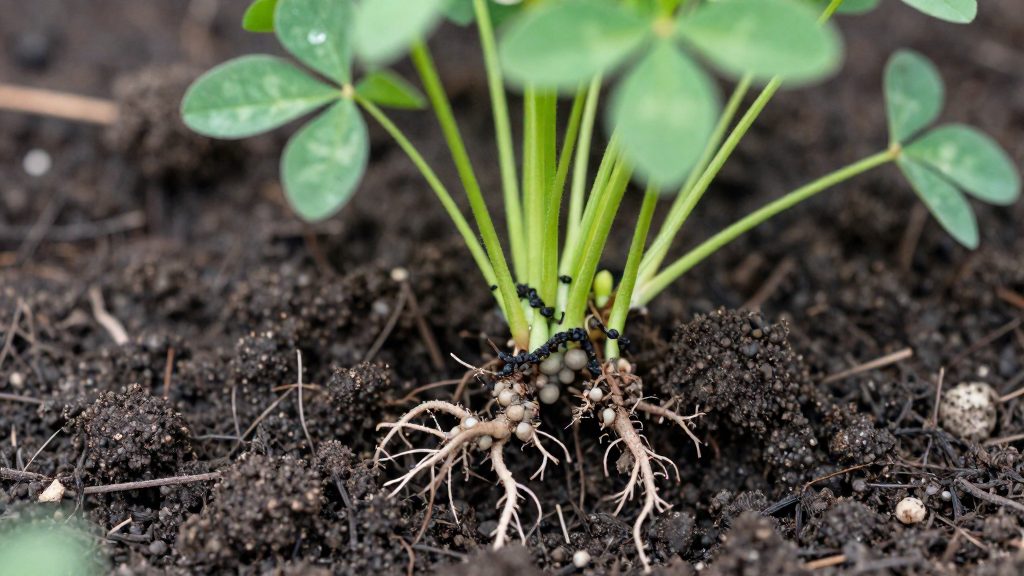
| Nitrogen supply | Legumes such as clover or alfalfa add nitrogen | Prairie Conservation and Cover Crop Alliance (date not specified) |
| Weed and moisture management | Can suppress weeds and conserve moisture | Prairie Conservation and Cover Crop Alliance (date not specified) |
When to sow
According to OMAFRA (2021), cover crops can be seeded at three points in the cycle:
- After harvest, once a crop is removed from a bed.
- Before spring crops, to cover the soil during the cold season.
- Between rows during the growing season.
Timing depends on your region. The official sources consulted do not give calendar dates, so check local frost and sowing information before choosing a window.
Choosing a cover crop
- Legumes such as clover or alfalfa are the cover crops named in the sources for adding nitrogen. Plan them in beds where you intend to grow heavy-feeding crops later.
- For a bed you harvest early, a fast-establishing cover sown right after harvest keeps the soil covered.
Limits to keep in mind
The Prairie Conservation and Cover Crop Alliance notes that fall-sown cover crops are limited by a short growing season. In colder regions, a fall sowing may establish poorly; check local conditions before choosing a sowing window.
How to choose a cover crop by goal and season length
The right cover crop depends on your climate, the length of your growing season, and the job you want it to do. OMAFRA (2021) describes cover crops in Ontario as a way to increase soil biodiversity and keep living roots in the ground year-round, a goal that applies in any region. The Prairie Conservation and Cover Crop Alliance adds a regional constraint: in Western Canada, fall cover crops are limited by a short growing season, so timing matters as much as the species you pick.
Before choosing seed, check three points:
- Time available: how many weeks remain between harvest and the next crop.
- Main goal: erosion control, nitrogen input, weed suppression, or moisture retention.
- Sowing window: after harvest, before spring crops, or between rows during the growing season, as OMAFRA (2021) describes.
The table below lists the benefits documented in the consulted sources, which can guide your choice:
| Goal | What the sources document |
|---|---|
| Nitrogen supply | Legumes such as clover or alfalfa add nitrogen (Prairie Conservation and Cover Crop Alliance) |
| Soil life and organic matter | Cover crops can raise organic matter and support soil microorganisms (Prairie Conservation and Cover Crop Alliance) |
| Nutrient capture | Cover crops can scavenge excess nutrients (Prairie Conservation and Cover Crop Alliance) |
| Erosion and wind | Listed as non-structural control for water erosion and as an effective wind erosion measure (OMAFRA, 2021) |
| Weeds and moisture | Cover crops can suppress weeds and conserve moisture (Prairie Conservation and Cover Crop Alliance) |
The official sources consulted do not provide a species list for each climate zone, so check with your provincial agriculture ministry or a local agronomist for varieties suited to your area. If your goal is nitrogen, clover and alfalfa are the legumes named in these sources.
For a small vegetable bed, sow after harvest or between rows, depending on your sowing window, and keep the soil moist without waterlogging it. Cover crops are a non-chemical practice that can fit an organic approach, provided the seed and other inputs you use also meet organic requirements.
When to sow after harvest?
Cover crops can be sown at three points in the growing cycle: after harvest, before spring crops, or between rows while the main crop is still growing. OMAFRA (2021) lists these options in Ontario’s soil health strategy, which aims to keep living roots in the soil year-round. The table below summarises the three timings.
| Timing | Purpose named in the guidance |
|---|---|
| After harvest | Keeps living roots in the soil once the main crop is removed |
| Before spring crops | Establishes ground cover ahead of the next sowing |
| Between rows, during the growing season | Covers the soil while the main crop is still growing |
Sowing after harvest is the most direct way to avoid bare soil. Once a bed is cleared, loosen the surface lightly, sow the seed evenly, and water gently without waterlogging the bed. A sunny spot gives the seedlings the best start.
Fall sowing depends on the season length. The Prairie Conservation and Cover Crop Alliance notes that fall-sown cover crops are limited by the short growing season, so the window for good growth closes earlier in cold regions. Check your local last-frost and first-frost dates and sow early enough for seedlings to establish before growth slows. The official sources consulted do not give a single calendar date for this, so the window must be judged regionally.
Species choice affects what the cover crop does. The same alliance reports that legumes such as clover or alfalfa add nitrogen to the soil, while other cover crops can take up excess nutrients. Cover crops can also suppress weeds, conserve moisture, and protect against wind and water erosion (Prairie Conservation and Cover Crop Alliance, undated). These benefits make the cover crop a useful non-chemical alternative to bare fallow, which is a practical advantage for organic growers.
How to Terminate and Incorporate a Cover Crop
Ending a cover crop means stopping its growth and then either leaving the plant material on the surface as mulch or working it into the soil. The official sources consulted do not specify a single termination date or method for home gardens. The right choice depends on whether the bed will be tilled or left undisturbed, and on what crop comes next in the rotation.
Two main approaches
- Surface residue (no-till): Cut the cover crop and leave the residue on the bed. OMAFRA (2021) lists residue management and no-till among the non-structural practices for controlling water erosion, so residue left on the surface contributes to soil protection.
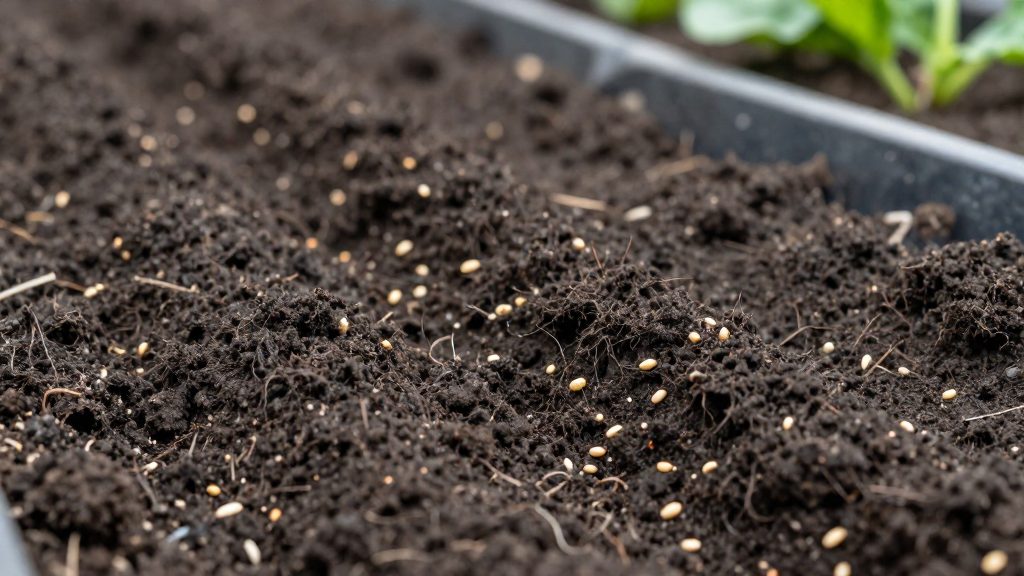
- Incorporation: Cut the plants and mix the residue into the top layer of soil. This suits beds that will be replanted soon and where the residue needs to break down in contact with the soil.
Step-by-step method
- Cut the plants with a scythe, a sharp hoe, or a string trimmer. Perennial legumes such as alfalfa or clover can regrow after cutting, so check that regrowth has stopped; the sources consulted do not specify a termination method.
- Let the cut material wilt on the bed for a short time. Wilted plant matter is easier to work in than fresh, upright growth.
- Incorporate the residue by turning the top layer of soil with a fork or a light tiller, or by digging it in by hand on small beds.
- Leave time before planting. The official sources consulted do not specify a waiting period, so check the soil condition and the needs of the next crop before sowing or transplanting.
Legumes and nitrogen
Legume cover crops such as clover or alfalfa add nitrogen, according to the Prairie Conservation and Cover Crop Alliance. When these plants are incorporated, the nitrogen they have gathered becomes available to the soil, which can benefit the following crop. Legume residues are therefore worth keeping in the bed when planning crops that need more nitrogen.
Timing and fall-sown cover crops
Cover crops can be seeded after harvest, before spring crops, or between rows during the growing season, according to OMAFRA (2021). Crops sown in fall face a short growing season, which the Prairie Conservation and Cover Crop Alliance identifies as a limit on their development. Expect smaller amounts of plant material from late sowings, and plan the termination around the timing of the next planting.
Organic alternatives to chemical termination
Cutting, hand tools, and leaving residue on the surface are mechanical methods that avoid synthetic herbicides. These methods fit an organic approach, and they also keep the soil structure intact when the residue stays in place.
Legumes and Nitrogen Fixation
Legumes are the cover crops most often cited for adding nitrogen to the soil. According to the Prairie Conservation and Cover Crop Alliance, species such as clover or alfalfa add nitrogen, which makes them a useful choice when the goal is to feed the soil as well as protect it. The same source notes that cover crops in general can raise organic matter, support soil microorganisms, scavenge excess nutrients, suppress weeds, conserve moisture, and protect against wind and water erosion. Legumes therefore fit into a broader soil-building plan rather than replacing other practices.
Ontario’s soil health strategy, published by OMAFRA (Ontario Ministry of Agriculture, Food and Rural Affairs) in 2021, lists cover crops among the practices that increase soil biodiversity and encourages living roots year-round. For a vegetable plot, this means avoiding long periods of bare soil.
Practical steps for an organic garden:
- Choose the timing. OMAFRA states that cover crops can be seeded after harvest, before spring crops, or between rows during the growing season. Sow legumes in the gap left by a harvested bed, or between rows of a crop that leaves room for them.
- Check the season length. The Prairie alliance notes that fall cover crops are limited by the short growing season. Count the weeks left before the first hard frost in your area before sowing late in the year, and sow earlier if the window is short.
- Prepare the site. Pick a sunny location and water the bed evenly, without letting the soil become waterlogged.
- Keep the cover in place. Cut or incorporate the legume growth according to the crop planned next. The official sources consulted do not specify exact cutting heights or incorporation timings, so adapt these steps to local conditions and your own observations.
Clover and alfalfa are the two legumes named in the Prairie source. Select a species that matches the climate and the length of your growing season, and use the nitrogen they add as part of a rotation with the vegetables that follow.
Adapting the Method to the Canadian Climate
Canadian growing seasons differ widely from one region to another, so cover crop timing has to follow your local season rather than a fixed calendar. OMAFRA (2021) recommends planting cover crops to increase soil biodiversity and to keep living roots in the ground year-round. In a home garden, the same principle applies: whenever a bed would otherwise sit bare, a cover crop can keep roots active and soil life fed.
The seeding window is the first decision. According to OMAFRA (2021), cover crops can be seeded after harvest, before spring crops, or between rows during the growing season.
| Seeding window | When it applies | Limit noted in the sources |
|---|---|---|
| After harvest | Once a bed is cleared at the end of the season | Fall cover crops are limited by the short growing season (Prairie Conservation and Cover Crop Alliance) |
| Before spring crops | On a bed that will be planted in spring | None specified |
| Between rows | During the growing season, alongside a standing crop | None specified |
Because fall seeding depends on the time left before frost, count back from your local first frost date and choose fast-establishing species for late-season sowings. Check your regional frost dates with a local extension service before deciding.
Species choice also matters. The Prairie Conservation and Cover Crop Alliance notes that legumes such as clover or alfalfa add nitrogen to the soil, while other cover crops can take up excess nutrients left from previous plantings. Mixing a legume with a non-legume is a common way to combine these roles.
Cover crops also help the garden withstand weather. The Prairie Conservation and Cover Crop Alliance reports that they can conserve moisture, suppress weeds, and protect against wind and water erosion. OMAFRA (2021) lists them among practices for controlling both water and wind erosion. Keep the bed moist enough for germination, but avoid waterlogging, which slows establishment.
Frequently asked questions
When can I sow a cover crop in my vegetable garden?
OMAFRA (2021) identifies three seeding windows: directly after harvest, before spring crops go in, or between rows of a crop already growing. If a bed sits empty after harvest, it can receive a cover crop at once, so seeding timing matters more than the size of the plot.
Which cover crop should I choose if I want to add nitrogen?
Legumes such as clover or alfalfa are the cover crops that the Prairie Conservation and Cover Crop Alliance names for adding nitrogen. The sources consulted do not specify application rates or which legume suits a given region, so check what grows well locally.
Do cover crops work in a cold climate with a short growing season?
The Prairie Conservation and Cover Crop Alliance notes that fall-sown cover crops are limited by the short growing season. Sowing earlier in the season, when the plants have time to establish before frost, is the safer option, and local frost dates are the best guide for timing.