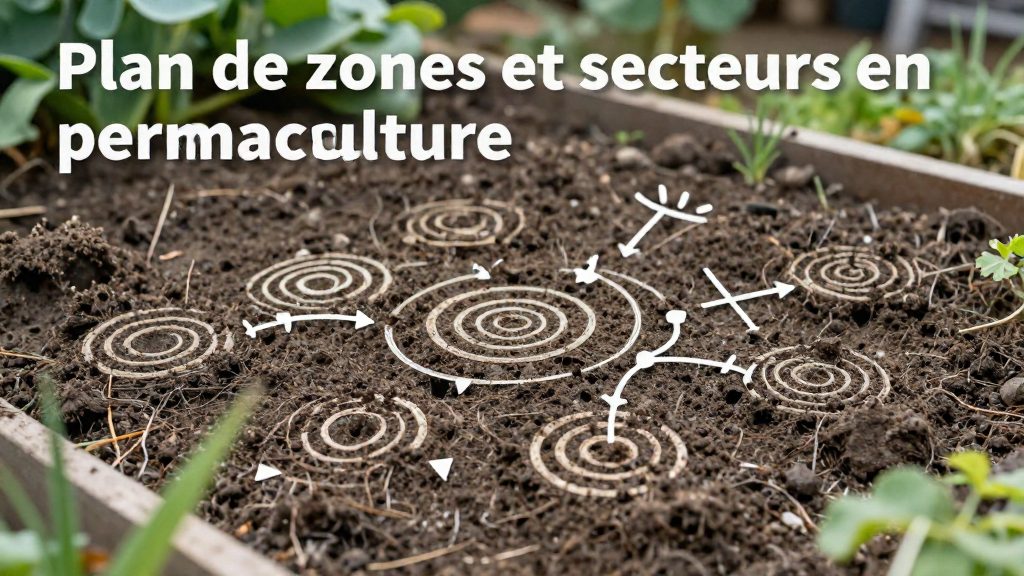
Permaculture zones and sectors are a mapping method for organising a plot. Zones rank areas by how often they are visited and how much care they need, while sectors are external forces that cross the land, such as sun, wind, water, wildlife and noise. Together they help decide where to place beds, perennials, water collection and shelter. The method was designed for farms and rural estates, but it can be adapted to small urban lots.
Zones and sectors: what are we talking about?
Zones are areas arranged around the home according to visit frequency and maintenance effort. Zone 0 is the house or indoor growing space, and Zone 1 holds the vegetables and herbs that receive care every day. Plants that demand a lot of attention go close to the house, while low-maintenance or self-sufficient systems sit further out, according to Harvest to Table (2025).
| Area | Typical content |
|---|---|
| Zone 0 | House or indoor cultivation |
| Zone 1 | Vegetables and herbs that receive daily care |
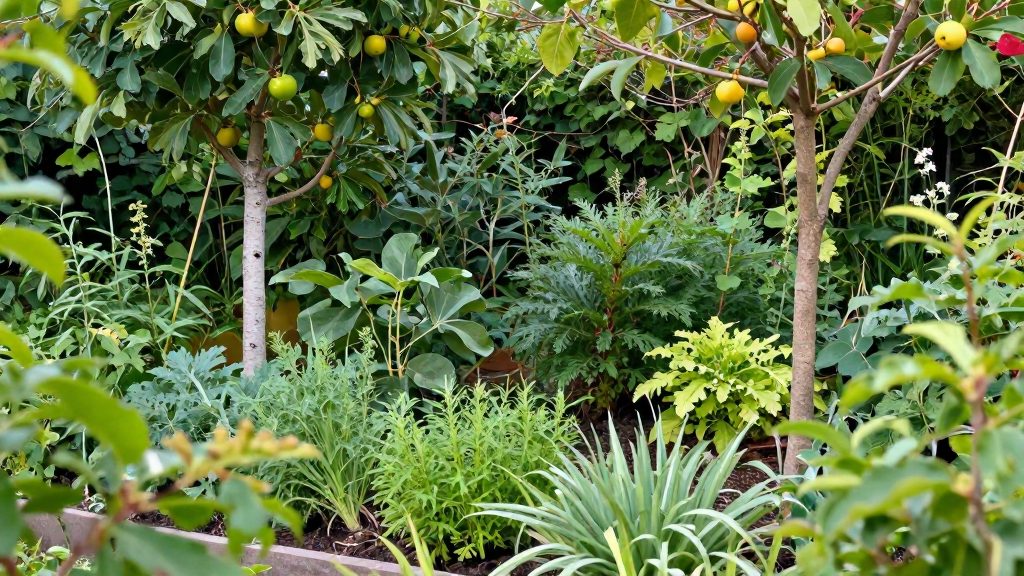
| Forest garden | Fruit and nut trees along the plot edge, small fruits, grapes and perennial herbs (Garden Therapy, 2025) |
| Farm zone | Backyard poultry and a small greenhouse for year-round production (Garden Therapy, 2025) |
Sectors: forces acting from outside
Sectors are forces that come from outside the plot: the path of the sun, prevailing winds, water flow, wildlife passage, and noise and traffic. Harvest to Table (2025) recommends observing the property during the day and across the seasons before drawing the map. Hedges, trellises and swales are used to manage wind, water and wildlife.
Adapting the method to a small urban lot
On a small city lot, the garden zone can extend into the front yard and the narrow passages between houses. Garden Therapy (2025) suggests vertical beds, containers on terraces and balconies, a rain barrel, and drip irrigation. Resilience.org (2006) notes that zones can be redefined by energy use, such as walking and cycling rather than driving, and sectors by type of resource: personal, community or local. Community gardens or land belonging to others can meet food needs without personal ownership of the plot.
How to observe your land before planning?
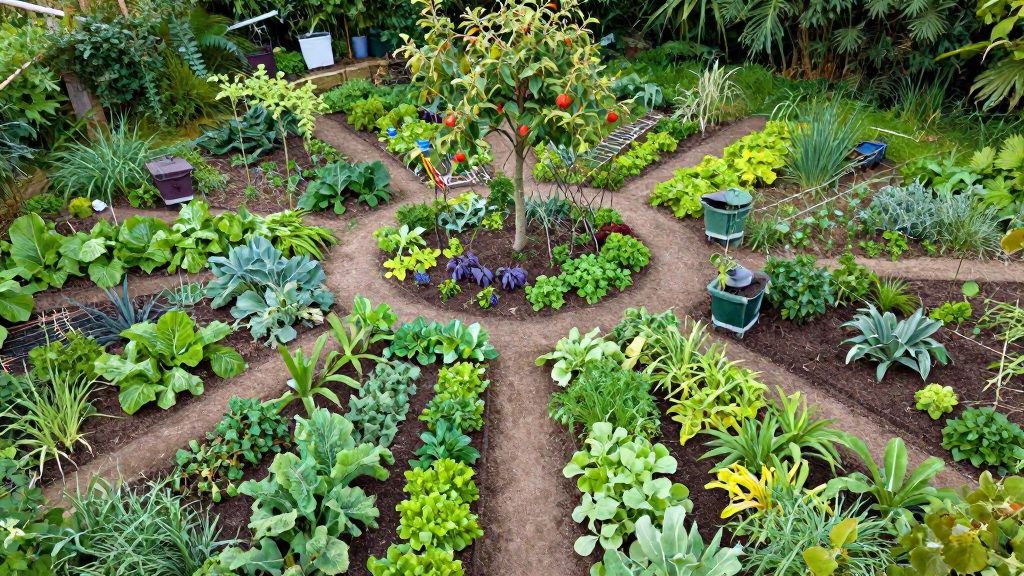
Observation comes before any layout. The permaculture zone and sector method starts from the forces that act on the land from outside: the path of the sun, prevailing winds, water flow, wildlife passages, and noise and traffic. According to Harvest to Table (2025), these must be watched over the course of a day and across the seasons before you draw a map. A single visit shows only one moment, so conditions can change from one season to the next.
Start by walking the lot at several times of day and noting what you see:
- Sun exposure: Track which areas are lit in the morning, at midday and in the evening, and how the shadows of buildings, fences and trees move.
- Wind: Identify where the prevailing winds reach the plot and which spots are sheltered.
- Water: Watch where rain runs off, pools or soaks in after a storm, and where the soil stays wet.
- Wildlife: Look for animal tracks and regular passages, which show where creatures cross the land.
- Noise and traffic: Note sources of noise and busy routes, since they affect where you want quiet areas or access points.
Record these observations on a simple sketch of the lot. Once the forces are mapped, you can decide how to manage them. Hedges, trellises and swales (water-catching depressions) are the tools the method uses to handle wind, water and wildlife.
Then assign zones by frequency of visit. Zone 0 is the house or indoor growing space, and Zone 1 holds the vegetables and herbs you tend every day. Plants that need frequent attention go close to the house, while low-maintenance or self-sufficient systems go further out.
| Force to observe | What to record | When to observe |
|---|---|---|
| Sun path | Sunlit and shaded areas at different hours | Across the day and through the seasons |
| Prevailing winds | Exposed and sheltered spots | Over several weeks, including windy days |
| Water flow | Runoff paths, pooling and wet soil | During and after rain |
| Wildlife passages | Tracks and regular crossing routes | Repeated visits at varied times |
| Noise and traffic | Noise sources and busy access routes | At peak and quiet hours |
On a small urban lot, the observation method stays the same, but the scale changes. According to Garden Therapy (Vancouver, Canada) (2025), the garden zone can occupy a front courtyard and narrow passages between houses, with vertical beds, containers on terraces and balconies, a rain barrel and drip irrigation. Resilience.org (2006-01-12) notes that zones can also be redefined in cities by energy use, such as walking and cycling instead of driving, and sectors by the type of resource, whether personal, communal or local. Community gardens or other people’s land can meet needs without personal ownership.
Zone 0 and Zone 1: the core of the small garden
In the permaculture zone system, each zone is defined by how often you visit it and how much attention its plants need. According to Harvest to Table (2025), zone 0 is the house or indoor growing space, and zone 1 holds the vegetables and herbs that receive care every day. The most demanding plants go closest to the house, and systems that need little maintenance go farther out.
On a small lot, zones 0 and 1 usually form the working heart of the garden. The method is simple: list the crops you harvest or tend most often, then assign them to zone 1.
- Salad leaves and culinary herbs are harvested almost daily, so they suit the area nearest the door.
- Fast-cropping vegetables that need regular watering and picking also belong in zone 1.
- Perennial or low-attention plants can move to the outer zones, where visits are less frequent.
Garden Therapy in Vancouver, Canada (2025) describes how this works in a city. On a small urban lot, the growing area can take over the front yard and the narrow passages between houses. Vertical beds, containers on terraces and balconies, a rain barrel, and drip irrigation can all fit into that space.
Before you set the boundaries of zone 1, observe the site. Note where the sun falls over the day, where water collects after rain, and which paths you walk most. Harvest to Table (2025) recommends watching the property through the day and across seasons before drawing the map. Then choose the sunniest spot available for the daily crops, and water them so the soil stays moist without becoming waterlogged.
Which sectors to analyse on a small urban lot?
On a small urban lot, the analysis has two steps. First, sort the space into zones by how often you visit and tend each area. Then map the sectors, which are the external forces that cross the land. Zone 0 is the house or indoor growing space, and zone 1 holds the vegetables and herbs that need daily care. Plants that demand the most maintenance go close to the home, while low-maintenance or self-sufficient systems go further out.
Zones on a city lot
According to Garden Therapy (Vancouver, Canada, 2025), the zones of a small urban garden can take the following forms:
| Zone | Content on a small urban lot |
|---|---|
| Zone 0 | House or indoor growing |
| Zone 1 | Vegetables and herbs cared for every day |
| Forest garden zone | Fruit and nut trees along the boundary, small fruits, grapes and perennial herbs |
| Farm zone | Backyard hens and a small greenhouse for year-round production |
The garden zone itself can occupy the front yard and the narrow passages between houses. Vertical beds, containers on terraces and balconies, a rain barrel and drip irrigation are the usual additions in this setting (Garden Therapy, Vancouver, Canada, 2025).
Sectors to observe
Sectors are the forces coming from outside the plot. Harvest to Table (2025) lists the following:
- Path of the sun
- Prevailing winds
- Water flow across the ground
- Wildlife movements
- Noise and traffic
Observe the lot during the day and across the seasons before drawing the map. Hedges, trellises and swales are the tools used to manage wind, water and wildlife (Harvest to Table, 2025).
Adapting the method to the city
Resilience.org (2006-01-12) notes that the zones and sectors method was designed for farms and rural estates. In town, the zones can be redefined by energy expenditure, meaning how far you must travel: walking and cycling count as lower energy use than driving. The sectors can be redefined by the type of resource, whether personal, community or local. Community gardens or land belonging to others can meet your needs without personal ownership.
Hedges, Trellises and Rain Barrels: Managing Wind and Water
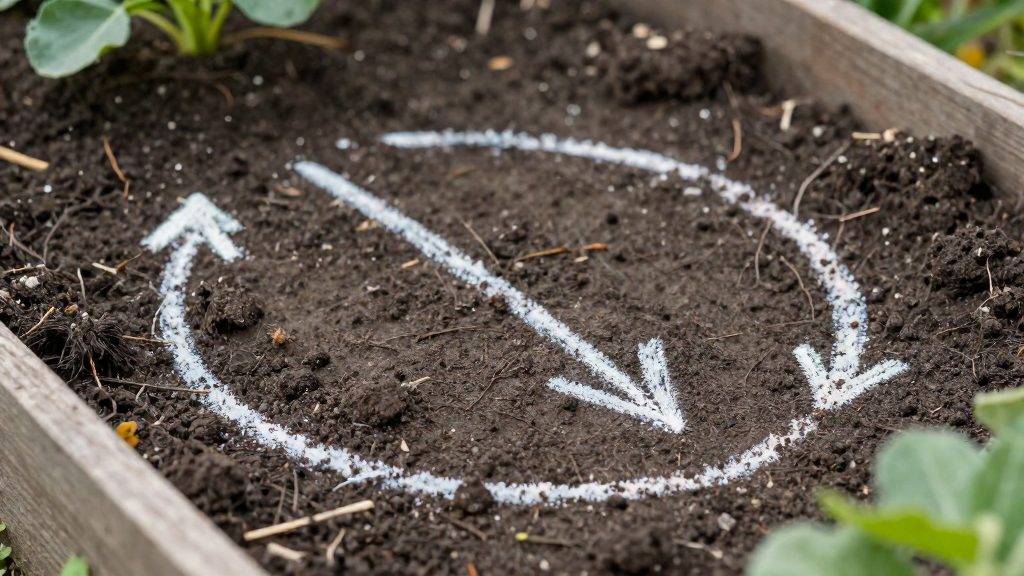
In the zone and sector method, hedges and trellises are the structural tools for managing wind, water and wildlife, according to Harvest to Table (2025). They come after observation, because the forces they respond to (sun path, prevailing winds, water flow, animal movement, noise and traffic) need to be identified first. On a small lot, the same logic applies at a smaller scale, and a single rainwater barrel combined with a few vertical beds can cover much of the water and space planning.
Observer avant de placer
Before building anything, watch the plot during the day and across the seasons. Harvest to Table (2025) stresses that the sector map should reflect real conditions. Note where the wind arrives from, where water runs after rain, which paths animals take, and which areas stay shaded.
Haies et treillis : gérer le vent
- Harvest to Table (2025) lists hedges, trellises and swales together as tools for managing wind, water and wildlife.
- Hedges also influence how animals move across the plot, according to the same source.
- Place a hedge or trellis on the side the wind comes from, so that it shelters the beds behind it.
Baissières et eau
Swales are cited with hedges and trellises as water-management features (Harvest to Table, 2025). Their role is to slow water on the land so it has time to soak in rather than run off. Pair them with observation of water flow to decide where they go.
Barils et goutte-à-goutte
On small urban lots, Garden Therapy (Vancouver, Canada) (2025) includes a rainwater barrel and drip irrigation in the garden zone, alongside vertical beds and containers on terraces and balconies. Water slowly at the root zone rather than soaking the surface, which keeps the soil from becoming waterlogged.
Adapter la méthode à la ville
Resilience.org (2006-01-12) notes that the zone and sector method was designed for farms and rural estates. In town, zones can be redefined by energy use, such as walking and cycling rather than driving, and sectors by property type: personal, community or local. Sectors defined this way let a gardener rely on community gardens or land belonging to others when personal space is limited.
Can you have a food forest on a small plot?
Yes, a food forest can fit on a small plot, though it works differently from a rural one. In permaculture zoning, the food forest sits in the outer zones, where it needs little daily attention. On a small lot, the planting can be scaled down to a border of fruit and nut trees, small fruits, grapes and perennial herbs. Garden Therapy (Vancouver, Canada, 2025) describes this layout as the food forest zone, with fruit and nut trees at the edge of the property. The main constraint is space, so the work is to fit the layers into the edges and leave the most visited ground for annual crops.
Placing zones on a small lot
Permaculture zones rank spaces by how often they are visited and how much care they need. According to Harvest to Table (2025), zone 0 is the house or indoor growing, and zone 1 holds the vegetables and herbs that need attention every day. High-maintenance plants go near the house, and low-maintenance or self-sufficient systems go farther out.
| Zone | Role on the plot | Small-plot example |
|---|---|---|
| Zone 0 | House or indoor growing | Indoor herbs near the kitchen |
| Zone 1 | Daily vegetables and herbs | Raised beds or containers close to the door |
| Food forest zone | Fruit and nut trees, small fruits, grapes, perennial herbs at the edge | Trees and shrubs along a fence or boundary |
| Farm zone | Hens and a small greenhouse for year-round produce | Only where local rules and space allow |
Garden Therapy (Vancouver, Canada, 2025) notes that on urban lots the growing area can extend into the front yard and narrow passages between houses. Vertical beds, terrace containers, balcony pots, a rain barrel and drip irrigation can all be added to make use of the space.
Using sectors to position the food forest
Sectors are external forces that act on the land: sun path, prevailing winds, water flow, wildlife movement, and noise or traffic. Harvest to Table (2025) advises observing the plot across a day and through the seasons before drawing the map. Hedges, trellises and swales (shallow water-catching depressions) help manage wind, water and wildlife. On a small plot, a hedge or trellis on the windward side can protect the food forest edge.
Adapting the method to the city
Resilience.org (2006-01-12) states that the zone and sector method was designed for farms and rural estates. In a city, zones can be redefined by energy use, such as walking or cycling rather than driving. Sectors can be redefined by the type of property or resource: personal, community or local. Community gardens or someone else’s land can meet needs when a personal plot is too small for a full food forest.
Applying Zones and Sectors to a Canadian Lot
Adapting permaculture zones to a Canadian lot starts with your own property, not a generic template. The zone method sorts spaces by how often they are visited and how much care they need, while sectors map outside forces such as sun, wind, water movement and wildlife paths. The method was designed for farms and rural estates, so on a small urban or suburban lot you need to reinterpret it. The official sources consulted do not specify regional frost dates or temperature figures for Canada, so your zone map should rest on direct observation of your site.
Re-reading the zones for a small lot
On a small lot, zone 1 holds the vegetables and herbs that receive daily attention, and it should sit closest to the house. Zone 0 is the house itself or indoor growing. Plants that need the most upkeep go nearest the door, and low-maintenance or self-sufficient systems go further out. According to Harvest to Table (2025), plants that need the most upkeep go near the house and low-maintenance systems go farther out.
Garden Therapy (Vancouver, Canada, 2025) describes how a compact urban site can use the front yard and narrow gaps between houses for growing, with vertical beds, containers on terraces and balconies, a rainwater barrel and drip irrigation. The same source places a forest-garden edge with fruit and nut trees along the boundary, and a farm zone with backyard poultry and a small greenhouse for year-round production.
| Zone | Typical use on a small lot | Source |
|---|---|---|
| Zone 0 | House or indoor growing | Harvest to Table (2025) |
| Zone 1 | Daily vegetables and herbs, near the house | Harvest to Table (2025) |
| Forest-garden edge | Fruit and nut trees, berry bushes, grapes, perennial herbs along the boundary | Garden Therapy (Vancouver, Canada, 2025) |
| Farm zone | Backyard poultry and a small greenhouse for year-round production | Garden Therapy (Vancouver, Canada, 2025) |
Resilience.org (2006-01-12) suggests redefining zones in urban settings by energy expenditure, so a bed reached on foot or by bicycle counts as closer than one that requires a car trip. Community gardens or neighbours’ land can also cover needs when you own no suitable ground.
Using sectors to manage the site
Sectors are the external forces you record during observation: sun path, prevailing wind, water flow, wildlife crossings, noise and traffic. Hedges, trellises and swales (baissières) are the tools the source names for managing wind, water and wildlife. On a narrow Canadian lot, a trellis or hedge placed on the windward side can protect a bed, while a rainwater barrel placed where roof runoff gathers reduces the need for hose watering.
Practical steps
- Walk the lot at morning, midday and evening, and note where shade falls.
- Mark the wind direction with a few light objects, such as strips of cloth, and watch them over several days.
- Note where water pools after rain and where it runs off.
- Place zone 1 beds nearest the door, then add perennial or low-care plantings toward the edges.
- Water with drip irrigation rather than soaking the soil, and check that beds drain.
Frequently asked questions
What is the difference between zones and sectors?
Zones rank areas of the plot by how often you visit them and how much care they need, with Zone 1 reserved for vegetables and herbs that get daily attention (Harvest to Table, 2025). Sectors are outside forces such as sun, wind, water and wildlife paths, and Harvest to Table (2025) recommends observing them across seasons before drawing your map.
Where should I place vegetable beds on a small lot?
Put your Zone 1 beds closest to the house, since they need the most frequent visits, and check the sun path in each sector before choosing the exact spot. On tight urban plots, Garden Therapy (2025) suggests vertical beds, containers on terraces and balconies, a rain barrel and drip irrigation.
Can zones and sectors work on a small urban lot?
Yes. Resilience.org (2006) explains that the approach was originally built for rural properties, but zones can be redefined by energy use, such as walking or cycling instead of driving. Sectors can then be read by type of ownership or resource, so community gardens or neighbours’ land can meet needs without personal ownership.