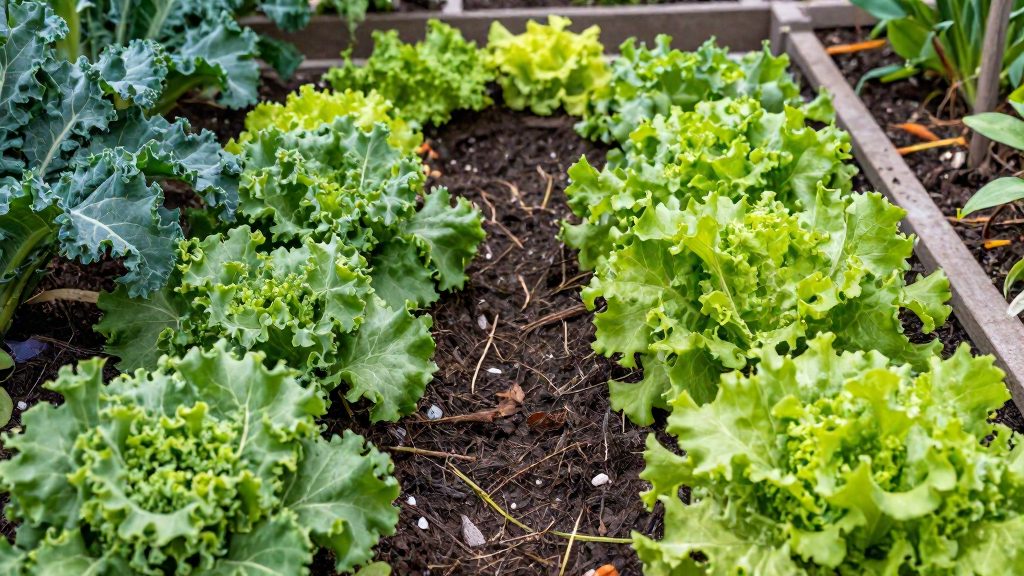
What is a keyhole garden?
A keyhole garden is a raised, circular bed built around a central compost basket, with a notch cut into one side so the gardener can reach the center without stepping onto the planting area. According to SDSU Extension (2025), a typical bed measures about 1.8 to 2.4 m (6 to 8 feet) across and 0.6 to 0.9 m (2 to 3 feet) high, with an access notch about 60 cm (2 feet) wide. Water poured into the central basket carries nutrients toward the roots, which is the main reason for the design.
Structure and key dimensions of a keyhole bed
Key dimensions
| Element | Specification | Source |
|---|---|---|
| Bed diameter | About 6 to 8 feet (1.8 to 2.4 m) | SDSU Extension (2025) |
| Bed height | About 2 to 3 feet (0.6 to 0.9 m) | SDSU Extension (2025) |
| Access notch width | About 2 feet (60 cm) | SDSU Extension (2025) |
| Compost basket diameter | About 1.5 feet (45 cm) | Bob Vila (2024) |
| Basket extension beyond bed walls | At least 1 foot (30 cm) | Bob Vila (2024) |
| Mulch thickness | About 2 inches (5 cm) | Bob Vila (2024) |
| Sunlight | At least 6 hours per day | Bob Vila (2024) |
Building the layers
The compost basket is built from wire mesh, metal lattice, or bamboo stakes, and small stones placed under it help drainage (Bob Vila, 2024).
Structure and climate
Place tall crops such as staked tomatoes or pole beans so they do not shade shorter plants.
Choosing the right size for a small plot
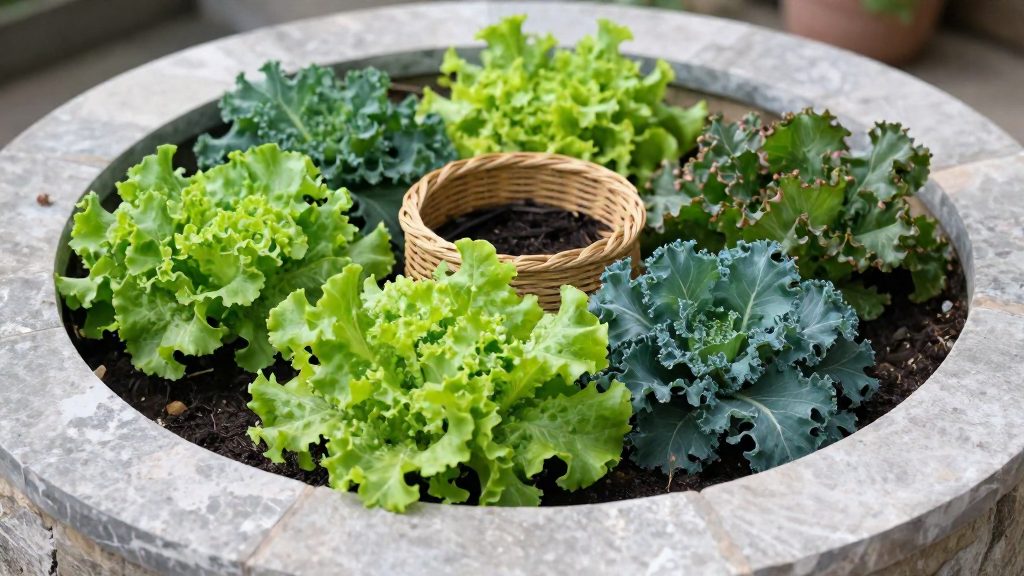
A keyhole garden suits a small organic plot because its footprint is compact. According to SDSU Extension (2025-10-29), a keyhole bed measures about 6 to 8 feet (about 1.8 to 2.4 m) in diameter and 2 to 3 feet (about 0.6 to 0.9 m) high, with an access notch about 2 feet (about 60 cm) wide. On a small plot, the lower end of the diameter range is the practical starting point, because every planting spot stays within reach from the notch.
Dimensions to plan for
| Element | Dimension | Reference |
|---|---|---|
| Bed diameter | 6 to 8 ft (about 1.8 to 2.4 m) | SDSU Extension (2025-10-29) |
| Bed height | 2 to 3 ft (about 0.6 to 0.9 m) | SDSU Extension (2025-10-29) |
| Access notch width | About 2 ft (about 60 cm) | SDSU Extension (2025-10-29) |
| Compost basket diameter | About 1.5 ft (about 45 cm) | Bob Vila (2024-08-30) |
| Basket overhang beyond bed walls | At least 1 ft (about 30 cm) | Bob Vila (2024-08-30) |
To estimate the growing surface, use the circle formula: area = 3.14 × radius × radius. A 1.8 m (6 ft) bed has a total surface of roughly 2.5 m², and a 2.4 m (8 ft) bed roughly 4.5 m², before subtracting the central basket and the access notch.
Allow space around the bed
- Measure the full footprint, not only the bed. The central basket takes up part of the bed and the access notch is not planting space, so the usable growing area is smaller than the bed diameter suggests.
- Keep the access notch clear. Leave room to kneel or reach in without stepping onto the planting zone.
Plan for tall crops
Tall plants such as indeterminate tomatoes and pole beans are hard to reach from the centre of a keyhole bed and need staking, according to Bob Vila (2024-08-30). On a small plot, reserve space for stakes or a trellis before deciding which crops to grow.
Wall Materials and Compost Basket
A keyhole bed is built with walls that hold its shape, and a central compost basket that delivers water and nutrients to the roots. According to Bob Vila (2024), the basket is made from wire mesh, welded wire, or bamboo stakes, and it sits at the center of the bed.
Wall materials
Stone or brick walls retain heat, which can extend the growing season into autumn, according to SDSU Extension (2025).
Compost basket specifications
| Element | Specification (per Bob Vila, 2024) |
|---|---|
| Diameter | About 45 cm (1.5 ft) |
| Height relative to bed walls | Extends at least 30 cm (1 ft) above the walls |
| Materials | Wire mesh, welded wire, or bamboo stakes |
| Base | Small stones placed beneath for drainage |
Keep the basket’s base open to the soil below so the water can drain.
Soil mix and compost choices
Bob Vila (2024) describes an equal-parts mix of sand, topsoil, and compost or manure. Exclude protein-rich materials from the compost, since they attract rodents.
How to fill the bed in layers?
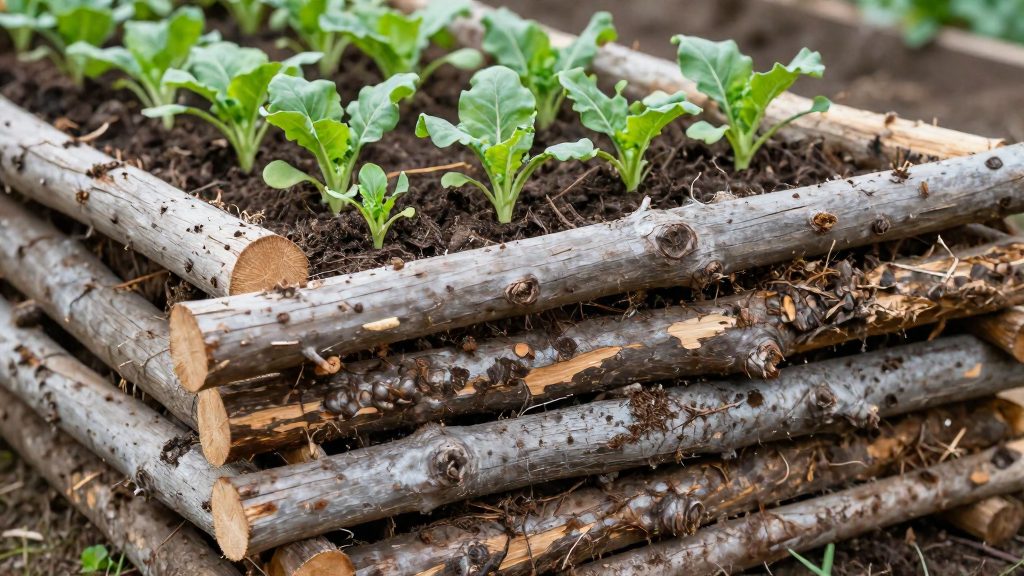
A keyhole garden is filled with the lasagna method, which builds the bed from alternating organic layers rather than a single block of soil. According to SDSU Extension (2025), the bed is built by alternating coarse organic matter such as branches and straw, leaves, cardboard, manure, and soil. The method suits a small organic plot because it turns garden residues into growing medium, and the bed can reach the 2 to 3 feet (about 0.6 to 0.9 m) height typical of this design.
For a taller bed, place large logs or thick branches at the bottom. These slowly break down and add bulk, so less topsoil is needed to reach full height.
Materials to alternate in the layers:
- Coarse organic matter (branches that are not freshly cut, straw) at the base, with large logs for taller beds
- Leaves over the coarse layer
- Cardboard, which the sources list among the materials to alternate
- Manure, which the sources list as a fertility layer
- Soil, which completes each cycle and forms the planting surface
The official sources consulted do not specify exact thickness for each layer, so adjust them to the materials you have and let the bed settle before planting.
Watering and feeding through the central basket
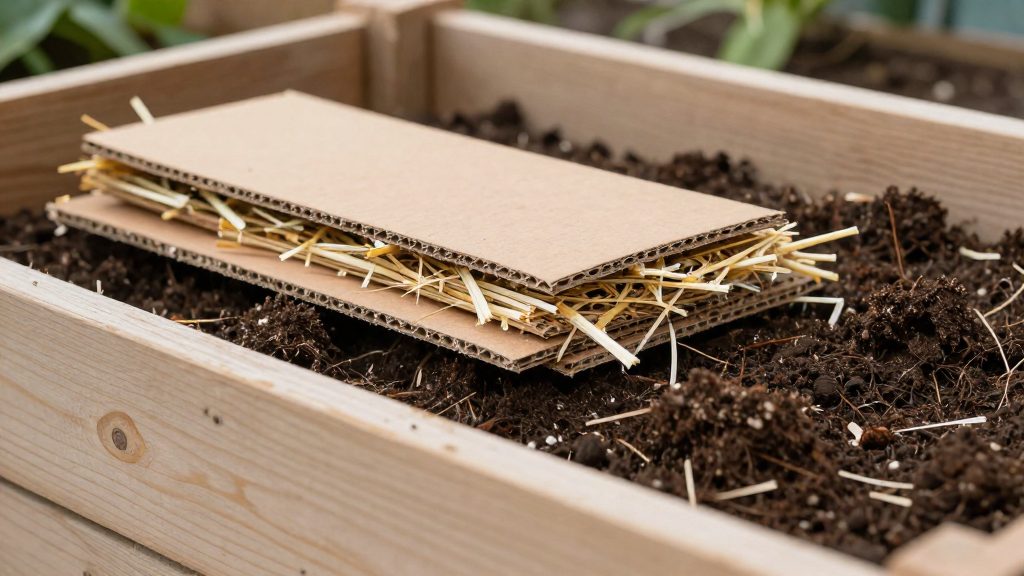
The central basket is the main access point for water and nutrients in a keyhole garden. According to SDSU Extension (2025-10-29), watering through the central basket lets water and nutrients reach the roots of the whole bed, not just the soil at the surface. Its dimensions and construction are set out below.
Basket specifications
| Feature | Specification | Source |
|---|---|---|
| Diameter | About 1.5 feet (about 45 cm) | Bob Vila (2024-08-30) |
| Height above bed walls | At least 1 foot (about 30 cm) | Bob Vila (2024-08-30) |
| Common materials | Wire mesh, welded wire, or bamboo stakes | Bob Vila (2024-08-30) |
| Base | Small stones placed underneath for drainage | Bob Vila (2024-08-30) |
How to water through the basket
- Pour water into the basket rather than over the bed surface, so it moves outward to the root zone.
- Water slowly and in measured amounts. The aim is to moisten the root zone without saturating the bed, which keeps the soil structure intact and the drainage working.
- Check soil moisture regularly, especially in the first weeks after planting and during dry spells.
Feeding the bed organically
The bed is fed by its own organic layers and by the soil mix, not by synthetic fertilizers.
Extending the season in a cold climate
The official sources consulted do not specify Canadian hardiness zones, local frost dates or minimum winter temperatures for keyhole gardens, so the answer depends on your local climate. According to SDSU Extension (2025), the structure can help extend the growing season in cold regions, mainly through the heat its walls store and the simple protection you add around it. Check your local last and first frost dates before planting, and treat the bed as a tool for stretching the season rather than a way to grow through winter.
How the walls help
The effect is practical: stone or brick walls retain heat, which can extend the growing season into autumn.
Covers for shoulder seasons
In northern climates, simple covers extend the transition seasons at both ends of the year (SDSU Extension, 2025). Row covers, cloches or a removable sheet over the bed are enough for this purpose. Remove them during warm spells so plants do not overheat.
Monitor soil temperature before planting
Soil temperature in a keyhole bed can vary more than in an in-ground bed (SDSU Extension, 2025). Measure it with a soil thermometer before sowing or transplanting, and wait until the soil has warmed rather than planting on the first mild day.
| Cold-season practice | Purpose | Source |
|---|---|---|
| Stone or brick walls | Store and release heat to extend autumn | SDSU Extension (2025) |
| Simple covers in transition seasons | Protect plants at the start and end of the season | SDSU Extension (2025) |
| Soil temperature check before planting | Avoid sowing into cold, variable soil | SDSU Extension (2025) |
| Mulch about 2 in (≈5 cm) thick | Insulate the surface and conserve moisture | Bob Vila (2024) |
Common Mistakes and Annual Maintenance
The table below lists common errors and their corrections, based on guidance from SDSU Extension (2025) and Bob Vila (2024). The table below lists the frequent errors and their corrections, based on guidance from SDSU Extension (2025) and Bob Vila (2024).
| Mistake | Why it matters | Correction |
|---|---|---|
| Building the base with freshly cut wood | As it decomposes, fresh wood ties up soil nitrogen (SDSU Extension, 2025) | Use larger branches or logs for height, and coarse organic matter such as straw |
| Adding protein-rich scraps to the compost | Protein attracts rodents (Bob Vila, 2024) | Keep protein-rich materials out of the fill |
| Lining the base with plastic sheeting | Plastic blocks drainage (Bob Vila, 2024) | Lay fabric over cardboard instead |
| Watering only the surface | Water and nutrients need to reach the roots (SDSU Extension, 2025) | Water through the compost basket |
| Planting tall crops without support | Tall plants are hard to reach and need staking | Stake indeterminate tomatoes and pole beans |
| Planting without checking soil temperature | Soil temperature can vary more than in an in-ground bed (SDSU Extension, 2025) | Check the soil before sowing or planting |
| Placing the bed in shade | The bed needs at least 6 hours of sun per day (Bob Vila, 2024) | Choose the sunniest spot available |
Annual maintenance
The annual top-up is the main routine task. According to Bob Vila (2024), the soil settles and compacts over time, so it needs to be recharged each year.
Each year, also:
- Check the compost basket. It should stand at least about 1 foot (30 cm) above the bed walls, and the stones at its base must still be draining freely (Bob Vila, 2024).
- Renew the mulch. Bob Vila (2024) recommends a layer about 2 inches (5 cm) thick.
- Check the bed height. Keyhole beds are usually 2 to 3 feet (0.6 to 0.9 m) high, so the settled soil should be topped up, keeping the surface sloping about 2 in (5 cm) lower at the outer wall than around the basket (Bob Vila, 2024).
Frequently asked questions
What size should a keyhole bed be on a small organic plot?
According to SDSU Extension (2025), a keyhole bed is typically about 1.8 to 2.4 m (6 to 8 feet) across and 0.6 to 0.9 m (2 to 3 feet) high, with a access notch about 60 cm wide. On a small plot, the smaller diameter keeps every planting spot within reach from the notch.
How do I fill the bed in layers without adding harmful materials?
Build the bed with the lasagna method, alternating coarse organic matter, leaves, cardboard, manure, and soil. SDSU Extension (2025) advises against freshly cut wood, which ties up soil nitrogen as it decomposes, and Bob Vila (2024) recommends compost free of protein-rich scraps, since these attract rodents.
How does the central compost basket help the plants?
Water poured into the compost basket moves nutrients down toward the roots, which is the main reason for the design. Bob Vila (2024) describes a basket about 45 cm (1.5 feet) in diameter that rises at least 30 cm (1 foot) above the bed walls, built from wire mesh, metal lattice, or bamboo stakes, with small stones underneath for drainage.