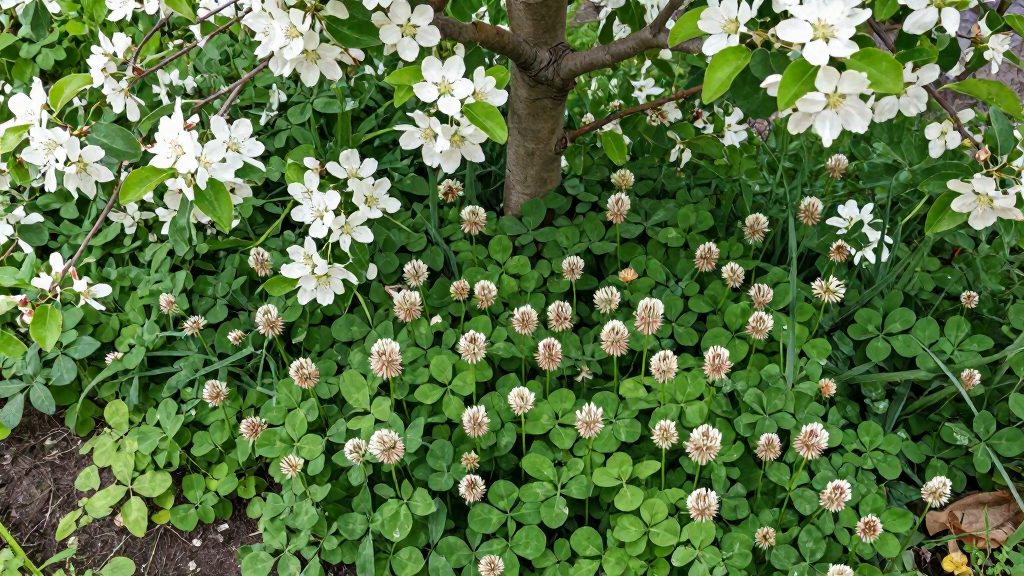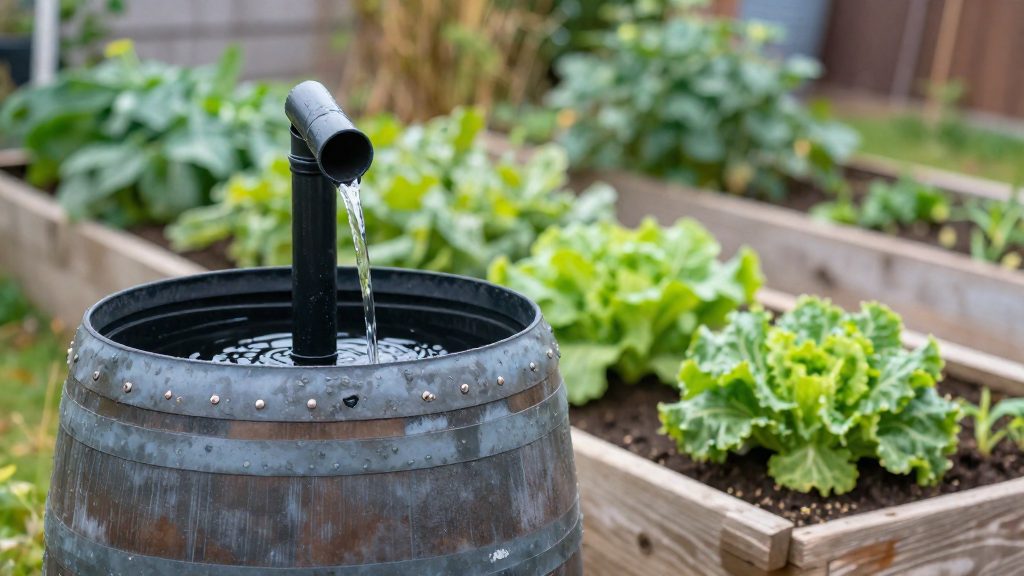
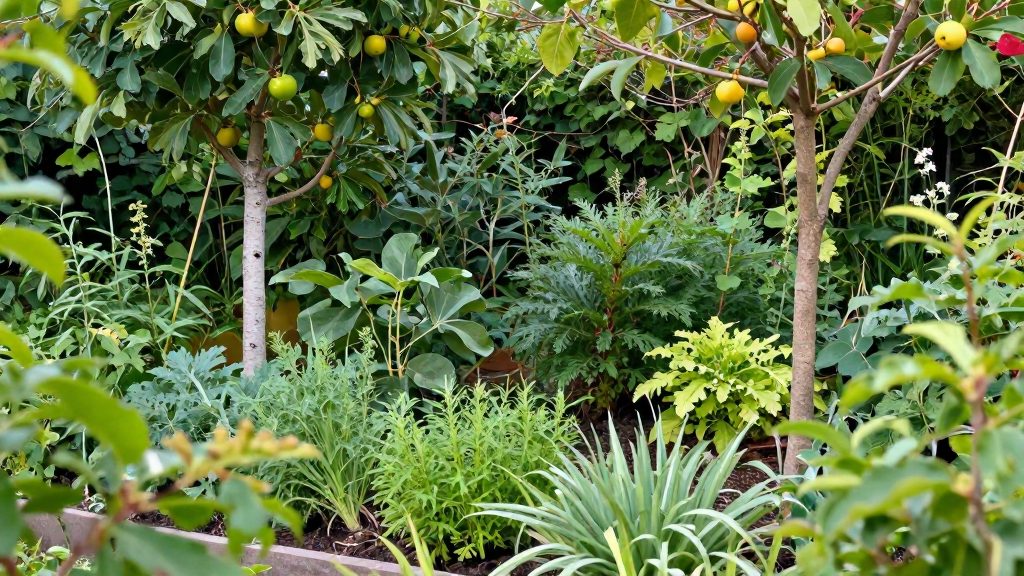
A food forest in a small garden is a perennial plot built around useful trees, with layers of trees, shrubs, groundcover and climbing plants arranged to mimic a managed forest ecosystem. According to Gardening Canada (June 2025), a small suburban garden can host a mini food forest, usually with dwarf fruit trees in the top layer. Orchard People (2025) recommends a site that receives at least 6 hours of sun per day, so the layout should start with a sun assessment before any planting.
What is a food forest in a small garden?
A food forest combines several plant layers in one space. Each layer fills a different height, so the garden produces food at several levels without requiring a separate bed for each crop.
The main layers
- Trees: choose dwarf fruit trees, which fit small plots.
- Shrubs: fill the space between trees with smaller fruiting plants.
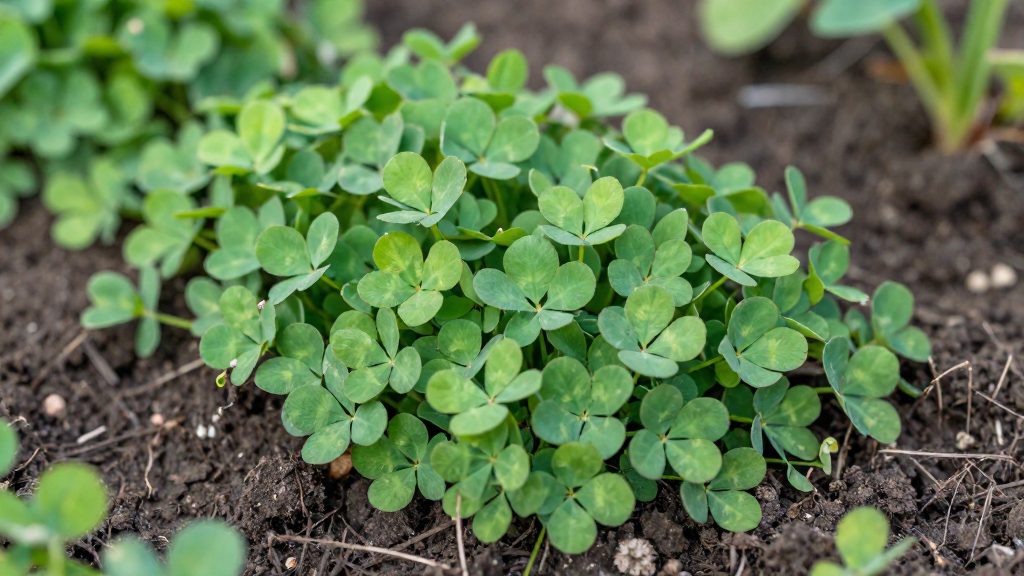
- Groundcover: low plants that cover the soil beneath the shrubs.
- Climbers: plants that grow up supports or trunks.
Small Farm Canada (2025) describes a food forest as a perennial garden built around useful trees and designed to imitate a managed forest. The reference book The Food Forest Handbook by Frey and Czolba comes from Pennsylvania, and Small Farm Canada notes that some of its examples do not suit every Canadian region. Adapt the plant choices to your local climate and frost dates.
Planting order and paths
Plant the large trees first, then fill the gaps with shrubs and smaller plants, according to Orchard People (2025). Leave mulched paths wide enough for a wheelbarrow so you can reach every plant for harvesting and maintenance without walking on the planting zones.
Common mistakes
| Mistake | Better practice |
|---|---|
| Planting too densely | Leave room for each tree and shrub to develop |
| Skipping paths | Plan wheelbarrow-wide mulched paths before planting |
| Not watering during establishment | Water regularly while new plants settle in |
| Mixing plants with incompatible pH needs | Keep acid-loving blueberry apart from neutral-soil apple |
Orchard People (2025) lists these as common errors in food forest projects.
Assessing Sun and Microclimate in Your Backyard
Before choosing any tree, map where sunlight actually reaches your plot. According to Orchard People (2025), a food forest site should receive at least 6 hours of sun per day. This threshold is the main filter for the layout: areas that meet it suit the fruiting layers, and shadier areas call for a different use or a different plant selection.
Mapping the Sun Across the Day
- Observe the plot in the morning, at midday, and in the late afternoon, and note which areas stay lit.
- Record the shade cast by fences, walls, sheds, hedges, and neighboring buildings.
- Repeat the observations in different seasons if possible, because the sun’s path changes over the year.
- Transfer the results to a simple sketch of the yard, with sunny and shaded zones marked.
Reading the Microclimate
Your microclimate is the set of local conditions that differ from the rest of the region: sun exposure, wind, and how water moves across the ground. Walls and fences can shelter a bed from wind, while open, exposed corners tend to dry out faster. Note where water collects after rain and where the soil dries quickly, since this affects where you place moisture-loving and drought-tolerant plants.
Placing Tall Elements First
Gardening Canada (2025-06-01) notes that a small suburban backyard can host a mini food forest built on several layers, with dwarf fruit trees selected for the limited space. Orchard People (2025) recommends planting the large trees first, then filling in with shrubs and smaller plants.
Before fixing the position of any tall tree, check the shadow it will cast at different times of day and over the seasons. A tree placed without this check can shade the sunny zones you mapped earlier, reducing the area that meets the sun requirement for the rest of the layers.
Adapting to Your Region
Small Farm Canada (2025) points out that some food forest examples, including those from The Food Forest Handbook by Frey and Czolba, do not suit every Canadian region. Use the mapped sun and microclimate of your own yard, and check local climate conditions, rather than copying a layout from another area.
Which layers to choose when space is limited?
A small backyard can still hold a food forest. According to Gardening Canada (2025), a suburban garden of modest size can accommodate one, built from layers of trees, shrubs, groundcover and climbing plants, with dwarf fruit trees chosen for the canopy. Orchard People (2025) recommends at least 6 hours of sun per day, so the layer plan should start with a sunlight check of the site before any planting.
| Layer | Role in the design | Practical guidance |
|---|---|---|
| Canopy trees | Tallest layer, provides fruit overhead | Choose dwarf fruit trees and plant them first |
| Shrubs | Middle layer filling the space around the trees | Plant once the large trees are in place |
| Groundcover and small plants | Lowest layer, covers the soil between shrubs | Use them to fill the remaining gaps |
| Climbers | Uses vertical space on fences or supports | Add where the site allows |
Sequencing matters more than the number of species. Place the large trees first, then fill in with shrubs and small plants. Leave mulched paths wide enough for a wheelbarrow, so the beds can be reached without walking on the planting zones. Orchard People (2025) lists overly dense planting and the absence of paths among the common errors.
For the soil, the sheet mulching method described by Orchard People (2025) uses two layers of cardboard overlapping by at least 20 cm, up to 15 cm of seed-free organic matter, then 5 cm of leaves and 5 cm of wood chips. Avoid conifer chips and black walnut chips. Water regularly during establishment. The sources consulted give no watering schedule, so adjust to local rainfall.
Small Farm Canada (2025) notes that The Food Forest Handbook by Frey and Czolba comes from Pennsylvania and that some of its examples do not suit every region of Canada. Choose species according to local climate and frost dates rather than copying a published plan.
Dwarf fruit trees and shrubs suited to the Canadian climate
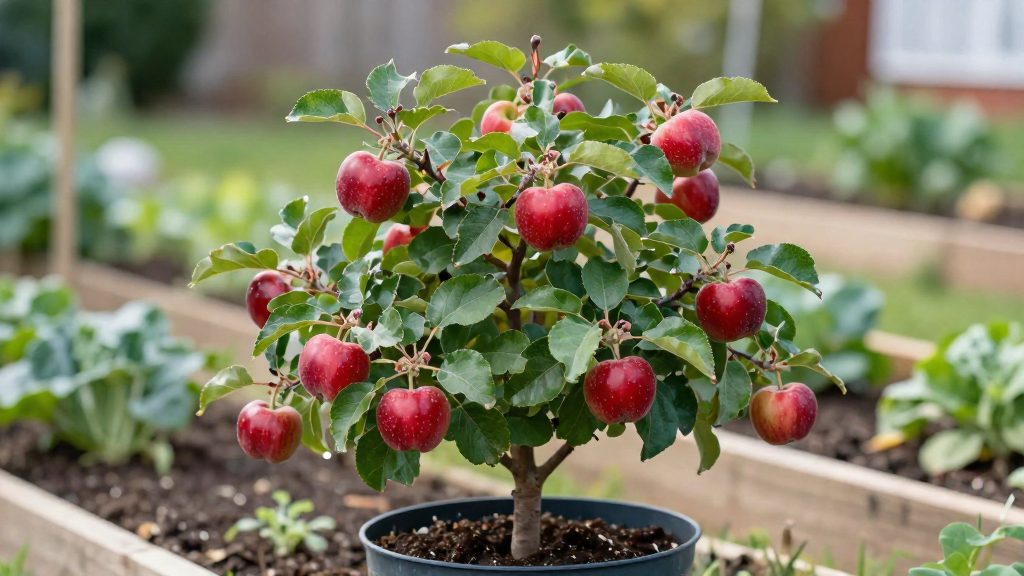
According to Gardening Canada (2025), a small suburban backyard in Canada can host a mini food forest. The design stacks trees, shrubs, ground covers and climbing plants in layers, and it uses dwarf fruit trees to keep harvests within easy reach. Site choice comes first: Orchard People (2025) recommends a spot that receives at least 6 hours of sun per day. According to Small Farm Canada (2025), The Food Forest Handbook by Frey and Czolba comes from Pennsylvania, and some of its examples do not suit every Canadian region, so check which species tolerate your local winters before buying.
Planting order
Orchard People (2025) describes a sequence that works in small spaces:
| Step | Action |
|---|---|
| 1 | Plant the large trees first, choosing dwarf fruit trees for a small lot |
| 2 | Fill the gaps between trees with shrubs and small plants |
| 3 | Leave mulched paths wide enough for a wheelbarrow |
| 4 | Water during establishment, since the guidance warns against skipping this step |
Matching plants by soil pH
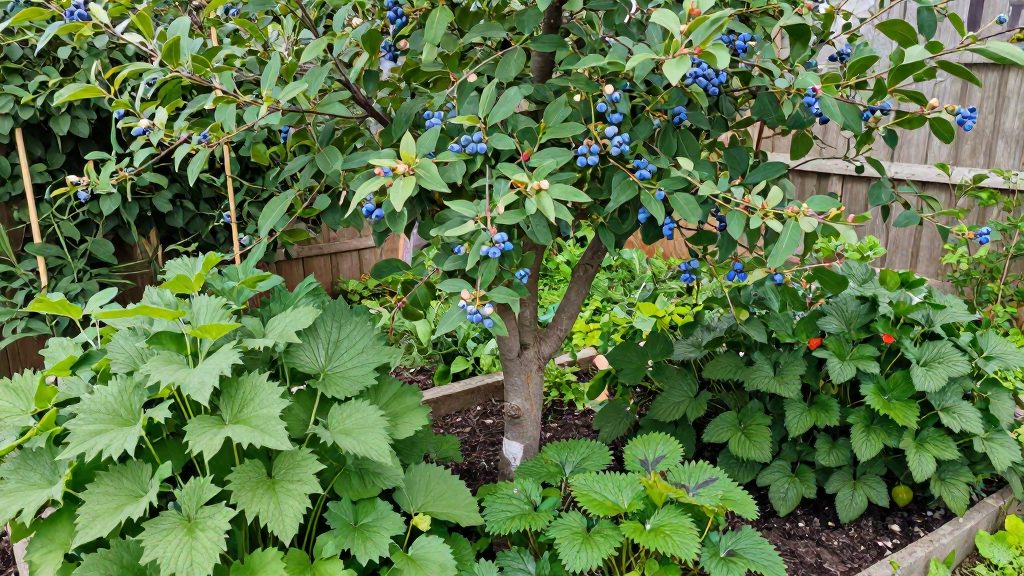
Plants in the same bed need compatible soil pH requirements. Orchard People (2025) gives a clear example: blueberry needs acidic soil, while apple prefers neutral soil. Before planting, group species by their soil preference rather than by appearance, so that one plant does not suffer in soil chosen for another.
Common errors to avoid
- Planting too densely, which leaves no room for growth
- Skipping paths, which makes harvesting and maintenance harder
- Not watering during the establishment period
- Mixing plants with incompatible pH needs
Preparing the Soil with Layered Sheet Mulching
Sheet mulching is a non-chemical way to prepare ground for a food forest without digging or tilling. You stack materials in fixed layers on the soil surface, and they break down into planting material over time. According to Orchard People (2025), the method uses two overlapping layers of cardboard, up to 15 cm of seed-free organic matter, 5 cm of leaves and 5 cm of wood chips.
Site and Layout Before Laying Materials
- Choose a site that receives at least 6 hours of sun per day (Orchard People, 2025).
- Mark the planting beds and the paths before you lay any material.
- Make the mulched paths wide enough for a wheelbarrow (Orchard People, 2025).
- Plant the large trees first, then fill the gaps with shrubs and smaller plants (Orchard People, 2025).
Building the Layers
| Layer | Order | Thickness or spacing | Notes |
|---|---|---|---|
| Cardboard | Bottom, two layers | Edges overlap by at least 20 cm | Lay the sheets so no ground is left exposed between them |
| Seed-free organic matter | Second | Up to 15 cm | Keep it free of seeds so weeds do not establish |
| Leaves | Third | 5 cm | Adds a second organic layer above the matter |
| Wood chips | Top | 5 cm | Avoid conifer chips and black walnut chips |
The working method is:
- Lay the first sheet of cardboard flat over the bed, then lay the second sheet so that each edge overlaps the first by at least 20 cm.
- Spread the seed-free organic matter evenly, up to 15 cm deep.
- Add 5 cm of leaves.
- Finish with 5 cm of wood chips.
Watering During Establishment
Orchard People (2025) lists failure to water during establishment as a common mistake. Water newly planted beds while the plants settle in.
Matching Plants to Soil pH
Plant selection matters because soil pH needs differ between species. Orchard People (2025) notes that blueberry needs acidic soil while apple prefers neutral soil. Group plants with compatible pH needs in the same zone, because mixing incompatible requirements is a common design error.
Adapting the Method to Your Region
Small Farm Canada (2025) notes that some food forest designs do not suit every region of Canada. Check which species and planting layouts suit your local climate before applying the same plan to your own yard.
How to Avoid Planting Mistakes
Most early problems in a small food forest come from planning rather than from the plants themselves. According to Orchard People (2025), the common errors are planting too densely, skipping paths, not watering during establishment, and mixing plants with incompatible pH needs. Each can be avoided by mapping light, spacing, access, and soil before the first tree goes into the ground.
Start with sun exposure. Orchard People (2025) recommends a site that receives at least 6 hours of sun per day. Observe the planned area at different times of the day before choosing species, because a shaded corner will not support the same fruiting plants as an open bed.
Plant in the right order. Place the large trees first, then fill the gaps with shrubs and smaller plants (Orchard People, 2025). For a small yard, choose dwarf fruit trees. Gardening Canada (blog), dated 1 June 2025, describes a suburban food forest built in layers of trees, shrubs, ground cover, and climbing plants.
Plan access before planting. Leave mulched paths wide enough for a wheelbarrow so that maintenance and harvesting do not require walking on the planting beds. Orchard People (2025) lists the absence of paths as a frequent error.
Respect soil pH. Blueberry needs acidic soil, while apple prefers neutral soil. Group plants with similar pH requirements rather than placing them side by side. The table below summarizes the main errors and their prevention.
| Common error | Prevention | Source |
|---|---|---|
| Planting too densely | Leave room for each tree and shrub to develop | Orchard People (2025) |
| No paths between beds | Lay mulched paths wide enough for a wheelbarrow | Orchard People (2025) |
| No watering during establishment | Water regularly while new plants settle | Orchard People (2025) |
| Incompatible pH needs | Keep acid-loving blueberry apart from neutral-soil apple | Orchard People (2025) |
For soil preparation, sheet mulching is a non-chemical method described by Orchard People (2025). Lay two cardboard layers that overlap by at least 20 cm, add up to 15 cm of seed-free organic matter, then cover with 5 cm of leaves and 5 cm of wood chips.
Plant selection also depends on region. Small Farm Canada (2025) notes that The Food Forest Handbook by Frey and Czolba comes from Pennsylvania and that some of its examples do not suit all Canadian regions. Check each species against your local climate before purchase.
Maintenance and Harvests Through the Seasons
A small food forest needs most of its attention in the first years, when the planting is young and the soil is still settling. According to Gardening Canada (2025), a small suburban backyard can host a mini food forest built from layers of trees, shrubs, groundcover and climbing plants, with dwarf fruit trees chosen to suit the space. Once the layers are established, the workload drops, but care still depends on local climate and on how the planting was spaced at the start.
Keeping the Mulch Layers in Place
The sheet mulching method described by Orchard People (2025) forms the base of the planting areas:
| Layer | Specification |
|---|---|
| Cardboard | Two overlapping layers, overlapping by at least 20 cm |
| Organic matter | Up to 15 cm, free of seeds |
| Leaves | 5 cm |
| Wood chips | 5 cm |
As the mulch breaks down, add fresh leaves and chips to the planting areas and paths. This keeps the soil covered and slows weed growth without tilling.
Watering During the Establishment Period
Orchard People (2025) lists not watering during establishment as a common mistake. Water newly planted trees, shrubs and groundcover regularly during this establishment period, and adjust to your local rainfall.
Paths and Spacing
Planting too densely is another frequent error noted by Orchard People (2025). Keep the paths wide enough for a wheelbarrow, and make sure plants have room to grow so that the layers don’t crowd each other. Give plants enough room to grow so the layers do not crowd each other.
Plants with incompatible pH needs should not share the same bed. Orchard People (2025) gives blueberry, which needs acidic soil, and apple, which prefers neutral soil, as an example of this conflict. Group plants by soil preference before planting, and group plants by their pH needs before choosing what goes where.
Harvests Through the Seasons
The official sources consulted do not specify harvest dates for particular species, and timing varies with region and climate. A food forest with several layers spreads its yield across the year, since different plants can ripen at different times. Small Farm Canada (2025) notes that The Food Forest Handbook by Frey and Czolba comes from Pennsylvania and that some of its examples do not suit every Canadian region. Check plant choices against your local conditions before buying, and adjust the harvest calendar to your own climate.