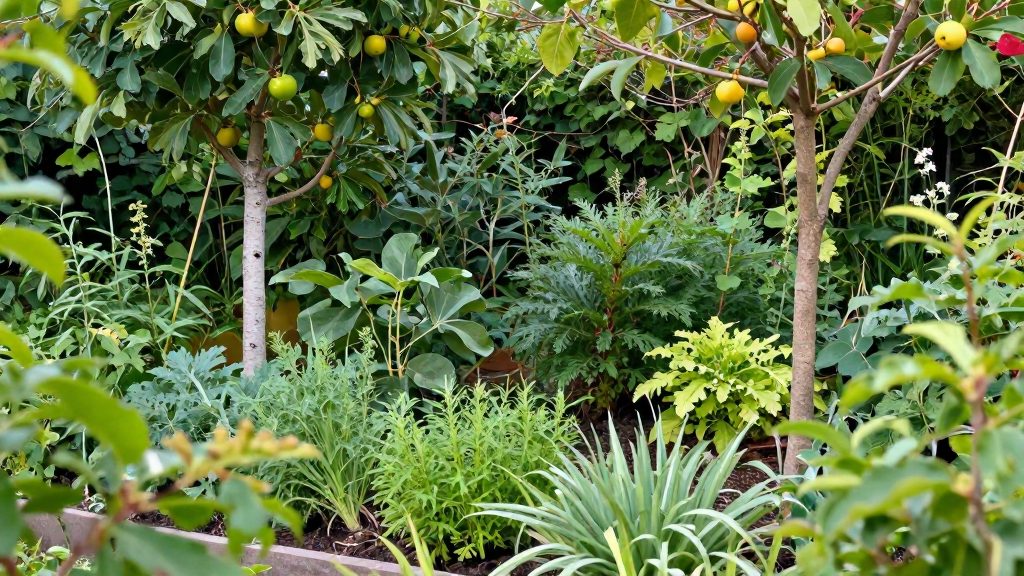
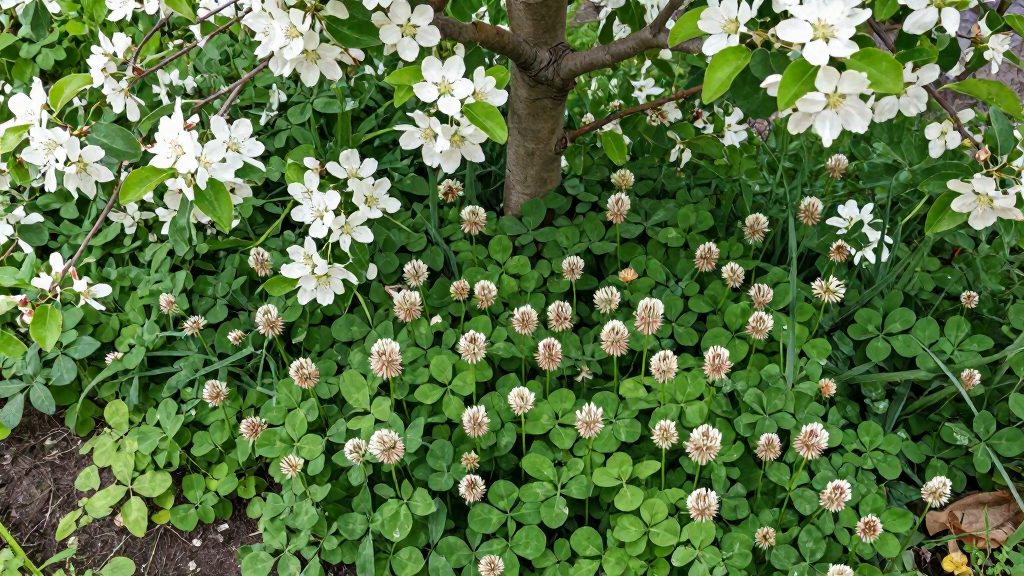
A permaculture guild around an apple tree is a group of plants grown together under and around the tree so that each one supports the others. According to Piper’s Orchard (2026), an orchard stewardship group based in Seattle, USA, guild planting means putting certain plants together so they benefit each other. Its apple-orchard guild list classifies companion plants by the role they play, which gives gardeners a practical checklist for choosing what to plant beneath and around the tree.
What is a permaculture guild around an apple tree?
A guild is built on functional roles rather than on a fixed list of species. The Piper’s Orchard apple-orchard list sorts guild plants into three groups:
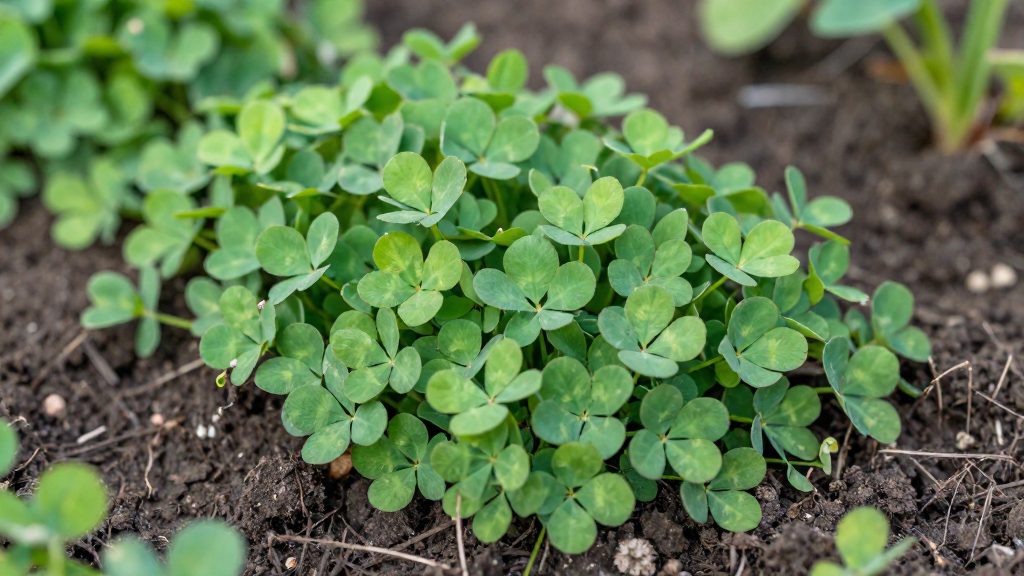
- Nitrogen fixers, such as Dark Dancer clover and hybrid lupine.
- Pollinator or beneficial-insect attractors, plants that draw in pollinators and insects useful to the orchard.
- Bioaccumulators, plants with deep roots that draw minerals up from the subsoil. Dandelion is the example given.
Using this classification, you choose at least one plant for each role and place them in the bed beneath and around the tree, keeping the area against the trunk clear. The list works as a planning tool, not as a rigid recipe, so you can substitute locally available plants that play the same role.
Practical steps for setting up a guild:
- Choose a sunny spot for the apple tree and its understory, since sunlight is a basic requirement for the trees and most companion plants.
- Map the roles first, then select the plants. Sketch where the nitrogen fixers, attractors and bioaccumulators will sit so that none crowds the trunk.
- Water without waterlogging. Keep the root zone evenly moist but never soggy, because saturated soil harms roots.
- Observe the bed through the seasons and adjust plantings where growth is weak or where pests appear.
The official sources consulted do not specify planting densities, sowing dates or spacing for apple-tree guilds, so adapt these choices to your region and climate.
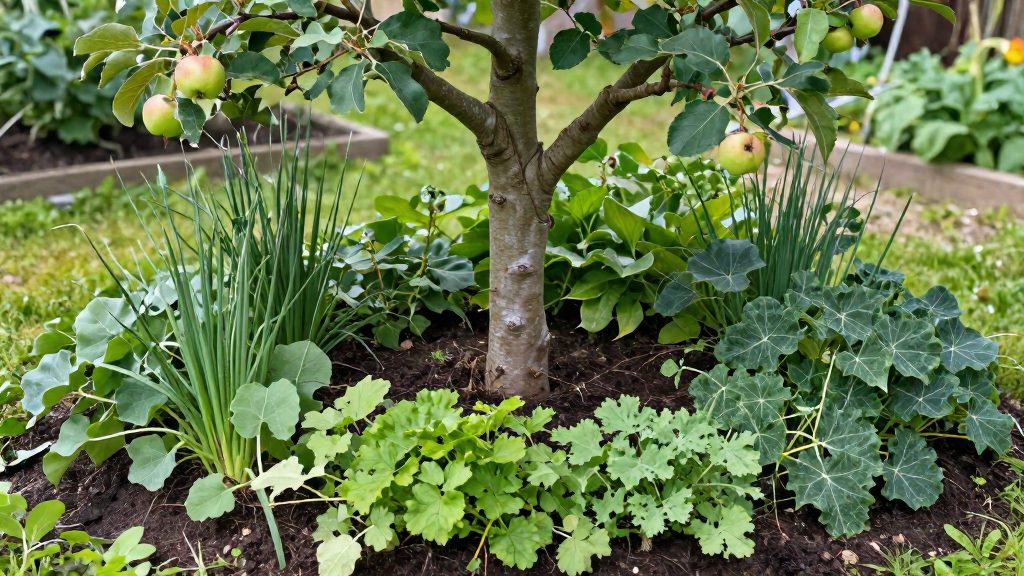
Plant roles in the guild
According to Piper’s Orchard (2026), the apple-orchard guild list assigns each companion plant a role, so the planting is organized by function rather than as a random mix. The list sorts plants into three functional groups.
- Nitrogen fixers: The list names Dark Dancer clover and hybrid lupine as examples of this group.
- Pollinator and beneficial-insect attractors: These plants are included to draw pollinators and beneficial insects into the orchard. The consulted source describes this group by function and does not name specific species for it.
- Bioaccumulators: These plants have deep roots that draw minerals up. Dandelion is the example given.
How to assign roles to your plants
- Choose the apple tree’s position first, then place companions around it without shading the tree.
- Sort each candidate plant by role. Write down whether it fixes nitrogen, attracts pollinators or beneficial insects, or accumulates minerals from deep roots.
- Check that each role is covered.
Adjust spacing to your site, your apple rootstock’s vigor, and your regional climate, and observe how the plants compete before adding more.
Which plant roles to choose under an apple tree?
Piper’s Orchard (2026), an orchard stewardship group based in Seattle, USA, describes an apple-orchard guild list that sorts plants by function: nitrogen fixers, pollinator and beneficial-insect attractors, and bioaccumulators with deep roots. Selecting plants by the job they do under the tree, rather than only by appearance, is the core method of this approach.
Start by deciding which functions you need around your apple tree, then choose one or two plants for each role. Check planting densities, spacing and hardiness zone ratings for your Canadian region with a local nursery or garden centre before buying. Climate differs widely between provinces, and a plant that thrives in one area may struggle in another.
| Guild role (per Piper’s Orchard, 2026) | Example named in the source |
|---|---|
| Nitrogen fixers | Dark Dancer clover, hybrid lupine |
| Bioaccumulators with deep roots | Dandelion |
Nitrogen fixers are the first category in the list. Dark Dancer clover and hybrid lupine are the examples given for this role. Confirm locally that lupine is not invasive in your province before planting it. Place them in the open ground beneath the canopy, leaving a clear area around the trunk.
Pollinator and beneficial-insect attractors form the second category. The source lists this role but does not name specific plants for it, so choose flowering species that suit your region and confirm locally that they are not invasive.
Bioaccumulators are plants with deep roots that draw minerals up toward the surface. Dandelion is the example given. It is a common plant that many gardeners already have, which makes it a practical starting point for this role.
Whatever you select, keep the area around the trunk free of plants that compete with the tree for light and water.
Preparing the soil: cardboard, compost and the drip zone
Preparing the soil under an apple tree before planting a guild means working with the existing ground rather than digging around the roots. Soil preparation makes the guild roles described by Piper’s Orchard (2026) possible, because every plant in the guild needs an area where it can establish without competing with the tree’s roots.
Defining the planting area
Plan the bed by the canopy edge, not by the trunk. The drip zone is the ground under the outer edge of the branches, where rainwater falls and where many of the tree’s fine feeder roots spread. Keep the ring of soil right against the trunk free of wet material, and place the guild plants in the drip zone and beyond it.
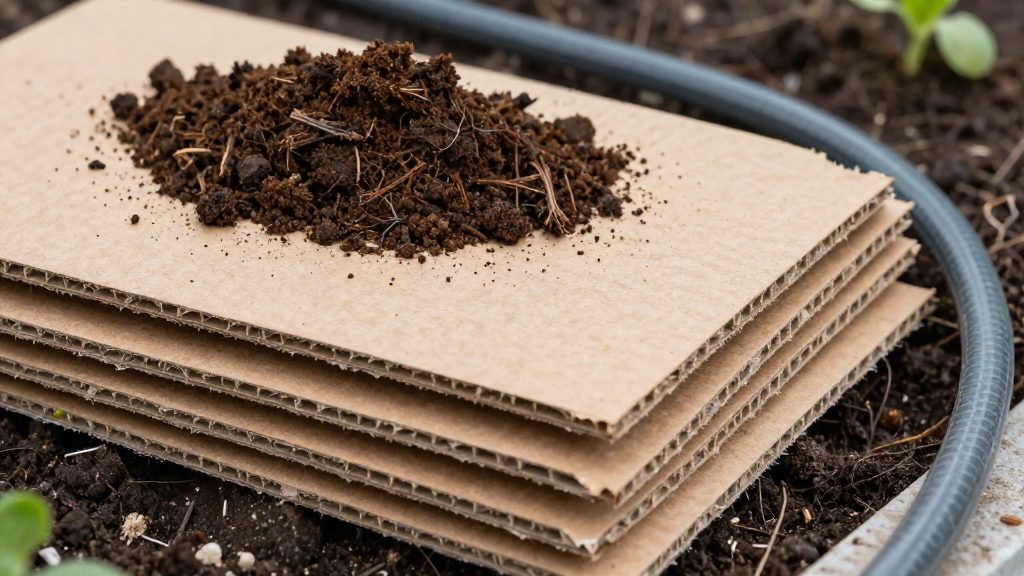
Laying cardboard as sheet mulch
Cardboard smothers grass and weeds without synthetic herbicides, which makes it a practical organic option for clearing turf before planting:
- Remove all tape, staples and glossy printing, since these materials break down slowly.
- Overlap the sheets so no bare soil or grass shows between them.
- Soak the cardboard thoroughly so it settles flat and starts to decompose.
- Keep the sheets clear of the trunk.
Cardboard works as a sheet mulch layer. It blocks light and keeps weeds from re-emerging while the soil underneath is left undisturbed, which protects the soil structure and the fungal and microbial life that feed the tree.
Adding compost on top
Spread a layer of finished compost over the cardboard. Choose compost that is dark, crumbly and earthy in smell, rather than fresh material that is still breaking down. Finished compost is easier to plant into and gives the guild plants a loose, workable top layer.
To plant, pull the compost aside to make a pocket, and place the transplant or seed in the soil underneath. Some gardeners cut a small opening through the cardboard for each plant; others plant along the edges of the sheets. The official sources consulted do not specify a single standard method for this step.
Planting the guild step by step
According to Piper’s Orchard (2026), its apple-orchard guild list sorts plants by role rather than by appearance: nitrogen fixers, such as Dark Dancer clover and hybrid lupine; pollinator or beneficial-insect attractors; and bioaccumulators with deep roots that draw minerals up, such as dandelion. The planting method below follows that role-based logic.
1. Observe the site first
- Choose a sunny position around the apple tree and note where the light falls through the day.
- Check how water moves across the ground so you can avoid spots that stay soggy.
- Look at the existing soil and ground cover before you add anything.
2. Assign a role to each plant
Decide what each plant will do before you buy or sow it:
| Role | Example named in the source | What the source says |
|---|---|---|
| Nitrogen fixer | Dark Dancer clover, hybrid lupine | Listed as nitrogen fixers |
| Bioaccumulator | Dandelion | Deep roots that draw minerals up |
| Pollinator or beneficial-insect attractor | Not named in the consulted source | Listed as a distinct role |
Give each role at least one plant.
3. Place the plants around the tree
- Keep plants a clear distance from the trunk rather than against it.
- Put the nitrogen fixers and the attractors where they can share space with the tree’s root zone without crowding it.
- Set the bioaccumulators where their deep roots can work the soil without competing directly with the nearest plants.
4. Water without waterlogging
Water the newly planted guild evenly. Check moisture with your finger before each watering, and adjust to rainfall and season.
5. Maintain without synthetic inputs
Mulch and observe the plants through the season, and replace any plant that struggles in your climate with another from the same role.
Which mistakes to avoid with a guild?
According to Piper’s Orchard (2026), the apple-orchard guild list assigns each plant a role. The most common errors come from treating the guild as a random mix of companion plants rather than a set of functions around the tree.
Mistake 1: Choosing plants without assigning a role. Each species should fill a function. The Piper’s Orchard list sorts plants into three groups:
| Role in the guild | Example named by Piper’s Orchard | What the role provides |
|---|---|---|
| Nitrogen fixer | Dark Dancer clover, hybrid lupine | Fixes nitrogen for the plants around it |
| Pollinator or beneficial-insect attractor | Plants chosen to attract these insects | Brings pollinators and beneficial insects to the orchard |
| Bioaccumulator (deep roots) | Dandelion | Draws minerals up from deeper soil layers |
If a guild contains only one of these roles, for example only flowering plants, it leaves the other functions uncovered.
Mistake 2: Planting too close to the trunk without a plan. Put the apple tree at the centre of the guild and place the companions progressively outward, leaving room for the tree’s roots and for access when pruning or harvesting.
Mistake 3: Reaching for chemical pesticides when pests appear. Attracting beneficial insects is the organic approach the guild is designed to support. Where a problem persists, choose organic alternatives instead of synthetic products.
Mistake 4: Ignoring site conditions. Sun and drainage decide how well every companion grows, and a guild that stays soggy weakens the companions and the tree alike.
Adapting the guild to your hardiness zone
A guild works only when its plants suit your local climate. According to Piper’s Orchard (2026), its apple-orchard guild list sorts species by role: nitrogen fixers, pollinator and beneficial-insect attractors, and bioaccumulators with deep roots. The roles stay the same from one region to another. The species that fill them must be chosen for your own conditions. The source consulted does not give hardiness ranges for the species it lists, so you need to check suitability locally.
Keep the functional roles, then match species to your climate. Begin by defining what your apple trees need from the understory, such as nitrogen, pollinator support, or minerals brought up from depth. Then select one or more species for each role that grow well in your area.
| Role | Example from Piper’s Orchard list | Function described in the source |
|---|---|---|
| Nitrogen fixer | Dark Dancer clover, hybrid lupine | Fixes nitrogen |
| Pollinator and beneficial-insect attractor | Listed by role, no species named in the source | Attracts pollinators and beneficial insects |
| Bioaccumulator | Dandelion | Deep roots draw minerals up |
Adapting the guild step by step:
- Measure your local conditions. Note winter lows, last spring frost, summer heat, rainfall, and soil drainage. Local nurseries and garden centres usually provide hardiness information for their area.
- Check each candidate species against those conditions. If a species listed in the guild does not tolerate your winters or summers, replace it with a locally adapted species that fills the same role.
- Start small. Plant a limited number of guild species around one or two trees first, and observe growth and pest pressure for at least one full season before expanding.
- Adjust to site conditions. Sun exposure and drainage affect every species in the guild, so place plants according to light and moisture, not only climate.
Frequently asked questions
What roles should plants play in an apple tree guild?
According to Piper’s Orchard (2026), an apple-orchard guild groups companion plants into three functional roles: nitrogen fixers, pollinator or beneficial-insect attractors, and bioaccumulators with deep roots. Choosing at least one plant for each role gives the guild a balanced structure.
Can I replace the suggested plants with ones I can find locally?
Yes. Piper’s Orchard (2026) presents its list as a planning tool rather than a fixed recipe, so you can use substitute plants that perform the same role in your garden. Check that any replacement suits your climate and soil.
How close can guild plants grow to the apple tree trunk?
Keep the area directly against the trunk clear of plants, and keep the root zone evenly moist without waterlogging it. Piper’s Orchard (2026) does not specify spacing or planting density, so observe how the tree and companion plants grow and adjust their placement over the seasons.