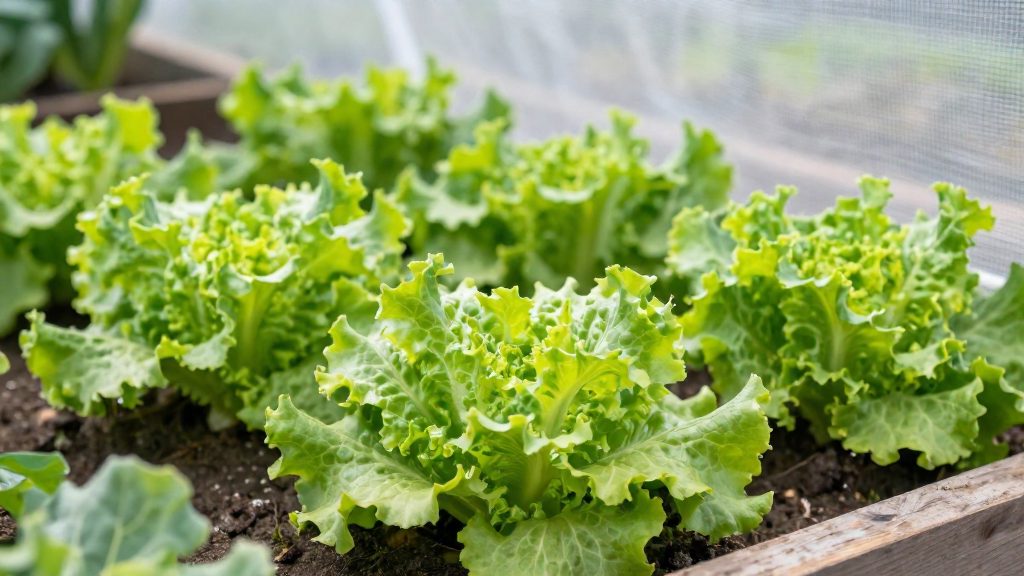
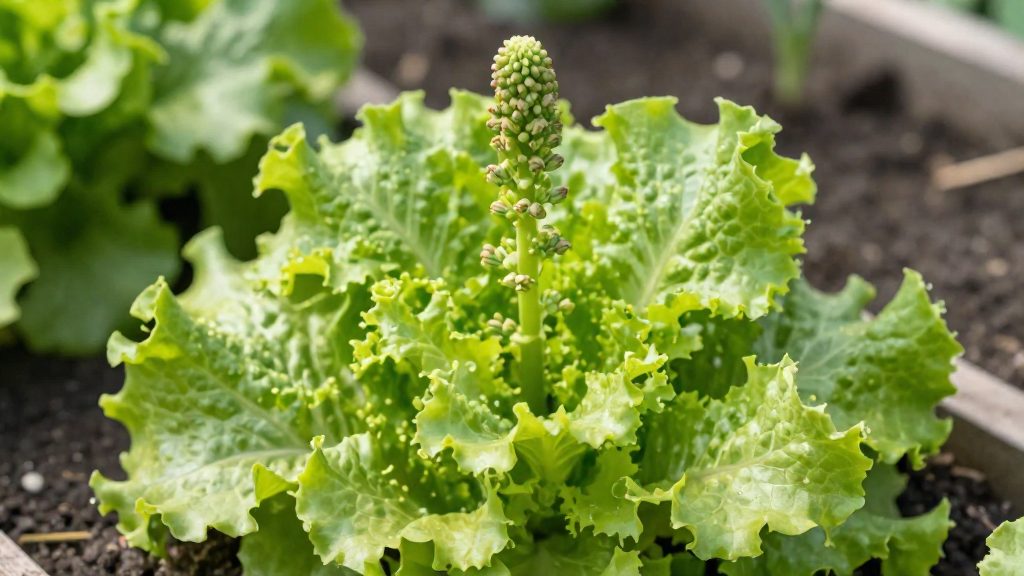
Lettuce bolts in summer mainly because of heat stress, and the threshold figures are specific. According to Garden Betty (Linda Ly) (2011-07-27), lettuce seed goes dormant when soil is above about 27°C (about 80°F), and germination is best at about 20°C (68°F). Growers should also stop fertilizing when daytime highs reach about 85–90°F (29–32°C) or above, and harvest often, because large leaves signal the plant to bolt. Choosing slow-bolting varieties and managing shade, water and harvest timing reduces the problem.
Why does lettuce bolt to seed in summer?
Bolting is the plant’s shift from leaf production to flowering and seed set. In hot weather, the plant comes under stress, and the timing of several garden practices affects how quickly that happens.
Temperature thresholds to track
| Condition | Threshold | What it means for the grower |
|---|---|---|
| Soil temperature | Above about 80°F (about 27°C) | Lettuce seed enters thermo-inhibition and goes dormant, so sowing in heat gives poor germination. (Garden Betty (Linda Ly), 2011-07-27) |
| Germination | About 68°F (20°C) | This is the best temperature for germination. (Garden Betty (Linda Ly), 2011-07-27) |
| Daytime highs | About 85–90°F (29–32°C) or above | Do not fertilize when daytime highs reach this range. (Garden Betty (Linda Ly), 2011-07-27) |
Canadian gardens vary widely by region, so compare these thresholds with the summer highs and soil temperatures recorded in your own plot.
Varieties that resist bolting
- Jericho: a romaine lettuce bred in Israel for desert climates, and slow to bolt. (Harvest to Table, 2025)
- Muir: a Batavian, described as among the most heat-tolerant options. (Harvest to Table, 2025)
- Loose-leaf types (butterhead, green leaf, red leaf and Batavian) are generally more heat-resistant and slower to bolt than head-forming types. (Garden Betty (Linda Ly), 2011-07-27)
Organic methods that limit bolting
- Afternoon shade: Use 30–60% shade cloth, with morning sun and afternoon shade. (Garden Betty (Linda Ly), 2011-07-27)
- Deep, consistent watering combined with a thick mulch keeps the roots cool. (Harvest to Table, 2025)
- Frequent morning harvests prevent leaves from growing large, which signals the plant to bolt. (Harvest to Table, 2025; Garden Betty (Linda Ly), 2011-07-27)
- Small successive sowings every two weeks spread the harvest across the season. (Harvest to Table, 2025)
The most heat-tolerant lettuce types
Heat tolerance in lettuce depends first on the type you grow and second on how you manage the bed during hot spells. According to Garden Betty (Linda Ly, 2011-07-27), loose-leaf types (butterhead, green leaf, red leaf and Batavian) are generally more heat-resistant and slower to bolt than head-forming types. Starting from that group narrows the choice before you select a specific variety. The sources consulted do not give regional heat thresholds for Canadian growing zones, so check local conditions for your area.
| Type | Example | Heat-related point |
|---|---|---|
| Romaine | Jericho | Bred in Israel for desert climates and slow to bolt (Harvest to Table, 2025) |
| Batavian | Muir | Described as among the most heat-tolerant options (Harvest to Table, 2025) |
| Loose-leaf (butterhead, green leaf, red leaf) | Any loose-leaf cultivar | Generally more heat-resistant and slower to bolt than head-forming types (Garden Betty, 2011-07-27) |
Jericho is a romaine bred in Israel for desert climates and is slow to bolt, which makes it a useful choice for hot periods. Muir, a Batavian, is named among the most heat-tolerant options. Choosing one of these varieties gives you a stronger base than a standard head lettuce, but it does not replace good bed management.
Conditions that support heat tolerance
- Afternoon shade: Shade cloth at 30–60% density, with morning sun and afternoon shade, helps plants through hot weather (Garden Betty, 2011-07-27).
- Deep, consistent watering: Water deeply and regularly rather than lightly and often, so the root zone stays evenly moist.
- Thick mulch: A thick layer of mulch keeps the roots cool (Harvest to Table, 2025). Organic materials such as straw or shredded leaves are a non-chemical option.
- Morning harvest: Pick in the morning, when leaves hold the most water.
- Frequent harvests: Letting leaves grow large signals the plant to bolt, so harvest often (Garden Betty, 2011-07-27).
- Staggered sowing: Sow small batches about every two weeks so that a fresh crop follows any heat-stressed one (Harvest to Table, 2025).
Sowing in warm soil
Lettuce seed goes dormant, a condition called thermo-inhibition, when soil is above about 80°F (27°C). Germination works best at about 68°F (20°C) (Garden Betty, 2011-07-27). In practice, sow in the cooler hours of the day or in the early morning, and shade the seedbed until seedlings appear.
Jericho, Muir and Loose-Leaf Types to Trial in Canadian Summers
Heat tolerance in lettuce depends mainly on growth type and on how readily a plant bolts, that is, sends up a flower stalk and turns bitter. According to Harvest to Table (2025), the romaine Jericho was bred in Israel for desert climates and is slow to bolt. Muir, a Batavian, is described as among the most heat-tolerant options. Both are reasonable candidates for trial in a Canadian summer garden, alongside your usual selections, since hot spells differ considerably from one region to another. The sources consulted do not specify how easily either variety can be obtained in Canada.
Choosing by growth type
Garden Betty (Linda Ly, 2011-07-27) states that loose-leaf types (butterhead, green leaf, red leaf and Batavian) are generally more heat-resistant and slower to bolt than head-forming types. When planning a summer bed, favouring loose-leaf selections is therefore a sound starting point.
Key temperature thresholds
| Condition | Figure from the sources | Source |
|---|---|---|
| Soil temperature above which lettuce seed goes dormant | About 80°F (27°C) | Garden Betty (Linda Ly, 2011-07-27) |
| Best germination temperature | About 68°F (20°C) | Garden Betty (Linda Ly, 2011-07-27) |
| Daytime highs at which fertilizing should stop | About 85–90°F (29–32°C) or above | Garden Betty (Linda Ly, 2011-07-27) |
| Shade cloth density suggested for hot weather | 30–60%, with morning sun and afternoon shade | Garden Betty (Linda Ly, 2011-07-27) |
Practical steps for hot weather
- Shade: Provide afternoon shade. Garden Betty (Linda Ly, 2011-07-27) suggests 30–60% shade cloth, which is a non-chemical protection.
- Watering and mulch: Water deeply and consistently, and mulch thickly to keep the roots cool, as recommended by Harvest to Table (2025). Mulch is an organic alternative to synthetic ground covers.
- Harvest: Pick in the morning and harvest often. Letting leaves grow large signals the plant to bolt (Garden Betty, Linda Ly, 2011-07-27).
- Sowing: Sow small batches about every two weeks, so that a steady supply does not depend on a single planting (Harvest to Table, 2025).
- Feeding: Avoid fertilizing when daytime highs reach the range given above.
When to sow to avoid heatwaves?
Lettuce sowing depends mainly on soil temperature rather than the calendar. According to Garden Betty (Linda Ly, 2011-07-27), lettuce seed goes into thermo-inhibition, a dormancy state, when soil is above about 80°F (about 27°C), and germination is best at about 68°F (20°C). Seed sown into overheated soil may fail to emerge, so check soil temperature before sowing. The official sources consulted do not give sowing dates for Canadian regions, so base timing on local soil readings rather than a fixed date.
| Condition | Threshold | Practical response |
|---|---|---|
| Soil temperature | Above about 80°F (27°C) | Seed dormancy; hold off sowing and shade the bed |
| Soil temperature | About 68°F (20°C) | Best germination range |
| Daytime highs | About 85–90°F (29–32°C) or above | Do not fertilize |
Sow in small batches about every two weeks, as recommended by Harvest to Table (2025). Staggered sowing means that if a heat spell arrives, younger batches are still coming on, and you can harvest older plants before they decline in the heat.
Choosing the right type matters as much as timing. Loose-leaf types (butterhead, green leaf, red leaf, Batavian) are generally more heat-resistant and slower to bolt than head-forming types (Garden Betty, 2011-07-27). Two examples named in the consulted sources are Jericho, a romaine bred in Israel for desert climates and described as slow to bolt, and Muir, a Batavian described as among the most heat-tolerant options (Harvest to Table, 2025).
Once the crop is in, the practical measures are:
- Afternoon shade: Garden Betty (2011-07-27) suggests 30–60% shade cloth, with morning sun and afternoon shade.
- Deep, steady watering: Water deeply and consistently, as Harvest to Table (2025) advises.
- Thick mulch: Mulch heavily to keep the roots cool.
- Morning harvest: Harvest in the morning and often, because leaves allowed to grow large signal the plant to bolt (Garden Betty, 2011-07-27).
Shade, mulch and watering
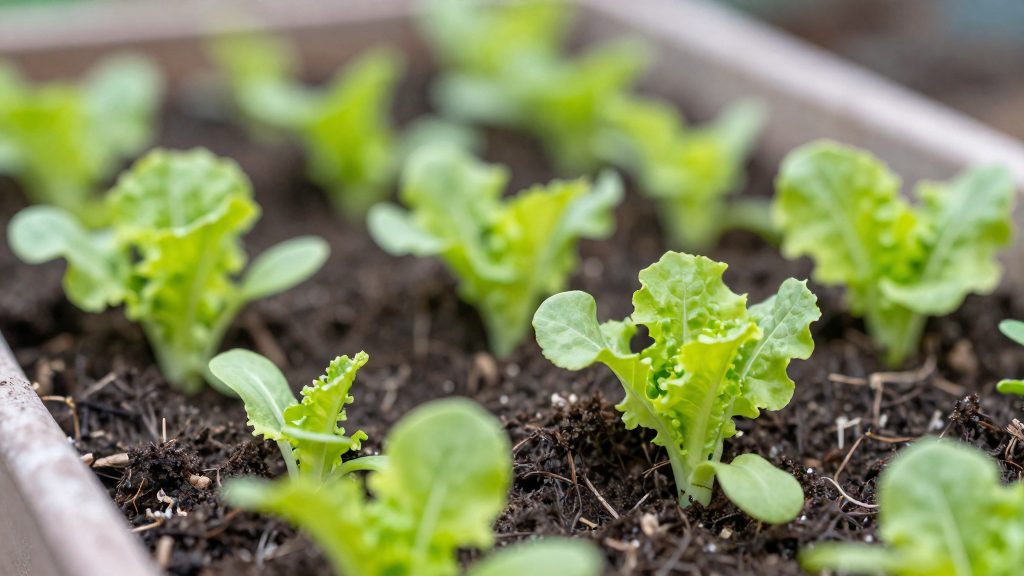
Lettuce copes with summer heat when its roots stay cool and its leaves are shielded from the hottest afternoon sun. According to Harvest to Table (2025), afternoon shade, deep and consistent watering, and thick mulch are the three main measures for hot weather, and harvesting in the morning helps as well.
Shade
- Use shade cloth rated at 30–60%, positioned so plants receive morning sun and afternoon shade, as recommended by Garden Betty (Linda Ly, 2011).
- Loose-leaf types, including butterhead, green leaf, red leaf and Batavian, are generally more heat-resistant and slower to bolt than head-forming types. They are a safer choice for exposed beds in summer.
- Among the options named by Harvest to Table (2025), the romaine ‘Jericho’, bred in Israel for desert climates, is described as slow to bolt, and the Batavian ‘Muir’ as among the most heat-tolerant.
Mulch and soil temperature
Mulch thickly to keep the root zone cool. Temperature also affects germination, which is a common problem when sowing in summer:
| Condition | Effect on lettuce |
|---|---|
| Soil above about 80°F (27°C) | Seed goes dormant (thermo-inhibition), according to Garden Betty (2011) |
| About 68°F (20°C) | Best germination temperature, according to Garden Betty (2011) |
Sowing during cooler periods, or in a cooler spot, gives seed a better chance to germinate.
Watering
- Water deeply and consistently. Irregular watering stresses the plant, and stress encourages bolting.
- Combine watering with mulch, since the mulch helps keep the soil, and therefore the roots, cooler between irrigations.
Harvest and sowing rhythm
- Harvest in the morning, when temperatures are lower.
- Harvest often. Letting leaves grow large signals the plant to bolt, according to Garden Betty (2011).
- Sow small batches about every two weeks, so you always have young plants coming on as older ones decline in heat, as described by Harvest to Table (2025).
How to germinate lettuce in hot weather
Lettuce seed germinates poorly when the soil is hot, so the main task in hot weather is to keep the seedbed cooler than the air above it. According to Garden Betty (Linda Ly) (2011-07-27), lettuce seed goes dormant through thermo-inhibition when soil is above about 80°F (about 27°C), and germination is best at about 68°F (20°C). Sowing timing, shade, and variety choice all affect whether seed sprouts.
Choose heat-tolerant types
| Variety | Type | Heat characteristic | Source |
|---|---|---|---|
| Jericho | Romaine | Bred in Israel for desert climates; slow to bolt | Harvest to Table (2025) |
| Muir | Batavian | Among the most heat-tolerant options | Harvest to Table (2025) |
Loose-leaf types such as butterhead, green leaf, red leaf, and Batavian are generally more heat-resistant and slower to bolt than head-forming types, according to Garden Betty (Linda Ly) (2011-07-27).
Sowing method
- Sow small batches about every two weeks, so a harvest is always available and no single sowing is lost to heat (Harvest to Table, 2025).
- Check soil temperature before sowing, and shade the seedbed so the soil stays below about 27°C (80°F).
- Keep the seedbed moist but not waterlogged until seedlings emerge.
- Shade the seedbed with 30–60% shade cloth, arranged for morning sun and afternoon shade, as recommended by Garden Betty (Linda Ly) (2011-07-27).
- Shade cloth and mulch are organic options that need no synthetic inputs.
After emergence
Water deeply and consistently, and mulch thickly with an organic material to keep the roots cool (Harvest to Table, 2025). Give the bed afternoon shade during the hottest weeks.
Avoid fertilizing when daytime highs stay at about 85–90°F (29–32°C) or above (Garden Betty (Linda Ly), 2011-07-27). Local conditions in Canada vary by region, so adjust sowing dates to your own climate and frost calendar.
Harvesting and Staggered Sowing
Harvest timing and sowing rhythm matter as much as variety choice in hot weather. Lettuce bolts when heat stresses it, so the aim is to keep plants young and to replace them before the hottest period. Sow in small batches and harvest often, rather than sowing one large bed at once.
Staggered sowing is the core method. According to Harvest to Table (2025), sow small batches about every two weeks, so that a new group of plants reaches harvest as the previous group finishes. Adjust the start and end of the series to your local frost dates. The official sources consulted do not specify exact sowing dates for Canadian regions, so base the schedule on local conditions.
Soil temperature controls germination. According to Garden Betty (Linda Ly) (2011-07-27), lettuce seed goes into thermo-inhibition, a dormancy triggered when the soil is above about 80°F (about 27°C). Germination is best at about 68°F (20°C).
| Condition | Figure from sources | Practical response |
|---|---|---|
| Soil above about 80°F (27°C) | Seed goes dormant (thermo-inhibition) | Sow when the soil is cooler; keep the seedbed shaded and moist |
| Germination temperature | Best at about 68°F (20°C) | Time sowings for cooler periods |
| Daytime highs of about 85–90°F (29–32°C) or above | Do not fertilize (Garden Betty, 2011-07-27) | Skip feeding during the heat; use compost applied before the hot spell as an organic base |
Harvest in the morning, when leaves are cool and crisp. Garden Betty (Linda Ly) (2011-07-27) notes that letting leaves grow large signals the plant to bolt, so picking regularly keeps the crop productive.
Protect the bed during the hottest weeks:
- Provide afternoon shade. Garden Betty (Linda Ly) (2011-07-27) describes 30–60% shade cloth, with morning sun and afternoon shade, as helpful.
- Water deeply and consistently rather than lightly and often, as Harvest to Table (2025) advises.
- Apply a thick mulch to keep the roots cool. An organic mulch such as straw or shredded leaves is a natural alternative to synthetic ground covers.
- Choose loose-leaf types where possible. Garden Betty (Linda Ly) (2011-07-27) notes that loose-leaf types, including Batavian, are generally more heat-resistant and slower to bolt than head-forming types.
Frequently asked questions
Which lettuce varieties resist bolting in hot summers?
Jericho, a romaine bred in Israel for desert climates, is slow to bolt, and Muir, a Batavian, is described as among the most heat-tolerant options, according to Harvest to Table (2025). Loose-leaf types generally handle heat better than head-forming types, according to Garden Betty (Linda Ly) (2011-07-27).
At what soil temperature does lettuce seed stop germinating?
Lettuce seed enters thermo-inhibition when soil rises above about 27°C (80°F), so sowing into hot ground gives poor results. The best germination temperature is about 20°C (68°F), according to Garden Betty (Linda Ly) (2011-07-27).
What organic practices help lettuce stay productive in heat?
Shade cloth rated at 30–60%, set up for morning sun and afternoon shade, along with deep, consistent watering and a thick mulch to keep roots cool, helps prevent bolting (Harvest to Table, 2025). Harvesting in the morning, sowing small batches about every two weeks, and stopping fertilizer once daytime highs reach 29–32°C (85–90°F) also reduce the risk (Garden Betty (Linda Ly), 2011-07-27).