The official sources consulted cover late blight in detail but do not address Alternaria (early blight) in the same way. According to Manitoba Agriculture (2010), copper-based products approved for organic production may be used preventively only where late blight is absent. Once the disease is confirmed in an organic crop, that source states that no effective organic control exists and advises destroying the crop, so prevention and early removal matter most.
Understanding Tomato Late Blight and What the Sources Cover
What the sources establish about late blight
- Preventive use: In Manitoba, where late blight is absent, organic growers may use copper-based products approved for organic production as a preventive measure (Manitoba Agriculture, 2010).
- No organic cure: Once the disease is confirmed in an organic crop, no effective organic control measure exists, and destroying the crop is advised (Manitoba Agriculture, 2010).
Handling infected residues
Infected residues can release spores even after they have been discarded or composted. Manitoba Agriculture (2010) recommends the following steps:
- Place the infected plant material in two plastic bags.
- Leave the sealed bags in the sun so the heat kills the tissue.
- Keep in mind that the spores are microscopic and carried by wind.
Biological products and their limits
Serenade, Sonata and Sporatec are listed by OMRI and labelled against late blight. The University of Delaware and University of Maryland Extension (2012) notes that very few efficacy trials exist for them. Effective use requires spray coverage and short intervals between applications. The author of that extension publication describes organic late blight control as “extremely difficult.”
OMRI is a US listing. It does not confirm registration in Canada or organic approval in other countries, so check local rules before buying.
Gaps in the available information
The official sources consulted do not specify a copper-free preventive practice, resistant tomato cultivars, or spacing, pruning and watering rules. They also do not give equivalent guidance for Alternaria.
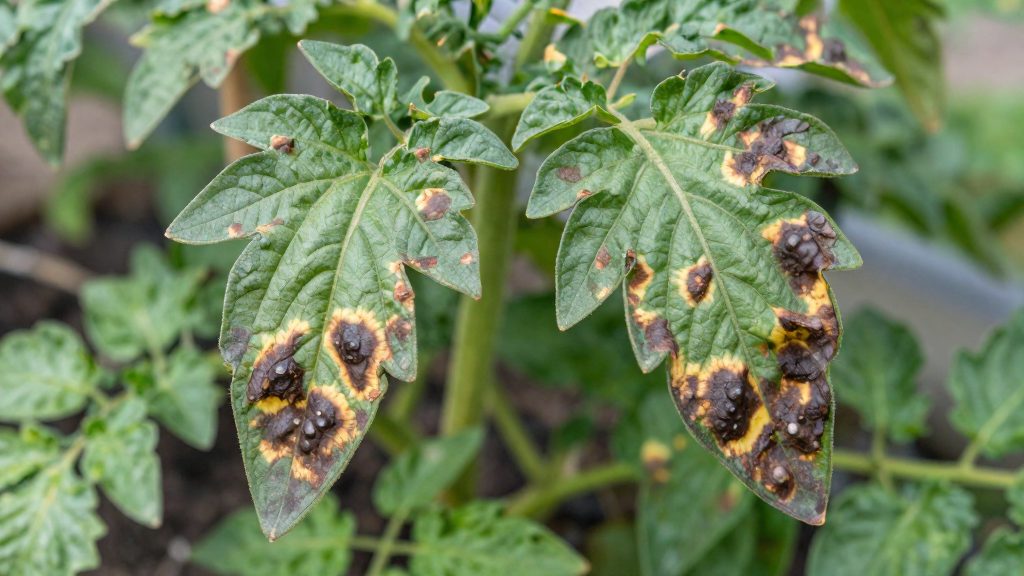
Can late blight be prevented without copper?
The sources consulted name copper-based products as the main preventive option for organic growers. In Manitoba, where late blight is absent, products approved for organic production can be used preventively. The sources consulted do not name a copper-free preventive practice that is equally proven. Once the disease is confirmed in an organic crop, Manitoba Agriculture (2010) states that no effective organic control measure exists and advises destroying the crop. Prevention is therefore the stage where action matters most. However, the sources document only copper-based products as a preventive option, so they do not support a proven copper-free prevention method.
| Option | Source | What the source states | Limitation |
|---|---|---|---|
| Copper-based products approved for organic production | Manitoba Agriculture (2010) | Used preventively where late blight is absent | Preventive use only; no effective organic control is described once the disease is confirmed |
| Serenade, Sonata, Sporatec | University of Delaware / University of Maryland Extension (2012-05-24) | OMRI-listed and labelled against late blight | Very few efficacy trials; they need thorough spray coverage and short intervals |
| Destruction of the infected crop | Manitoba Agriculture (2010) | Advised once the disease is confirmed in an organic crop | Removes the crop rather than controlling the disease |
The biological products listed above are the only copper-free options the sources mention, but they are poorly tested, and the University of Delaware / University of Maryland Extension (2012-05-24) author describes organic late blight control as “extremely difficult”. Good spray coverage matters more than the product name, and short application intervals are required.
Handling infected material
Spore management is part of prevention, because infected residues can release spores even after they have been thrown out or composted. Manitoba Agriculture (2010) recommends:
- Placing infected residues in double plastic bags.
- Leaving the sealed bags in the sun so the heat kills the tissue.
The same source notes that spores are microscopic and carried by wind, so removing residues from the garden limits the risk to neighbouring plants.
What the sources do not cover
The official sources consulted do not specify spacing, pruning or watering practices for late blight, nor do they name resistant cultivars. Choosing a sunny site and watering carefully are general good practices, but the sources consulted do not confirm their effect on late blight specifically.
Choosing Resistant Varieties
The official sources consulted do not specify named resistant tomato cultivars, nor do they rate particular varieties for late blight. Variety choice therefore remains a practical selection task: you check what seed suppliers and local growers report, then plant accordingly. It supports prevention but does not replace the other measures in this guide.
Start with the disease-resistance information on seed packets and in catalogues. Look for an explicit mention of late blight rather than general vigour claims, and treat a vague “disease tolerant” description as unverified until you have confirmed it elsewhere. Check whether a supplier gives clear disease-resistance descriptions and states how the seed was treated.
Local experience is often more reliable than a catalogue. Ask neighbouring organic growers, a local gardening association, or your regional agricultural extension service which tomato varieties have held up in your area and climate, since late blight pressure depends heavily on weather and region.
| Selection step | What to check | Purpose |
|---|---|---|
| Read seed descriptions | Explicit late blight mention, supplier organic status | Avoid relying on unverified claims |
| Ask local growers | Performance in your region and climate | Match varieties to local conditions |
| Keep records | Which varieties were affected each season | Build a reliable list for future years |
| Mix varieties | Several cultivars spread across different beds | Limit losses if one cultivar fails |
Mixing varieties and keeping records are the two habits that pay off over several seasons. A written log of which plants developed symptoms, and when, shows you which cultivars suit your site and which to drop.
Spacing, Pruning and Watering at the Base
The official sources consulted do not specify spacing distances, pruning schedules or watering intervals for tomatoes. They do explain that late blight spreads through airborne spores. The practices below are general gardening habits, and the sources do not confirm any effect on late blight. Treat the advice below as general practice rather than a documented control method.
Spacing and airflow
Plant tomatoes with enough room for air to circulate between neighbouring plants, and avoid packing them into dense clumps. Choose a sunny, open site, because shaded, damp corners keep leaves wet for longer. Staking or caging plants early keeps foliage off the soil and makes it easier to inspect the plants regularly.
Pruning
Remove lower leaves that touch the ground, along with any leaves that are yellowed or spotted. Use clean secateurs and disinfect them between plants. Thinning the inner canopy is commonly advised to improve airflow, but the sources consulted do not confirm an effect on late blight.
Watering at the base
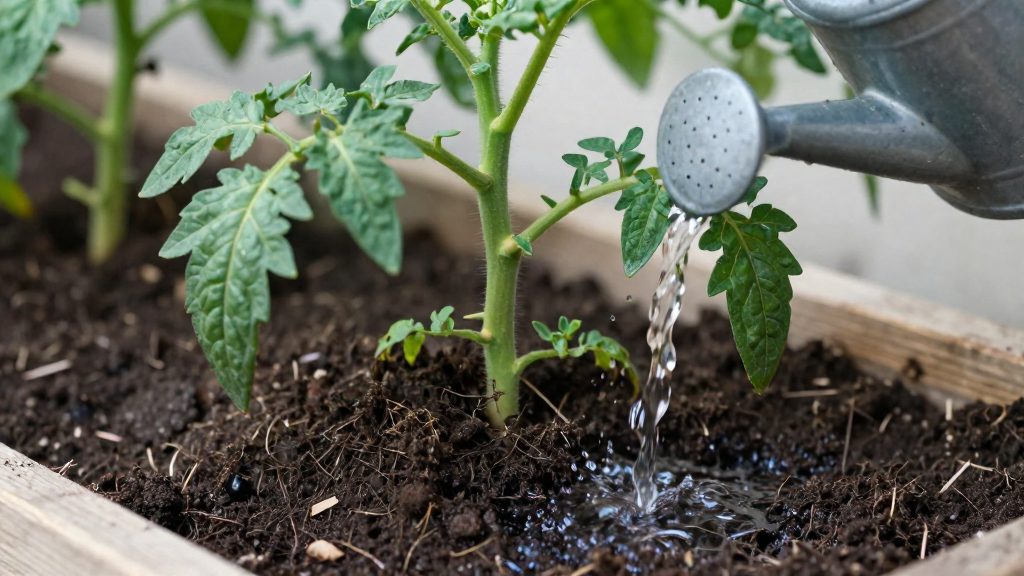
Water directly onto the soil at the base of the plant rather than over the leaves. Water early in the day so foliage dries before evening. Keep the soil evenly moist without letting it become waterlogged, and apply a mulch layer to reduce soil splash onto the lower leaves during rain or watering.
Garden hygiene: plant residues and volunteer plants
Infected plant material is a source of spores, so handling residues after harvest matters as much as the care given during the season. According to Manitoba Agriculture (2010), infected residues can release spores even after they have been thrown out or composted. Hygiene therefore means controlling where infected material goes, not just removing it from the bed.
Handling infected residues
- Do not leave infected debris on the soil surface or in an open compost heap.
- Place infected material in double plastic bags, then leave the sealed bags in the sun so the heat kills the tissue (Manitoba Agriculture, 2010).
- Remove debris from the bed promptly. The spores are microscopic and carried by wind (Manitoba Agriculture, 2010), so keeping residues out of the growing area reduces the chance of spread to nearby plants.
Managing volunteer plants
Volunteer plants are seedlings that sprout from residues or fallen fruit left in the ground. Pull them out as soon as they appear, bag them using the same method, and keep them out of the compost. The official sources consulted do not specify a removal schedule for volunteers.
Decision points
| Situation | Action | Source |
|---|---|---|
| Infected residues at end of season | Double-bag and expose to sun before disposal | Manitoba Agriculture (2010) |
| Volunteer seedlings in the bed | Pull, bag, and keep out of compost | Derived from the spore risk above |
| Disease confirmed in an organic crop | Destroy the crop | Manitoba Agriculture (2010) |
When disease is confirmed in an organic crop, Manitoba Agriculture (2010) states that no effective organic control measure exists and advises destroying the crop. Hygiene practices reduce the spore load, but they do not replace prevention.
Are Biofungicides Effective?
Biofungicides such as Serenade, Sonata and Sporatec are the products most often proposed as organic options against late blight. All three are listed by the Organic Materials Review Institute (OMRI) and labelled against late blight. Their efficacy is poorly documented, however. According to University of Delaware / University of Maryland Extension (2012-05-24), very few efficacy trials exist for them, and the author describes organic late blight control as “extremely difficult.”
OMRI is a United States listing. It does not, by itself, confirm registration or organic permission in Canada, so check local approvals before buying.
What these products need to work
- Full spray coverage: the foliage must be thoroughly wetted, since the products depend on contact with the plant surface.
- Short application intervals: repeat applications at intervals shorter than those for routine treatments. The official sources consulted do not specify the exact interval.
Limits of organic control
- In Manitoba, where late blight is absent, organic growers may use copper-based products approved for organic production as a preventive measure, according to Manitoba Agriculture (2010). The official sources consulted name no copper-free preventive practice.
- Once the disease is confirmed in an organic crop, Manitoba Agriculture (2010) states that no effective organic control measure exists and advises destroying the crop.
Handling infected residues
Spores can persist after infected material is discarded or composted, and they are microscopic and carried by wind. Manitoba Agriculture (2010) recommends:
- Placing infected residues in double plastic bags.
- Leaving the sealed bags in the sun so that the heat kills the tissue.
The official sources consulted do not name resistant cultivars or specific spacing, pruning or watering measures for late blight, so these are not covered here.
What to do if late blight is confirmed
Once late blight is confirmed in an organic tomato crop, the official guidance consulted does not identify an effective organic control measure. According to Manitoba Agriculture (2010), the crop should be destroyed in this case. The same source mentions copper-based products approved for organic production only as a preventive measure in areas where late blight is absent, so they are not a rescue treatment once symptoms appear.
Step 1: Decide early to remove the crop
Plan to destroy the crop rather than try to save infected plants. Infected residues can release spores even after they have been thrown out or composted, and the spores are microscopic and carried by wind (Manitoba Agriculture, 2010). Removing the affected material promptly reduces the risk of spreading the disease to neighbouring plants.
Step 2: Handle the residues safely
- Place infected plant material in a double plastic bag.
- Leave the sealed bags in the sun so the heat kills the tissue, as recommended by Manitoba Agriculture (2010).
- Keep the bags out of the compost heap. The sources consulted do not say that the material is safe to compost after sun treatment.
Step 3: Understand the limits of organic products
Three products are cited as organic options against late blight: Serenade, Sonata and Sporatec. They are OMRI-listed and labelled against late blight. However, very few efficacy trials exist for them. According to University of Delaware / University of Maryland Extension (2012), they need good spray coverage and short application intervals, and the author describes organic late blight control as “extremely difficult”.
Check the following before using any of these products:
- Spores keep spreading once the disease is present, so product use does not replace removal.
- OMRI is a US listing. It does not confirm registration in Canada or permission for organic use in other countries.
- The official sources consulted do not specify application rates or timing for these products.
Frequently asked questions
Can I prevent tomato late blight without copper?
The official sources consulted do not document a proven copper-free preventive method. Serenade, Sonata and Sporatec are OMRI-listed and labelled against late blight, but the University of Delaware and University of Maryland Extension (2012) notes that very few efficacy trials exist, so treat them as unproven options. OMRI is a US listing, so confirm Canadian registration separately before use.
What should I do with tomato plants already showing blight?
Manitoba Agriculture (2010) advises destroying an organic crop once late blight is confirmed, because no effective organic control is documented at that stage. Seal the infected material in two plastic bags and leave it in the sun to heat the tissue. The sources do not say that treated material is safe to compost, and spores can still be released after composting.
Do resistant varieties or spacing stop blight from spreading?
The sources consulted name no resistant tomato cultivars and set no spacing, pruning or watering rules for late blight. Thinning the canopy and keeping foliage dry are common gardening habits that improve airflow, but no source confirms that they limit late blight. Before buying seed, check whether the supplier explicitly mentions late blight resistance in the variety description.