Find your average first frost date and the frost chance on it. Purdue Extension (2018) reports a 50% chance of frost on the average first fall frost date, so that date is a midpoint, not a safe cutoff. Two weeks earlier, the chance of a 32°F (0°C) freeze falls to 10%. Planning around the average date therefore leaves a real risk of losing late plantings, and planning from local frost records gives a more accurate deadline.
Why count back from your first frost date?
Your first frost date anchors every fall schedule because frost, not the number of days on the calendar, ends the growing season. Cornell Cooperative Extension (Warren County) works from a first killing frost date when setting its fall planting windows, which shows how the frost date becomes the reference point for all later calculations.
What a 50% frost chance on the average date means
The average first frost date is a statistical midpoint. When the chance of frost on that date is 50%, frost has already occurred by then in roughly half of years. Any crop sown to mature on or just before the average date has about even odds of being caught by frost.
Why two weeks before the average date is safer
Frost risk changes quickly in the weeks before the average date.
| Timing relative to average first frost date | Chance of a 32°F (0°C) freeze |
|---|---|
| On the average first frost date | 50% |
| Two weeks before the average date | 10% |
Using local frost records instead of national averages
National or regional averages smooth over differences between nearby sites, so they may place your frost date too early or too late. A more reliable approach uses frost records from the nearest weather station with a long history of observations.
- Find the station closest to your garden, preferably one with several decades of records.
- Note the date of the first autumn frost in each year, then look at the typical range across years.
- Compare your results with the local Cooperative Extension office’s recommendations.
- Adjust for your site: low-lying ground and cold air pockets often frost earlier than slopes or areas near buildings.
Local records give you a date you can plan around, and they show how much the timing varies from one year to the next.
How do you calculate fall planting dates?
The calculation works backward from your first fall frost. Find the average first frost date for your area, then count back by the time a crop needs to mature and germinate. Purdue Extension (2018) describes this as looking up the cultivar’s days to maturity and counting backward from the frost date by that number of days. Cornell Cooperative Extension (Warren County, undated) adds germination time to that count.
Counting-back formula:
- Last sowing date = first frost date minus (days to maturity + germination time)
- Days to maturity: read the figure on the seed packet for the specific cultivar
- Germination time: the number of days the seed needs to emerge, added to the count
Worked example (Cornell, first killing frost about October 9):
| Step | Action | Result |
|---|---|---|
| 1 | Set the first killing frost date | About October 9 |
| 2 | Subtract days to maturity plus germination time for each crop | Last sowing date for that crop |
| 3 | Check the resulting window | Fall plantings run from mid-July to mid-September |
Cornell’s example therefore gives a last fall sowing around mid-September for crops that need the full count. Earlier sowings in July leave more margin if the crop is slow to mature.
Choosing fast-maturing cultivars:
When the calculated last sowing date has already passed, select cultivars with fewer days to maturity. Purdue Extension (2018) notes that fast-maturing cultivars improve the odds of harvesting before a killing frost. Compare the days-to-maturity figures across seed packets before you buy.
Which vegetables tolerate frost?
Vegetables sort into three frost tolerance groups, and that grouping shows how late in autumn each crop can stay in the ground. Purdue Extension (2018) classes common crops as tender, semi-hardy or hardy. Knowing the group tells you which beds need attention first when a cold night is forecast.
Tender, semi-hardy and hardy groups
| Group | Crops listed by Purdue Extension (2018) |
|---|---|
| Tender | Beans, cucumber, pepper, squash, tomato |
| Semi-hardy | Beets, carrot, lettuce, chard, potato |
| Hardy | Broccoli, Brussels sprouts, cabbage, kale, onion, peas, radish, spinach, turnip |
Tender crops are the first to be lost to frost, so harvest them or cover them before the first cold night. Semi-hardy crops sit between the two extremes and should be watched closely as temperatures fall. Hardy crops are the best choice for late-season sowing and planting.
Documented frost and freeze limits
Cornell Cooperative Extension, Warren County (undated), gives specific temperature thresholds for several hardy crops:
- Peas and cauliflower survive frosts at 28–32°F.
- Broccoli, cabbage, carrots, kale, lettuce and spinach survive hard freezes at 25–28°F.
A frost is a light cold event, while a hard freeze is colder. The difference matters because a crop that survives a light frost may still be lost when temperatures drop further. The official sources consulted do not specify how long these temperatures can be held before damage occurs.
Practical protection without chemicals
- Cover tender beds with non-chemical protection such as fleece or cloches on cold nights, and remove covers on mild days.
- Place fall beds in the sunniest spot available, since a sheltered, sunny bed stays warmer on cold nights.
- Water in the morning and keep the soil moist but not waterlogged, because soggy beds lose heat more quickly.
How do you choose fall crops by frost date and cold tolerance?
Fall sowing works by counting back from your local first frost date, not by following a fixed monthly calendar. The sources consulted give a frost-based method and frost tolerance figures for each crop, but they do not give complete month-by-month sowing windows for every vegetable. For each crop, subtract its days to maturity from the average first frost date, then check whether it tolerates the cold it will meet while growing. Leafy greens, brassica seedlings and radishes can all be planted in this way, and the sections below show how.
Working backward from the frost date
- Find your average first frost date for your area from a local extension service or weather record.
- Purdue Extension (2018) recommends fast-maturing cultivars, since they improve the odds of harvest before a killing frost.
Frost tolerance by crop group
Crops fall into three groups by how much cold they handle, according to Purdue Extension (2018). This table sorts the crops mentioned in this section.
| Frost tolerance group | Crops named in the sources | Practical implication |
|---|---|---|
| Tender | Beans, cucumber, pepper, squash, tomato | Must finish before the first killing frost |
| Semi-hardy | Beets, carrot, lettuce, chard, potato | Can take light frost; sow with a shorter margin |
| Hardy | Broccoli, Brussels sprouts, cabbage, kale, onion, peas, radish, spinach, turnip | Best candidates for late-season sowing |
Leafy greens: sowing in succession
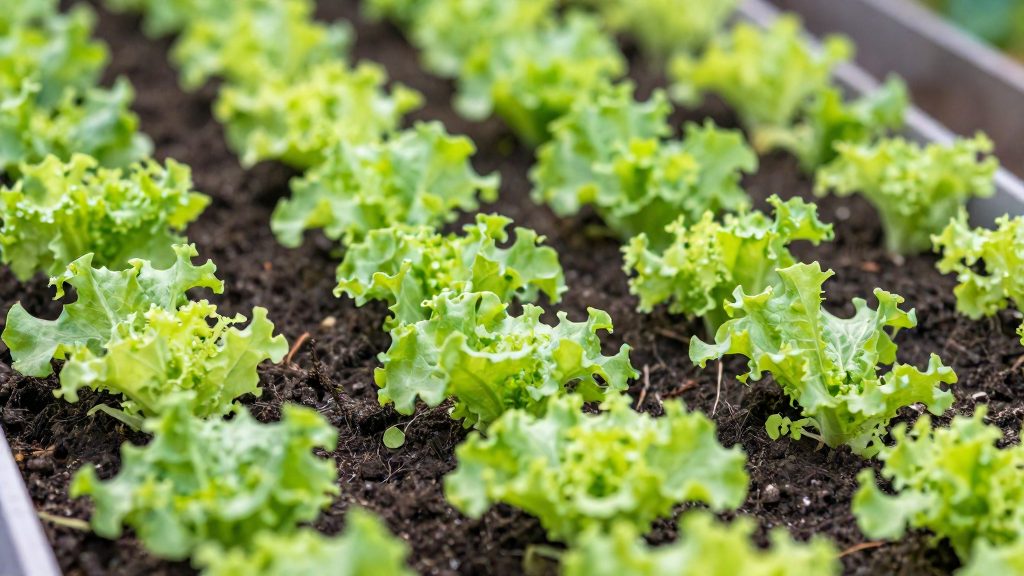
Leafy greens are the easiest fall crop to manage. Each batch should be counted back from the frost date using its own days to maturity, so the last batches go in early enough to mature.
- Lettuce, chard and spinach suit successive sowings, and kale is in the hardy group.
- Spread sowings across the calendar and keep a written log of each batch’s sowing date.
- Stop sowing once the calculated date for a crop has passed, even if the weather is still mild.
Brassica seedlings from late summer
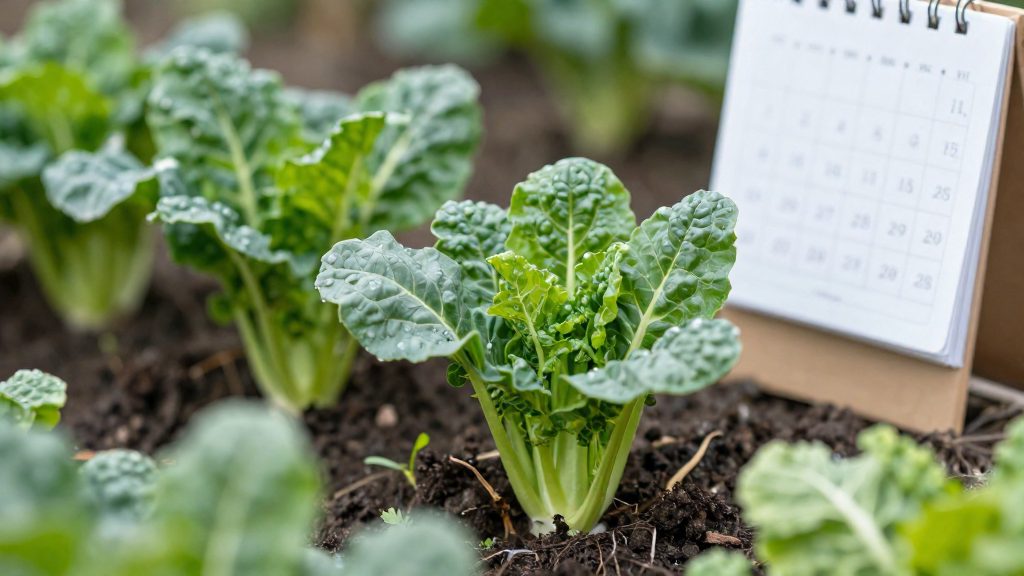
Brassicas such as broccoli, cabbage, Brussels sprouts and kale belong to the hardy group, so they can be started late and still tolerate cold. The sources consulted do not specify transplant dates for these crops. Allow time for the seedlings to establish before cold weather arrives.
Root crops and radish sowing windows
Radish is in the hardy group, so it suits the latest sowings, while carrot and beet are semi-hardy and need an earlier last sowing date. The sources consulted do not give separate month-by-month windows for root crops. Count backward from the frost date for each cultivar, and favour radish for the latest sowings because it is in the hardy group.
How does succession planting extend the harvest?
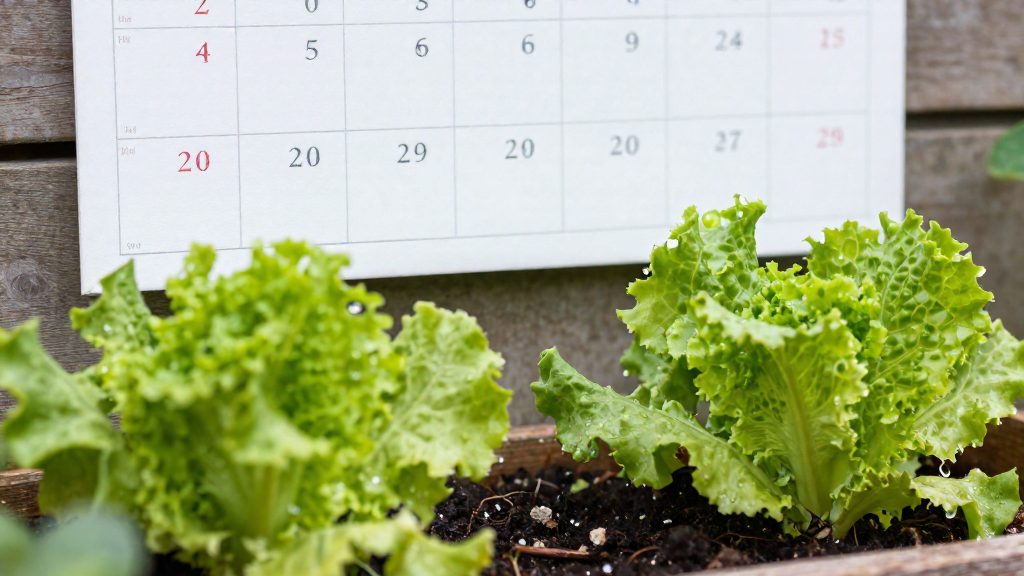
Succession planting spreads one crop’s harvest across several weeks by sowing small batches at set intervals rather than one large sowing. According to Cornell Cooperative Extension, Warren County (undated), sowing small batches of a crop such as lettuce every two to three weeks keeps harvests coming until frost. Each batch matures at a different time, so the bed is never harvested all at once and fresh produce stays available. In autumn, the limiting factor is the first killing frost, so the last sowing has to be timed backward from that date.
Choosing staggered sowing intervals for each crop
Start from your average first frost date, not from the calendar.
Repeat the sowing at a staggered sowing interval of two to three weeks for lettuce, per Cornell.
Managing overlap and gaps between plantings
Overlap happens when a new batch is sown before the previous one is finished. The official sources consulted do not specify a set overlap length. The practical goal is for the next batch to be established before the current one is exhausted, using the two-to-three-week rhythm as the reference.
A gap appears when a sowing is skipped or delayed. The harvest then stops until the next batch matures. Check the timing of each batch against the frost date, because a late sowing may not mature before the first killing frost.
Replacing harvested beds with successor plantings
When a bed is cleared, plant the successor crop immediately and verify it with the count-back method. The successor’s frost tolerance group shows whether it can tolerate the cooler weather that follows.
Which organic practices help a fall garden?
Three organic practices protect soil and crops as days shorten and temperatures fall: organic mulch, row covers, and cold frames. Each one slows heat loss from the soil or shields plants from frost, and each can be made from materials most gardeners already have.
Organic mulch for soil warmth and moisture
Spread a layer of straw, dry leaves, or finished compost over the soil between plants. The layer holds in the warmth the soil collected during the day, reduces moisture loss, and keeps the root zone more even in temperature. Keep the mulch a few inches away from stems and crowns, since material packed against the stem can encourage rot in damp, cool weather. Compost also feeds the soil over time, which makes it useful on both counts.
Row covers and cold frames for frost protection
- Row covers are lightweight fabric sheets laid directly over the crop or supported on hoops. Anchor the edges with soil or stones so that cold air cannot slip underneath. Lift the cover on mild days so that plants get light and air, and close it again before the evening drop.
- Cold frames are low, enclosed boxes with a transparent lid, placed on a sunny spot. They trap daytime heat around the plants, and they are most effective for hardening off seedlings or extending the harvest of leafy greens. Open the lid on sunny days to prevent overheating and excess humidity, which can promote fungal problems.
Organic alternatives to synthetic fertilizers and pesticides
- Fertilizers: Compost and well-rotted manure feed the soil biology, which then releases nutrients to plants gradually. Plant-based organic meals are another option for crops that need a quicker supply of nitrogen.
- Pest control: Row covers exclude many insects physically, which often removes the need for treatments. Hand removal of pests and checking the undersides of leaves are low-cost habits. If a treatment is needed, choose a biological product approved for organic use and follow the label. The official sources consulted do not specify which products are approved for organic use where you live, so check with your state Cooperative Extension office or your organic certifier.
When should you plant garlic?
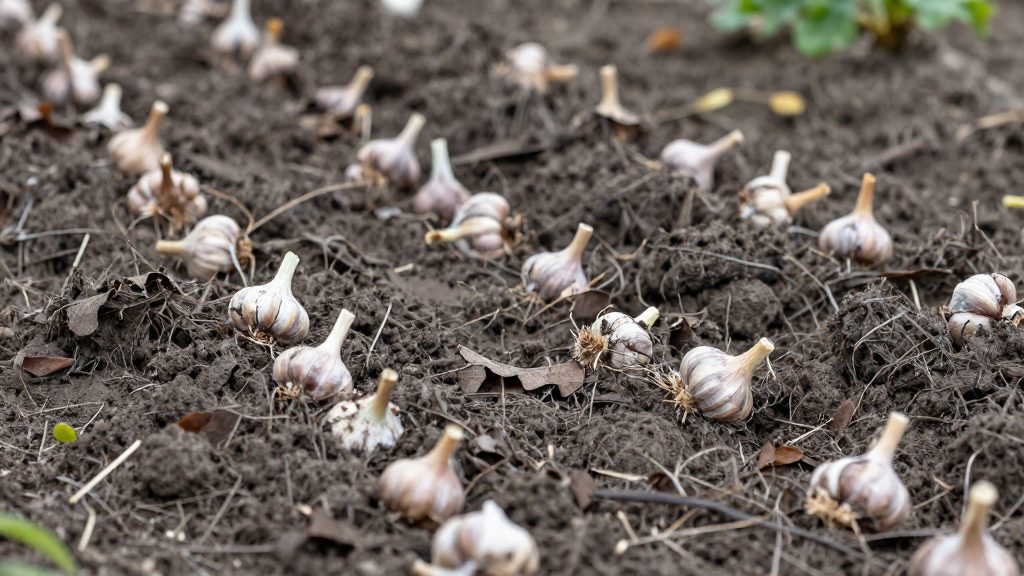
For fall planting, the timing depends on the first killing frost in your area, not on the calendar date alone. In the Cornell Cooperative Extension (Warren County) example, the first killing frost falls around October 9, and garlic goes into the ground around October 2–9, just before that frost. Planting in this window lets cloves establish roots before the ground freezes, without shoots emerging early and being damaged by cold before winter.
| Timing point | Cornell Cooperative Extension example |
|---|---|
| First killing frost | About October 9 |
| Garlic planting window | Around October 2–9 |
To apply this logic locally, find your average first killing frost date and plant garlic in the days before it, adjusting for your region’s climate.
Choosing cloves and seed garlic
- Select large, firm, blemish-free cloves from your best bulbs.
- Buy seed garlic from growers who label their stock as organic, rather than using market garlic of unknown origin.
- Discard any cloves that are soft, moldy, or damaged before planting.
Planting depth and spacing
Plant each clove pointed end up and cover it with soil. The official sources consulted do not specify exact depth or spacing figures, so check a regional extension guide for your soil type before planting.
Frequently asked questions
How do I work out my last sowing date for a fall crop?
Start from your average first frost date, then subtract the crop’s days to maturity from the seed packet, plus the time needed for germination. According to Cornell Cooperative Extension (Warren County), this count-back method gives the latest workable sowing date for each crop.
Which vegetables can I still sow late in the season?
Hardy crops such as broccoli, cabbage, kale, spinach, peas and radish handle the cold best, so they suit the final sowings. Tender crops like beans, cucumber, pepper, squash and tomato should be sown much earlier, because they stop growing at the first frost, according to Purdue Extension (2018).
Is the average first frost date a safe deadline for planting?
No. On that date, the chance of frost is about 50%, so it works as a midpoint rather than a cutoff. Two weeks earlier, the chance of a 32°F (0°C) freeze drops to about 10%, which is why many growers aim to finish maturing crops before that date, according to Purdue Extension (2018).