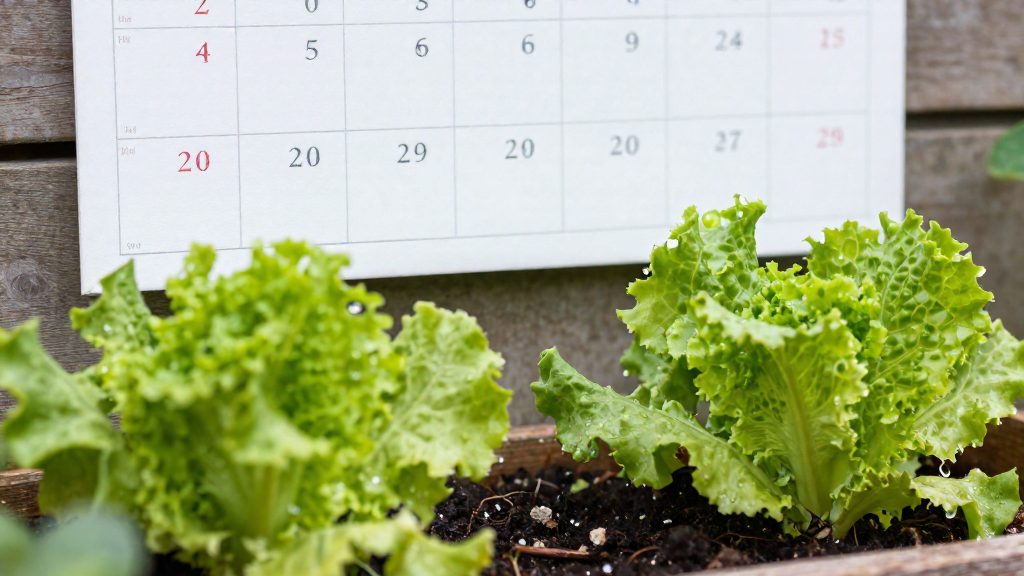
Hardiness zones describe winter cold, not the calendar for sowing or planting. The USDA Plant Hardiness Zone Map is based on the average annual extreme minimum winter temperature, and it indicates which perennials are likely to survive at a site. Vegetable planting dates depend on the average last spring frost and on whether the soil is warm enough, so a gardener needs a local date as well as a zone.
Why USDA zones are only a starting point
What the zone measures
According to USDA Agricultural Research Service (2023), zones are divided into 10°F bands, and each band is split into 5°F half zones. The map is presented as a guide to which perennials are likely to survive at a given site. A zone therefore answers a winter-survival question, such as whether a perennial herb or shrub is likely to come back after cold weather.
Why it does not set planting dates
The same USDA source states that the map does not address frost dates or planting times. Vegetable timing is set by a different reference point: the average last spring frost. Two gardens in the same zone can have very different safe planting windows if their spring frost dates differ.
Timing rules that depend on the last frost
According to Utah State University Extension, planting is organised around the average last frost and the frost tolerance of each crop group:
| Timing | Crop group (example from the source) |
|---|---|
| About two weeks before the average last frost | Group B semi-hardy crops, such as lettuce |
| At the average last frost | Group C crops |
| About two weeks after the average last frost, once the soil is warm | Group D very tender crops, such as tomatoes and peppers |
| As soon as the soil dries out in spring | Hardy peas |
Local variation within one region
Average last-frost dates differ widely between nearby places. According to Utah State University Extension, on the Wasatch Front they range from April 17 (Bountiful–Val Verda) to May 21 (Provo Airport). Virginia Cooperative Extension (Virginia Tech) (2009) recommends finding the average date of the last killing frost for your area on a map, then using it to adjust the recommended planting dates chart. The same guide warns that actual dates vary with local conditions and yearly temperature fluctuations.
How to set local planting dates
- Find the average last spring frost date for your nearest weather station or regional extension guide.
- Use your zone only to decide which perennials are likely to survive winter.
- Sow or transplant warm-season crops after the last frost and once the soil has warmed.
- Sow hardy crops such as peas as soon as the soil is workable in spring.
- Keep a simple garden log of frost and planting dates, and adjust the timing from one season to the next.
How do you find your last frost date?
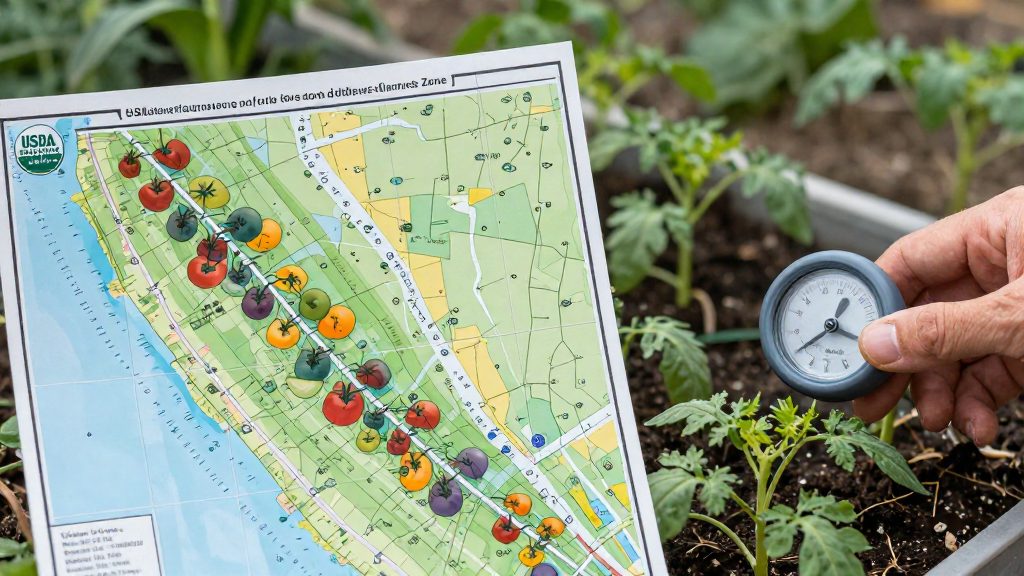
The average last-frost date is the baseline for a local planting calendar. You find it on a frost-date map or in local weather records, not from the hardiness zone. The USDA Plant Hardiness Zone Map is based on the average annual extreme minimum winter temperature and does not address frost dates or planting times, according to USDA Agricultural Research Service (2023). Virginia Cooperative Extension (2009) describes the method directly: find your area on a map showing the average date of the last killing frost, then use that date to adjust the recommended planting dates chart.
Using frost-date maps or local records
- Open a frost-date map from a regional extension service, or pull the historical frost data for the nearest weather station.
- Choose the reference point closest to your garden, not only the nearest large city.
- Note the average date of the last spring frost for that point.
- Write the date down as your baseline for the season.
Wide variation between cities in the same region
Average last-frost dates differ considerably, even between cities in the same area. Utah State University Extension reports that on the Wasatch Front they range from April 17 at Bountiful–Val Verda to May 21 at Provo Airport.
| Location (Wasatch Front, Utah) | Average last-frost date |
|---|---|
| Bountiful–Val Verda | April 17 |
| Provo Airport | May 21 |
Gardeners in these two places would plant more than a month apart. Copying a calendar from a neighboring town can therefore give the wrong timing, so planting dates should be set locally.
Adjusting the planting chart to your local frost date
Planting dates are tied to the average last spring frost, not to the hardiness zone, according to Utah State University Extension. Once you have your local date, apply it to the chart you use:
- Locate the chart’s reference frost date and the dates it lists for each crop.
- Shift those dates by the difference between the chart’s reference and your local average.
- Keep the adjusted calendar on paper or in a garden notebook so you can compare it with the actual weather each year.
Cool-season vs warm-season planting windows
Planting windows are set by the last frost date in spring, not by the USDA hardiness zone. The USDA Plant Hardiness Zone Map is based on average annual extreme minimum winter temperature and serves as a guide to which perennials are likely to survive at a site. It does not address frost dates or planting times (USDA Agricultural Research Service, 2023). To schedule sowings, work from the average last spring frost for your own area and place each crop group relative to that date.
Utah State University Extension uses three reference points for its planting groups:
| Group | Timing relative to average last frost | Examples given in the source |
|---|---|---|
| Group B, semi-hardy | About two weeks before the last frost | Lettuce |
| Group C | At the average last frost | Not specified by the source |
| Group D, very tender | About two weeks after the last frost, once the soil is warm | Tomatoes, peppers |
Group B crops tolerate light cold, so they go in early, while Group D crops need warm soil and wait until frost risk has passed. Group C crops are sown on the average last frost date itself. The official sources consulted do not list which crops belong to Group C.
Hardy peas are an exception to the frost-based sequence. Utah State advises sowing them as soon as the soil dries out in spring, without tying them to the last frost date.
Why the same calendar differs by location
Average last-frost dates vary widely within a single region. On Utah’s Wasatch Front, Utah State reports averages ranging from April 17 at Bountiful–Val Verda to May 21 at Provo Airport. A gardener in one town could therefore be sowing Group B crops while a neighbour a short distance away is still waiting.
Virginia Cooperative Extension (2009) recommends finding the average date of the last killing frost for your area on a map, then using that date to adjust the recommended planting chart. The guide notes that actual dates depend on local conditions and on yearly temperature fluctuations, so a published date is a starting point rather than a guarantee.
When should you start seeds indoors?
Indoor sowing is timed backward from the date you plan to move seedlings outdoors, and that date depends on your local average last spring frost, not on your USDA zone. The USDA Plant Hardiness Zone Map is based on the average annual extreme minimum winter temperature, and it does not address frost dates or planting times (USDA Agricultural Research Service, 2023). Your zone tells you which perennials are likely to survive at a site. It does not tell you when to sow.
Counting backward from the target transplant date
- Find your local last spring frost. Virginia Cooperative Extension (Virginia Tech, 2009) advises locating the average date of the last killing frost for your area on a map, then using it to adjust the recommended planting-date chart. The guide notes that actual dates vary with local conditions and yearly temperature fluctuations.
- Sort your crops by frost tolerance. Utah State University Extension groups crops by how they relate to the last frost:
| Crop group | Example crops | Timing relative to the average last frost |
|---|---|---|
| Group B, semi-hardy | Lettuce | About two weeks before |
| Group C | Not specified by the source | At the average last frost |
| Group D, very tender | Tomatoes, peppers | About two weeks after, once the soil is warm |
- Set the transplant date for each crop. Hardy peas, according to Utah State University Extension, go in as soon as the soil dries out in spring.
- Subtract the indoor growing period. Each seed packet or regional guide gives the number of weeks a crop needs indoors. Count that many weeks back from the transplant date to find your sowing date. The official sources consulted do not give a general indoor period for every crop, so the packet or a local extension guide remains the reference for each variety.
Hardening off seedlings before outdoor transplanting
Hardening off gradually acclimates indoor-grown seedlings to outdoor light, wind, and temperature changes. Move them outside for short periods in a sheltered, partly shaded spot away from strong wind. Lengthen the time outdoors and increase their sun exposure over several days. Bring them indoors on cold nights. Plants moved directly from a warm room into full sun and wind often suffer leaf damage. Transplant only once the seedlings tolerate a full day outdoors.
Container, light, and seedling spacing basics
- Containers: use clean trays or pots with drainage holes so the roots do not sit in standing water. Water from below or gently from above, keeping the mix moist without waterlogging it.
- Light: seedlings stretch and weaken when light is weak. Place them where they receive the strongest light available indoors, and rotate trays so growth stays even.
- Spacing: thin or space seedlings so their leaves do not overlap. Crowded seedlings compete for light and air, which encourages weak stems.
How to time early crops in cold-winter areas using your local last frost
In cold zones, spring soil conditions and local frost history set the earliest sowing window, so the crops below are the ones to start first. According to Utah State University Extension, hardy peas go in as soon as the soil dries out in spring. Other crops are timed from the average last spring frost, not from the zone number alone, so the local frost date determines when the remaining groups can go in.
| Crop group | Sowing trigger | Basis in consulted sources |
|---|---|---|
| Hardy peas | Soil dries out in spring | Utah State University Extension |
| Brassicas and leafy greens | Local last-frost date, then variety description | Official sources consulted do not specify tolerance thresholds |
| Root crops | Local last-frost date, then days to maturity on the seed packet | Official sources consulted do not specify root crop timing |
Hardy peas
- Sow once the soil is dry enough to work. The trigger is the soil condition, not a fixed calendar date.
- Choose a sunny site and keep the seedbed moist without leaving it waterlogged.
- Cover young plants with fine mesh row cover, an organic option, if a late cold snap is forecast.
Cold-tolerant brassicas and leafy greens
The official sources consulted do not specify cold-tolerance levels for individual brassicas or leafy greens. Compare the hardiness notes in each variety description before choosing what to sow early. Confirm your local last-frost date first, then use it with the variety description and the seed packet to decide how early to sow. Utah State University Extension places semi-hardy crops such as lettuce about two weeks before the average last frost.
Root crops and short-season varieties
For short seasons, favour short-season varieties whose maturity period fits between your planting date and the first autumn frost. Read the days-to-maturity figure on the seed packet and count back from your local frost-free window. This matters most when the spring start is late.
Why the local frost date matters
On the Wasatch Front, average last-frost dates range from April 17 at Bountiful–Val Verda to May 21 at Provo Airport, a gap of more than a month, according to Utah State University Extension. Virginia Cooperative Extension (2009) advises readers to locate their area’s average date of the last killing frost on a map and adjust the planting chart accordingly.
Warm-season crops and heat management in milder-winter regions (zones 6–10)
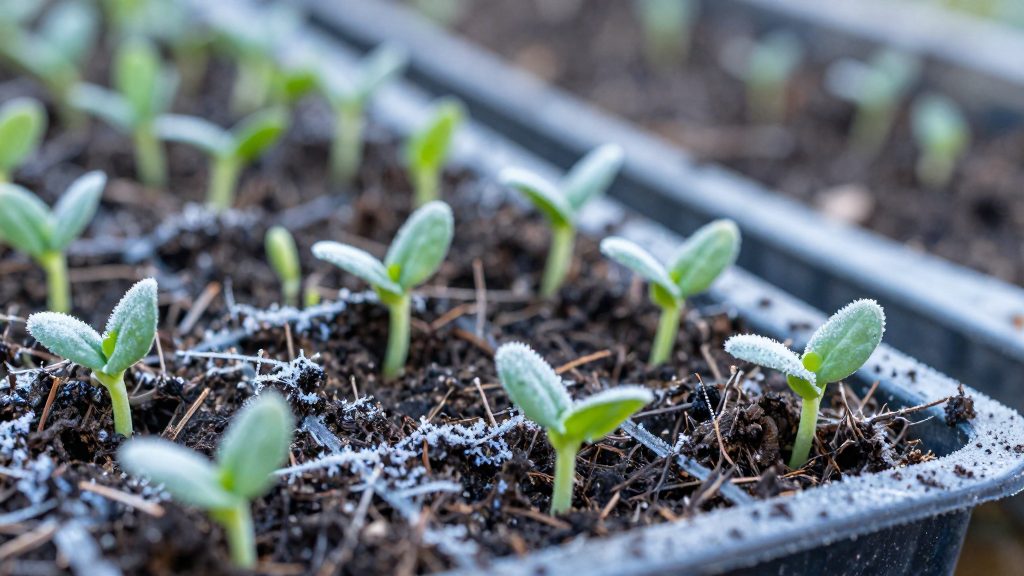
The USDA Plant Hardiness Zone Map is based on average annual extreme minimum winter temperatures, so zones 6 to 10 cover progressively milder winters than zones 3 to 5. They do not describe summer heat or planting dates. According to USDA Agricultural Research Service (2023), the map is a guide to which perennials are likely to survive at a site and does not address frost dates or planting times. In these zones, the timing of warm-season crops depends mainly on local spring and summer conditions, so choose sowing dates for your own site.
Warm-season crops for hot summer gardens
Okra, melons and cucumbers are the main warm-season options covered here. They are sown or transplanted once the soil has warmed and spring frost risk has passed. Plant them in the sunniest part of the garden and water at the base so the soil stays moist without becoming waterlogged.
| Crop | Season type | Practical note for hot gardens |
|---|---|---|
| Okra | Warm season | Sow in warm soil; it is grown for pods picked while young |
| Melons | Warm season | Give the vines room to spread and keep the soil evenly moist |
| Cucumbers | Warm season | Water regularly during heat spells to keep fruit production steady |
Bolting risk in cool crops during heat
Many leafy and cool-season crops, such as lettuce, bolt when hot weather arrives. Bolting means the plant sends up a flowering stem early, and the leaves become bitter and less useful. The main levers are timing and shade:
- Sow cool crops early in spring or in the cooler weeks of autumn, not at the height of summer.
- Shade the bed with a cloth or with taller plants during the hottest part of the day.
- Mulch and water consistently so the root zone does not dry out during heat spells.
Choosing heat-tolerant varieties
Look for varieties described as heat-tolerant or slow to bolt in seed catalogues, and compare their descriptions with your local conditions. Seed suppliers and local extension services are the most reliable sources for variety performance in your area. The official sources consulted do not specify individual variety recommendations for zones 6 to 10.
Do fall and winter crops follow zones too?
Not directly. The USDA Plant Hardiness Zone Map is based on the average annual extreme minimum winter temperature, and it is meant as a guide to which perennials are likely to survive at a site. According to USDA Agricultural Research Service (2023), the map does not address frost dates or planting times. Fall and winter sowing therefore depends on the local frost calendar, with the hardiness zone giving only a rough sense of how cold winters get.
| Reference point | What it describes | How it helps |
|---|---|---|
| USDA hardiness zone | Average annual extreme minimum winter temperature | Shows how cold a site’s winters tend to be |
| Average last spring frost | Local date for the end of frost risk | Sets spring planting dates (Utah State University Extension) |
| Average first fall frost | Local date for the start of frost risk | Anchors the count-back for fall sowings |
Fall planting counted back from first frost
Count backward from the first fall frost. Find the average first-frost date for your area, as Virginia Cooperative Extension (Virginia Tech, 2009) recommends for the last spring frost, then work backward through the days to maturity printed on each seed packet. The sowing date is the point where a crop can finish before cold stops growth. Because actual dates vary with local conditions and yearly temperature fluctuations, treat the result as a starting estimate and adjust it after observing your own garden for a season or two.
Overwintering crops under cover or mulch
Mulch and cover protect overwintering beds. A layer of organic mulch or a protective cover slows soil cooling and shields plants from wind and frost. Use natural materials such as straw or dry leaves, and avoid packing them against plant stems. Keep beds well drained, because waterlogged soil damages roots more than cold alone. Water sparingly in winter and avoid soaking the soil.
Mild-winter zones and a longer harvest
Because the hardiness zone reflects average winter minimum temperatures, sites in milder zones generally have warmer winters. That usually means fall sowings can stay productive later into the cold season and overwintering becomes more reliable. Gardeners in these areas can extend harvests, but the official sources consulted do not specify exact extra weeks for any zone, so base your calendar on local frost data rather than zone alone.
Where to find your local extension calendar
Planting calendars are published by land-grant university extension services, which adapt dates to each state’s climate. The USDA hardiness zone map cannot give you sowing dates. According to USDA Agricultural Research Service (2023), the map shows which perennials are likely to survive at a site and does not address frost dates or planting times. For a sowing schedule, use the regional extension publication that is tied to your area’s average last spring frost.
State land-grant university extension websites
Each state’s land-grant university extension service maintains a website with vegetable planting guides. Search the site for terms such as “vegetable planting dates,” “planting calendar,” or “frost dates.” Compare what you find with the examples below:
| Extension source | Method described | Key point |
|---|---|---|
| Utah State University Extension | Crops are grouped by frost tolerance and timed against the average last frost | Group B semi-hardy crops such as lettuce go in about two weeks before that date; Group C crops go in at that date; Group D very tender crops such as tomatoes and peppers go in about two weeks after, once the soil is warm |
| Virginia Cooperative Extension (Virginia Tech) (2009) | Readers find their average date of the last killing frost on a map and use it to adjust the recommended planting dates chart | Actual dates vary with local conditions and yearly temperature fluctuations |
Utah State also notes that hardy peas can go in as soon as the soil dries out in spring, so the calendar supports timing by soil conditions as well as by date.
County extension offices and master gardener contacts
Extension services also operate at county level. A county office can tell you which local frost date its calendar uses and whether it has a printed chart for your area. Ask specifically for vegetable planting dates for your county.
Master gardener programs are volunteer training schemes linked to extension services. Members can usually answer local questions about planting times and soil timing. The official sources consulted do not specify how to reach these programs or which contact details apply in each state, so search for your state name together with “extension office” and your county name to find the current listings.
Printed regional planting calendars and guides
Extension services often publish planting calendars as bulletins or leaflets. Some are available free at county offices, and others can be downloaded from state extension websites. Choose the most recent edition for your region, because dates can change between editions.
When you use a printed chart, follow the Virginia method: locate your area’s average last frost date, then adjust the planting dates in the chart to match. Write that frost date on the chart so you have it at hand when you plan your sowing.
Frequently asked questions
Does my USDA hardiness zone tell me when to plant vegetables?
No. According to USDA Agricultural Research Service (2023), the zone map reflects the average annual extreme minimum winter temperature and guides which perennials are likely to survive, not when to sow. Your planting calendar depends on your local average last spring frost and on soil temperature.
When should I plant lettuce compared with tomatoes?
According to Utah State University Extension, semi-hardy crops such as lettuce go in about two weeks before the average last frost. Very tender crops such as tomatoes and peppers go in about two weeks after it, once the soil is warm.
How can I find the last frost date for my area?
Virginia Cooperative Extension (2009) recommends locating the average date of the last killing frost for your area on a map, then using that date to adjust a planting dates chart. Actual dates shift with local conditions and yearly temperature variation, so treat the result as a starting estimate.