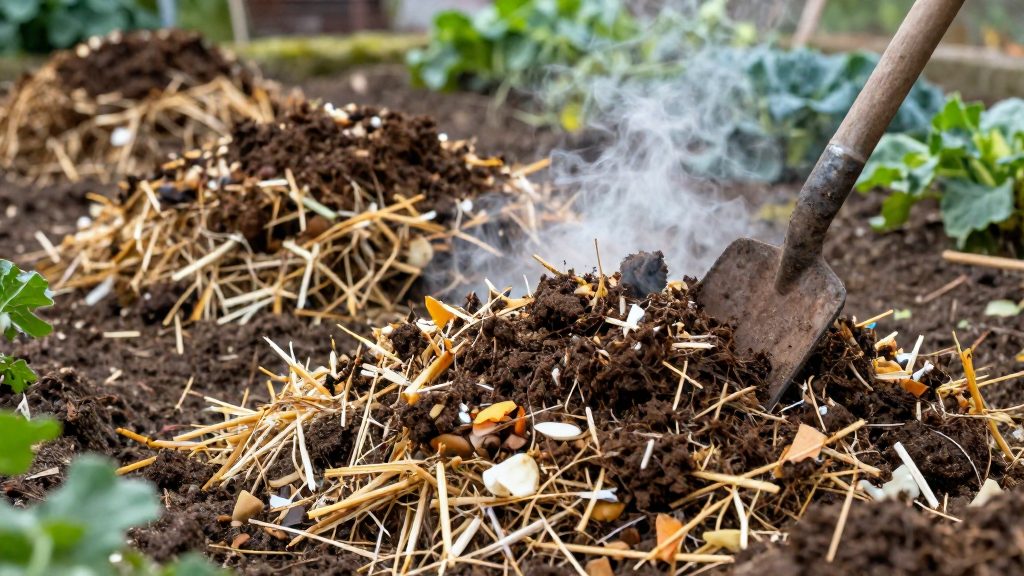
Biodynamic compost preparations are six numbered herbal preparations, 502 to 507, that gardeners add to a compost heap in small quantities while it is being built and turned. According to Biodynamic Association (UK) (2026) and BioDynamie Services (2026), each one is made from a specific plant or natural material, including yarrow flowers, chamomile, stinging nettle, oak bark, dandelion and valerian. They are used to support the vitality and health of the compost and the soil it feeds.
What are biodynamic compost preparations?
The six biodynamic compost preparations are numbered 502 to 507. Each has a fixed plant or natural material, and the numbering is the standard way to refer to them.
| Preparation | Material |
|---|---|
| 502 | Yarrow (achillée millefeuille), flowers only |
| 503 | Chamomile (camomille matricaire) |
| 504 | Stinging nettle (ortie dioïque) |
| 505 | Oak bark (écorce de chêne) |
| 506 | Dandelion (pissenlit) |
| 507 | Valerian (valériane) |
How the preparations are used
Preparations 502 to 507 are added to the heap in small amounts during construction and each time it is turned. Once they are placed in the pile, the heap is covered with straw, old hay, soil or a similar material. Preparation 507 is different: it is sprayed over the whole heap rather than inserted.
According to BioDynamie Services (2026), the preparations act in the compost somewhat like yeast, helping to strengthen vitality and soil health. The sources consulted do not specify application rates, so follow the amounts given in the reference you use for your method.
How the preparations are made
The sources describe the making of three preparations in particular, all of which involve burying material in a natural container:
- 502 (yarrow): dried yarrow flowers are kept out of direct sun, placed in a stag bladder and buried.
- 503 (chamomile): dried chamomile is placed in a cow’s small intestine, buried in autumn and dug up in spring.
- 505 (oak bark): oak bark is placed in an animal skull and buried in a damp location.
The sources do not describe the preparation method for 504, 506 or 507.
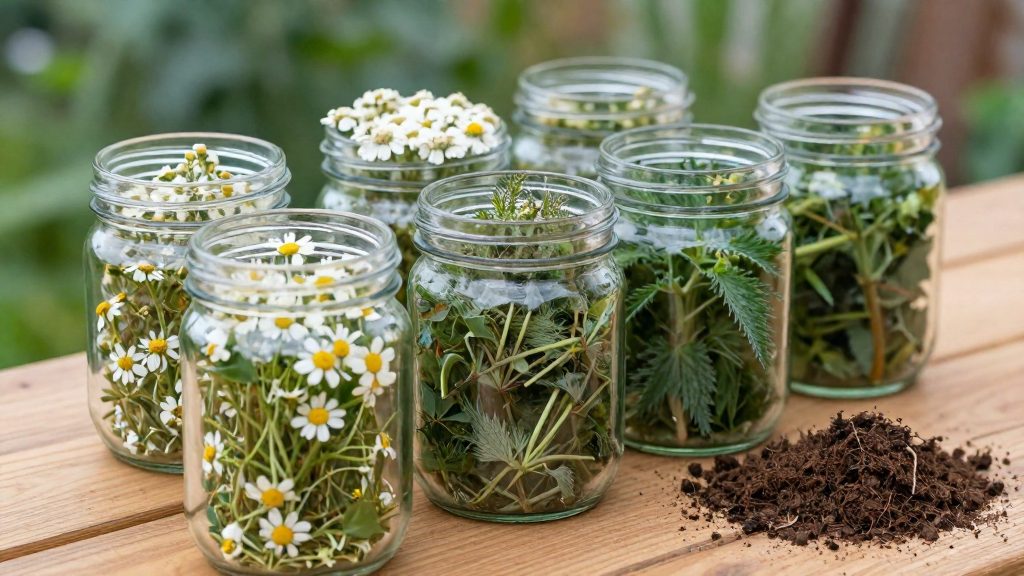
The six preparations 502 to 507
The six preparations numbered 502 to 507 are added to biodynamic compost in small quantities, both when the pile is built and when it is turned. Each is made from one named plant or plant material. According to the Biodynamic Association (UK) (2026), preparation 507 is handled differently: it is sprayed over the whole pile rather than inserted into it.
| Preparation | Base material | Application |
|---|---|---|
| 502 | Yarrow, flowers only | Inserted into the pile |
| 503 | Chamomile (matricaria) | Inserted into the pile |
| 504 | Stinging nettle (dioecious) | Inserted into the pile |
| 505 | Oak bark | Inserted into the pile |
| 506 | Dandelion | Inserted into the pile |
| 507 | Valerian | Sprayed over the whole pile |
Preparation methods for 502, 503 and 505
According to Biodynamic Association (UK) (2026), the preparations are made as follows:
- 502 (yarrow): Dried yarrow flowers are kept away from direct sunlight, placed in a stag bladder, and buried.
- 503 (chamomile): Dried chamomile is placed in a cow’s small intestine, buried in autumn, and recovered in spring.
- 505 (oak bark): Oak bark is placed in an animal skull and buried in a damp place.
The consulted sources do not describe the preparation steps for 504 (nettle) or 506 (dandelion), so these should be checked against a dedicated biodynamic guide before use.
Insertion and covering
Once the preparations are placed in the pile, the pile is covered with straw, old hay, soil, or a similar material. BioDynamie Services (2026) describes the preparations as acting in the compost somewhat like a yeast, supporting vitality and soil health.
The sources consulted do not compare these preparations with other compost activators.
How to add them to the compost heap?
The six biodynamic compost preparations, numbered 502 to 507, are added to the heap in small quantities while it is built and each time it is turned. According to Biodynamic Association (UK) (2026), preparation 507 (valerian) is sprayed over the whole heap instead of being placed inside it. These preparations are a non-chemical option for supporting the heap, so they fit an organic vegetable garden without synthetic inputs.
The six preparations and their plants
| Preparation | Plant used |
|---|---|
| 502 | Yarrow (flowers only) |
| 503 | Chamomile (matricaria) |
| 504 | Dioecious nettle |
| 505 | Oak bark |
| 506 | Dandelion |
| 507 | Valerian |
Source: BioDynamie Services (2026).
Preparing the materials
Some preparations require a specific process before use:
- 502 (yarrow): dried flowers are kept out of direct sunlight, placed in a stag bladder, and buried.
- 503 (chamomile): dried chamomile is placed in a cow’s small intestine, buried in autumn, and recovered in spring.
- 505 (oak bark): oak bark is placed in an animal skull and buried in a damp place.
Source: Biodynamic Association (UK) (2026). The official sources consulted do not specify these steps for preparations 504 and 506.
Inserting the preparations into the heap
- Build the heap in layers, as you normally would.
- Add the preparations in small quantities during construction. The official sources consulted do not specify exact amounts or positions within the heap.
- Cover the heap after inserting the preparations. Use straw, old hay, soil, or a similar material.
- Repeat at each turning. Add the preparations again whenever you turn the heap.
- Spray preparation 507 over the whole heap rather than inserting it.
According to BioDynamie Services (2026), once the preparations are in the heap, they act somewhat like a yeast. They are intended to strengthen the vitality and health of the soil.
How the preparations fit into compost making for the vegetable garden
The six biodynamic compost preparations, numbered 502 to 507, are added to the compost heap itself rather than applied directly to the beds. According to Biodynamic Association (UK) (2026), they go into the pile in small quantities during two stages: when the heap is built and when it is turned. Preparation 507 is the exception, since it is sprayed over the whole heap instead.
| Preparation | Plant used | How it is applied |
|---|---|---|
| 502 | Yarrow (flowers only) | Added in small quantities to the heap |
| 503 | Chamomile (matricaria) | Added in small quantities to the heap |
| 504 | Stinging nettle (dioecious) | Added in small quantities to the heap |
| 505 | Oak bark | Added in small quantities to the heap |
| 506 | Dandelion | Added in small quantities to the heap |
| 507 | Valerian | Sprayed over the entire heap |
The sequence for a vegetable garden compost heap is as follows:
- Build the heap, then insert preparations 502 to 506 in small quantities.
- Cover the heap with straw, old hay, soil or a similar material. According to BioDynamie Services (2026), this covering lets the preparations act in the pile much like a yeast, which supports the vitality and health of the soil.
- Repeat at each turning. The preparations are added again when the heap is turned.
- Spray preparation 507 over the whole heap.
The sources consulted do not give exact dates, calendar windows or dosages for each application, so the amounts and timing should follow the instructions of the preparation supplier or the method you are using. The preparations are a non-chemical input, which suits organic vegetable growing, where the goal is to strengthen the compost and the soil rather than add synthetic products.
Where to find biodynamic preparations in Canada
The official sources consulted do not name specific suppliers of biodynamic preparations in Canada, and they do not list Canadian retailers, prices, or distribution networks. Sourcing options therefore depend on your region. Start with local organic growers’ networks, community gardens, and farm-gate suppliers who already work with biodynamic methods, and ask whether their preparations come from a recognised biodynamic source.
The alternative is to prepare them yourself. According to Biodynamic Association (UK) (2026) and BioDynamie Services (2026), the six preparations, numbered 502 to 507, are made from specific plants or natural materials, and the sources describe burial in animal containers for 502, 503 and 505 only. Making them requires patience and planning, because some steps run across seasons.
Preparations you can make at home
| Preparation | Plant material | Container | Method |
|---|---|---|---|
| 502 | Yarrow (Achillea millefolium), flowers only | Deer bladder | Flowers dried out of direct sun, placed in the bladder, then buried |
| 503 | Chamomile | Cow small intestine | Dried chamomile buried in autumn, retrieved in spring |
| 505 | Oak bark | Animal skull | Bark buried in a damp location |
The official sources consulted do not describe the preparation methods for 504 (stinging nettle), 506 (dandelion), or 507 (valerian) in the same detail. Consult those specific methods before preparing them.
How to use them in the compost heap
- Add in small quantities: the preparations are added to the heap in small amounts during construction and during each turning.
- Cover the heap: once the preparations are inserted, cover the pile with straw, old hay, soil, or a similar material.
- Spray preparation 507: valerian is sprayed over the entire heap rather than mixed into it.
According to BioDynamie Services (2026), the preparations act in the compost somewhat like yeast, supporting soil vitality and health. Keep the heap moist but not waterlogged.
Is There Evidence That They Work?
Biodynamic compost preparations are used by growers who want to influence compost and soil, but the official sources consulted do not specify controlled measurements of their effect on yield, soil biology or plant health. The practice itself is well described: six preparations, numbered 502 to 507, are added in small amounts during pile construction and turning. Any claimed benefit should be read as the growers’ stated rationale rather than an established result.
According to BioDynamie Services (2026), the preparations act in the compost somewhat like yeast, with the stated aim of strengthening vitality and soil health. The same source gives no measurements or comparisons with untreated piles, so this statement cannot be checked against data in the material consulted.
The Six Preparations
The preparations are made from these plants, according to BioDynamie Services (2026):
- 502: yarrow (flowers only)
- 503: German chamomile
- 504: stinging nettle (dioecious)
- 505: oak bark
- 506: dandelion
- 507: valerian
How the Three Documented Preparations Are Made
Biodynamic Association (UK) (2026) describes the following methods for three of the preparations:
| Preparation | Plant material | Container | Burial |
|---|---|---|---|
| 502 | Dried yarrow flowers, kept out of direct sun | Stag bladder | Buried |
| 503 | Dried chamomile | Cow small intestine | Buried in autumn, recovered in spring |
| 505 | Oak bark | Animal skull | Buried in a damp environment |
The official sources consulted do not specify the method for preparations 504 and 506.
Applying Them to the Compost Pile
- Insert the preparations in small quantities while building the pile and again when turning it.
- Preparation 507 (valerian) is sprayed over the whole pile rather than inserted.
- After adding the preparations, cover the pile with straw, old hay, soil or a similar material, as described by BioDynamie Services (2026).
For an organic approach that does not depend on these preparations, the same compost principles apply: a balanced mix of green and brown materials, regular turning and a covered pile.
Natural Alternatives for Compost
Biodynamic compost preparations are six numbered preparations, 502 to 507, each made from a specific plant or material. According to Biodynamic Association (UK) (2026), they are added to the heap in small quantities during construction and turning, and preparation 507 (valerian) is sprayed over the whole pile. BioDynamie Services (2026) describes their role as acting in the compost somewhat like yeast, to support vitality and soil health. Gardeners who want a natural compost without these preparations can still apply the same core practices: build the heap in layers, keep it covered, keep it moist, and turn it regularly. The official sources consulted do not specify dosages or a fixed turning schedule, so the steps below stay descriptive.
The six preparations
| Preparation | Plant or material | Preparation method given in the sources |
|---|---|---|
| 502 | Yarrow (achillée millefeuille), flowers only | Dried flowers kept out of direct sun, placed in a deer bladder and buried |
| 503 | Chamomile (camomille matricaire) | Dried chamomile placed in a cow small intestine, buried in autumn and recovered in spring |
| 505 | Oak bark | Bark placed in an animal skull and buried in a humid location |
The remaining preparations use stinging nettle (504, dioecious), dandelion (506) and valerian (507). The consulted sources list these plants but do not describe how they are prepared.
How the preparations are used in the heap
- Insert small amounts of each preparation during construction and again when the heap is turned.
- Once inserted, cover the heap with straw, old hay, soil or a similar material.
- Spray preparation 507 over the entire pile.
Natural practices when preparations are not used
A compost heap without biodynamic preparations still works with simple organic practices:
- Layer plant material in alternating green (fresh, nitrogen-rich) and brown (dry, carbon-rich) materials, such as kitchen scraps, grass clippings, dry leaves and straw.
- Keep the heap moist without waterlogging it, so decomposition continues without turning anaerobic.
- Cover the heap with straw, old hay or soil to limit drying and temperature loss.
- Choose a sunny, well-drained site for the heap, which helps it heat up and decompose more evenly.
- Avoid synthetic compost accelerators. A covered, moist heap of plant material is the organic baseline, and it requires no chemical inputs.
Adjust these practices to your region and climate, since moisture and temperature conditions vary across the country.
Frequently asked questions
What are biodynamic compost preparations, and do I need them?
The six numbered preparations, 502 to 507, are herbal materials that gardeners add to a compost heap in small quantities. According to Biodynamic Association (UK) (2026), each one is made from a specific plant or natural material, such as yarrow, chamomile or valerian. They are optional, and a standard organic compost heap can be built without them.
Which preparation is sprayed on the heap, and how are the others added?
Preparation 507 (valerian) is sprayed over the whole heap, while preparations 502 to 506 are placed inside it. Those are added in small amounts during construction and at each turn, and the heap is then covered with straw, old hay or soil. The official sources consulted do not specify application rates or exact timing, so follow the amounts given in the method you use.
Can a beginner make the preparations at home, and what about the others?
Biodynamic Association (UK) (2026) describes burying preparations 502, 503 and 505 in natural containers, such as animal organs, over several months. The sources consulted do not give preparation methods for 504, 506 or 507. For beginners, a well-managed organic heap built with straw, plant residues and soil can be a simpler starting point, and you can add the preparations later once you have a method you trust.