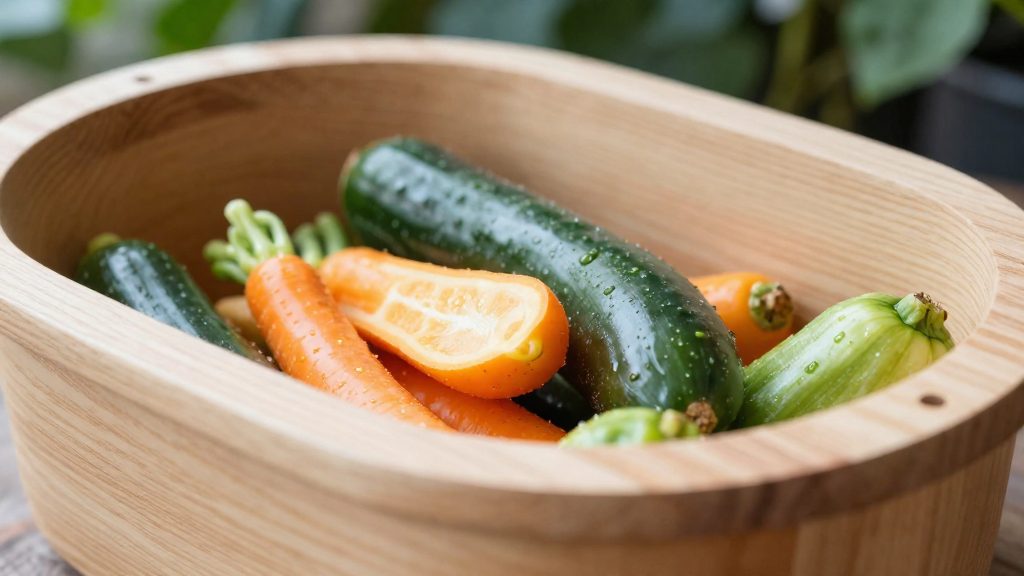
Yes, you can keep composting kitchen scraps indoors through winter. Indoor methods avoid the cold, which is why they suit apartments and cold climates. Two methods process kitchen scraps indoors in winter: vermicomposting with worms and bokashi fermentation. A third option, holding scraps in a lidded pail until they thaw, only stores them.
Can you really compost indoors in winter?
Why outdoor piles stall when frozen
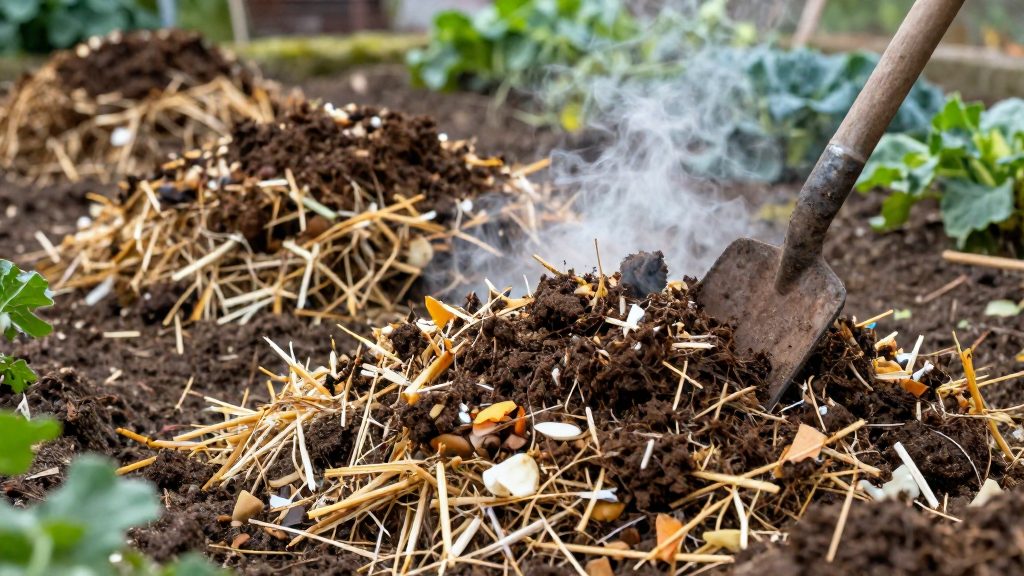
Decomposers slow down or stop when compost material freezes, so an outdoor pile that is active in autumn often sits idle through the coldest months. University of Vermont Extension (2025-02-07) notes that outdoor piles therefore need extra management in winter. Indoor methods avoid this problem by keeping the process out of the cold.
Two indoor composting methods plus one storage option
Two methods process kitchen scraps indoors: vermicomposting and bokashi fermentation. The third option, lidded pail storage, does not process scraps. It only holds them until the ground thaws.
| Option | Type | What it accepts | Notes |
|---|---|---|---|
| Vermicomposting with red wiggler worms (Eisenia fetida) | Indoor composting | Fruit and vegetable scraps only; meat is excluded | Worms break down scraps in a bin kept indoors. |
| Bokashi fermentation | Indoor fermentation | Cooked leftovers, meat, dairy, and bones | According to Green Action Centre (Manitoba) (2022-02-28), bokashi is ‘not technically a composting method’. |
| Lidded pail storage | Temporary storage, not composting | Food scraps, held until thaw | Scraps are added to the bin once it thaws (Green Action Centre (Manitoba), 2022-02-28). |
Realistic expectations for winter results
- Vermicomposting depends on the worm population, so match the quantity of scraps to what the colony can process.
- Bokashi produces pre-compost, not finished compost. The consulted sources do not specify a timeline for the bin itself.
- Pail storage pauses the process rather than running it. Green Action Centre (Manitoba) (2022-02-28) recommends saving a few bags of fall leaves to cover food waste in late winter or spring.
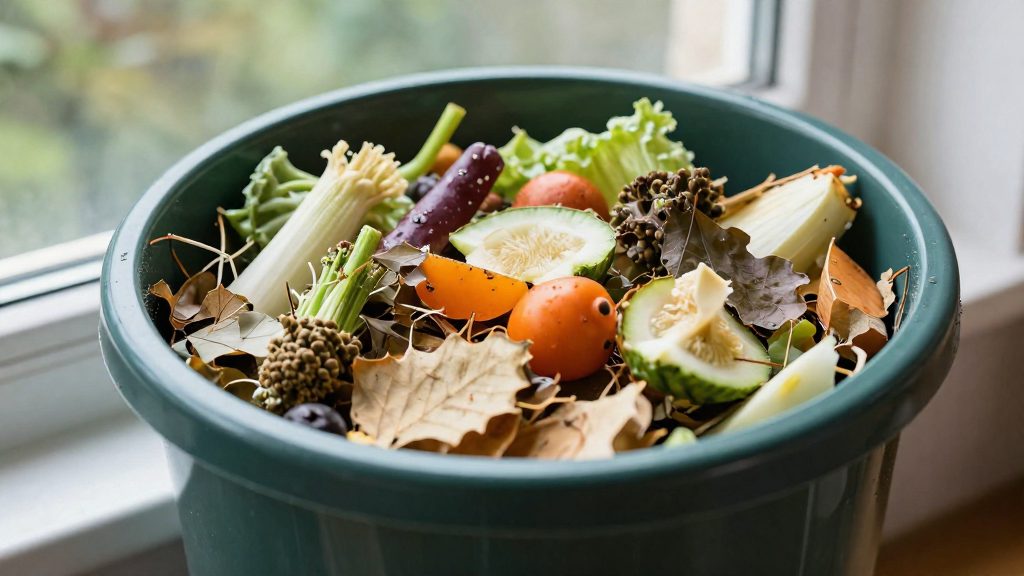
Vermicomposting: worm bins for Canadian homes
Vermicomposting uses worms to break down kitchen scraps in a bin kept indoors, which makes it a practical option through the winter. According to Green Action Centre (Manitoba) (2022), the species used is the red wiggler (Eisenia fetida). You can buy a ready-made worm bin or build one from two stacked containers.
Choosing and building the bin
- Store-bought bin: Ready to use, and the design is already set up for worm composting.
- Two stacked containers: A do-it-yourself option. Stack two containers so the worms can move between layers and the bin stays easy to open and check.
Bedding
The worms live in bedding, which should be kept damp. The two recommended options are:
| Bedding | Notes |
|---|---|
| Dampened shredded paper | Moisten it before adding it to the bin |
| Coconut coir | Moisten it before adding it to the bin |
Dampen the bedding until it feels like a wrung-out sponge, then fill the bin with it before adding the worms.
Feeding rate
Worms can eat about half their body weight in scraps per week, according to Green Action Centre (Manitoba) (2022). The worm population adjusts to the amount of food it receives, so the colony grows or shrinks with the feeding rate. Bury each addition under the bedding; this is a general practice rather than a point from the consulted sources, and it helps limit odours and flies.
For scale, the University of Vermont Extension (2025-02-07) notes that a small worm colony can eat about a pound of food scraps a week. Start with a modest amount and increase it as the colony grows.
Cold temperatures slow down decomposition in outdoor piles, so the indoor setup is well suited to a Canadian winter (University of Vermont Extension, 2025-02-07).
Bokashi: fermenting scraps, meat and dairy included
According to Green Action Centre (Manitoba) (2022-02-28), bokashi is ‘not technically a composting method’. It ferments food scraps, including meat and bones, into a pre-compost that breaks down quickly in the garden in spring. The lidded container keeps the process indoors, which suits cold climates.
Why bokashi is not classed as composting
- The scraps are kept in a lidded bin with a bran and microorganism mix.
- The material ferments in the closed container rather than decomposing in open air.
- The output is a pre-compost, not finished compost, so it needs a second step before it feeds plants.
Fermenting meat, bones and dairy in a lidded bin
Bokashi accepts cooked leftovers, meat and dairy, which sets it apart from a worm bin. A practical routine:
- Add scraps to the bin as they accumulate in the kitchen.
- Sprinkle the bran mix over each new layer.
- Press the material down to limit air pockets, then close the lid.
- Repeat until the bin is full, keeping the lid closed between additions.
Budget for the ongoing cost of the bran and microorganism mix, since it has to be replenished as you keep adding scraps.
Burying the pre-compost to finish breakdown
Fermented material is not ready to use as soil. According to University of Vermont Extension (2025-02-07), it must be buried in soil or added to a compost pile to finish breaking down. The official sources consulted do not specify a burial depth or the number of weeks the process takes.
| Method | Meat, bones and dairy | Winter behaviour |
|---|---|---|
| Bokashi | Accepted | Lidded bin, fermenting indoors; suits cold climates |
| Worm bin | Meat excluded; dairy not listed; fruit and vegetable scraps only | Indoor option for winter kitchen scraps |
| Outdoor compost pile | Not addressed in the sources consulted | Needs extra management |
What can go in each indoor bin?
Indoor composting has two main approaches, and they accept different materials. According to the Green Action Centre (Manitoba) (2022-02-28), vermicomposting uses red wiggler worms (Eisenia fetida) in a bin, while bokashi ferments food scraps into pre-compost. Because the two systems handle different foods, the kitchen pail needs to be sorted according to which bin will receive its contents.
Accepted scraps for worm bins
Worm bins take fruit and vegetable scraps only, according to the Green Action Centre (Manitoba) (2022-02-28). The scraps are placed on dampened shredded paper or coconut coir bedding. Typical items include:
- Fruit peels, cores, and rinds
- Vegetable trimmings and peelings
- Other raw fruit and vegetable waste
The official sources consulted do not specify whether cooked leftovers are accepted in worm bins, so they should be kept out.
Accepted scraps for bokashi buckets
Bokashi accepts a wider range of kitchen waste. The University of Vermont Extension (2025-02-07) states that bokashi can handle cooked leftovers, meat and dairy. The Green Action Centre (Manitoba) (2022-02-28) adds that bokashi can ferment meat and bones.
Item-by-item comparison
| Scrap type | Worm bin | Bokashi bucket |
|---|---|---|
| Fruit and vegetable scraps | Accepted | Accepted |
| Cooked leftovers | Not listed as accepted | Accepted (University of Vermont Extension, 2025-02-07) |
| Meat | Excluded (Green Action Centre (Manitoba), 2022-02-28) | Accepted (Green Action Centre (Manitoba), 2022-02-28) |
| Dairy | Not listed as accepted | Accepted (University of Vermont Extension, 2025-02-07) |
| Bones | Not listed as accepted | Accepted (Green Action Centre (Manitoba), 2022-02-28) |
Preparing scraps
- Chopping: Cut larger pieces into smaller ones so they are easier to bury and break down. This is a general practice, and the official sources consulted do not specify a particular size.
- Eggshells: The official sources consulted do not specify how to handle eggshells.
- Coffee grounds: The official sources consulted do not specify how to handle coffee grounds.
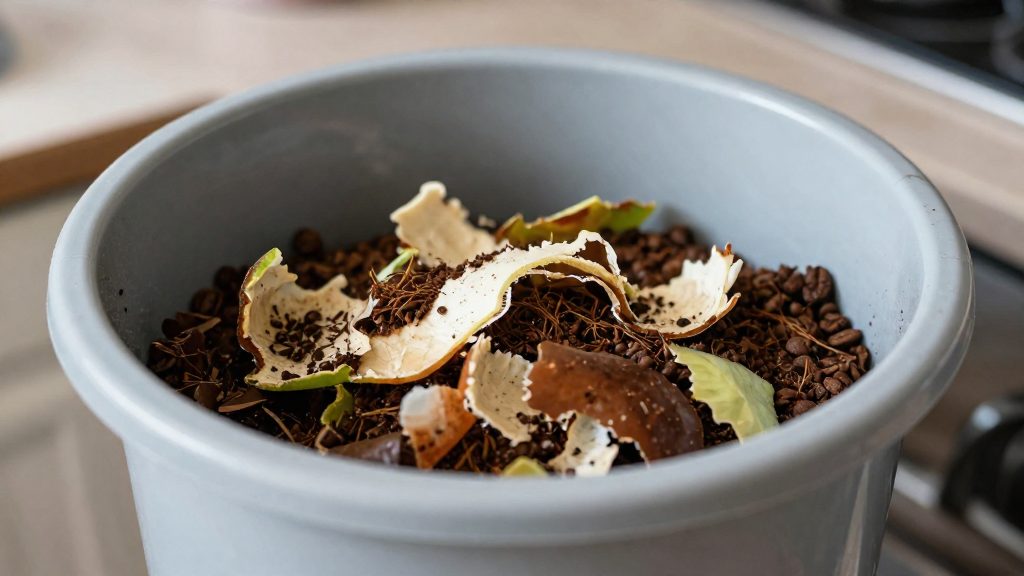
How do you avoid odours and fruit flies?
Odours and fruit flies in an indoor bin mostly come from food left exposed on the surface, from scraps that sit unprocessed for too long, and from overfeeding. The official sources consulted address feeding levels only in general terms and do not specify fruit fly life stages or trap timing for indoor bins, so the steps below focus on what you can control.
Save fall leaves for late winter or spring
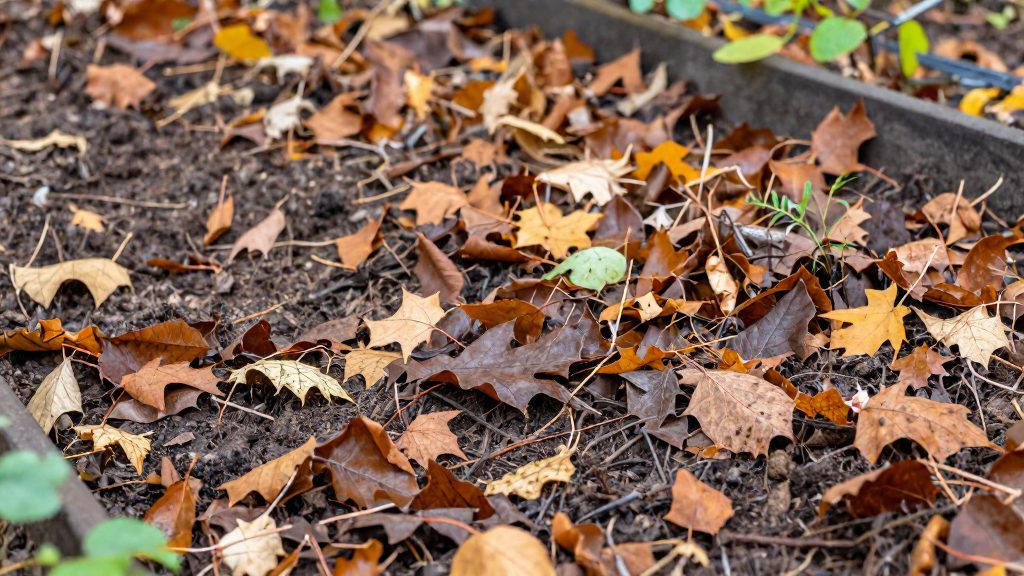
Green Action Centre (Manitoba) (2022-02-28) recommends saving a few bags of fall leaves to cover food waste in late winter or spring. The official sources consulted do not specify how to use leaves with an indoor bin, so this step is not part of the indoor routine described here.
Keep the moisture balance and avoid sour bins
Sour smells usually follow scraps that stay unprocessed. The main lever is the amount you add. Adding more than the colony can process leaves scraps to rot.
To keep the bin from turning soggy:
- Add only what the colony is eating, and check for uneaten scraps before adding more.
- Remove visibly wet, rotting material and replace it with fresh, drier scraps.
- Avoid adding extra liquid with the scraps.
Limit fruit fly access through feeding in proportion
The most reliable way to reduce fruit fly activity is to remove the food they need. Keep scraps covered, do not leave peelings uncovered on the surface, and feed in proportion to the colony. If you use a commercial trap, follow the manufacturer’s placement instructions.
Cold weather changes the pace of decomposition. Smaller additions help limit how much food is left unprocessed at any one time.
Store scraps in a lidded pail when the bin is full
When an indoor bin is full, Green Action Centre (Manitoba) (2022-02-28) recommends storing scraps in a lidded pail or garbage can and adding them to the bin once they thaw. This keeps new waste contained and gives the bin time to catch up. The process pauses while scraps wait in the pail.
Storing scraps in a lidded pail or garbage can
- Use a container with a tight-fitting lid so the scraps stay contained and odours stay in.
- Keep the container separate from the bin, so the bin’s contents and the waiting scraps do not mix. The source does not specify where to store it; the scraps are added to the bin once it thaws.
- The official sources consulted do not specify a container size or a maximum holding time.
Freezer storage before bin use
The official sources consulted do not specify freezer storage procedures for indoor kitchen scraps, including container type, portioning, or storage time. Check local guidance before relying on a freezer as a holding step.
Thawing and reintroducing scraps into the bin
- Add the stored scraps once it thaws, as Green Action Centre (Manitoba) (2022-02-28) describes.
- Add them in small batches instead of all at once, so the bin is not overloaded. This is a general practical approach rather than a figure from the sources.
- Sort scraps by destination before adding them:
| Scrap type | Worm bin | Bokashi |
|---|---|---|
| Fruit and vegetable scraps | Accepted | Accepted |
| Meat | Excluded | Accepted, including bones |
| Cooked leftovers and dairy | Not specified by the sources | Accepted |
Using your finished compost in spring
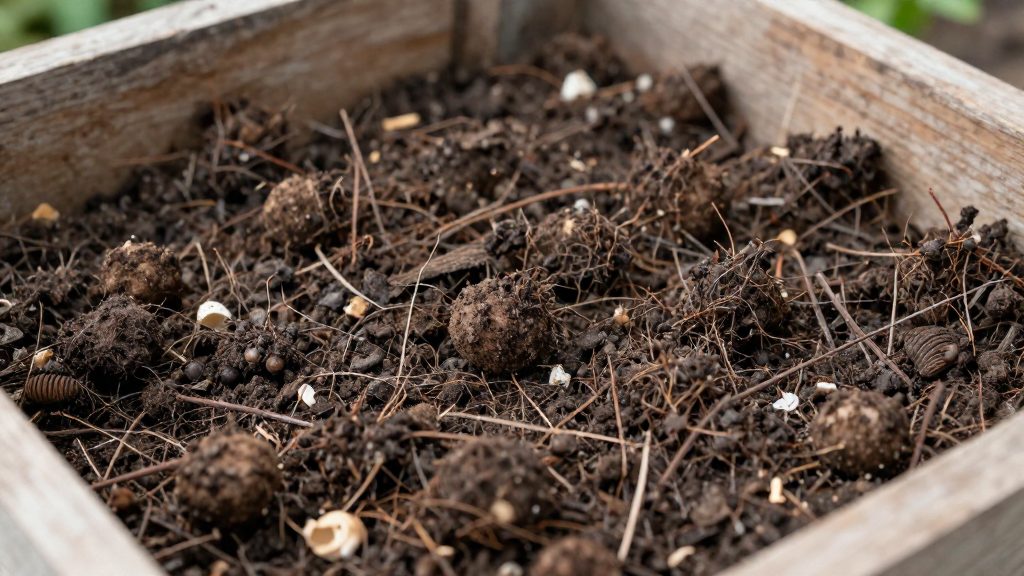
The two main indoor outputs behave differently. Worm bin material comes from a bin fed fruit and vegetable scraps only, while bokashi output is pre-compost that must finish breaking down before planting. The consulted sources do not describe how to judge when worm bin material is ready. Sort the two before you add them to a bed or a tray.
| Material | Source | Spring use |
|---|---|---|
| Worm bin material | Red wiggler bin fed fruit and vegetable scraps only | Screen out bedding and uneaten pieces first; the official sources consulted do not specify spring uses. |
| Bokashi pre-compost | Cooked leftovers, meat, dairy and bones | Bury in soil or add to a compost pile to finish breaking down before planting (University of Vermont Extension, 2025-02-07). |
Worm bin material in seed-starting mixes
The official sources consulted do not address seed-starting mixes, so no mix ratio is given. Before any use, screen out the remaining bedding, which is dampened shredded paper or coconut coir, and any uneaten pieces.
Application rates for finished compost
The official sources consulted do not specify application rates for finished compost in spring. Judge the amount by the material’s condition and the soil’s needs rather than by a fixed figure.
Timing: finishing pre-compost before planting
Bokashi pre-compost breaks down quickly in the garden in spring, according to Green Action Centre (Manitoba) (2022-02-28), but it must be buried in soil or added to a compost pile to finish breaking down (University of Vermont Extension, 2025-02-07). Work it into the bed early enough that it can finish before you sow or transplant. The sources consulted do not give a minimum number of weeks, so leave a longer gap for larger amounts. Check the soil before planting: if the material is still recognizable and has not blended in, give it more time.
Frequently asked questions
Can I compost kitchen scraps indoors without a garden?
Yes. Vermicomposting in a bin and bokashi fermentation both work indoors without outdoor ground. Bokashi only produces pre-compost, which must be buried in soil or added to a compost pile to finish breaking down, according to University of Vermont Extension (2025).
What should I keep out of a worm bin in winter?
Worm bins should take fruit and vegetable scraps only, and meat is excluded, according to Green Action Centre (Manitoba) (2022). Meat can go into a bokashi system instead. Match the amount you add to what the colony can process: University of Vermont Extension (2025) notes that a small worm colony eats about a pound (roughly 450 g) of food scraps a week.
What do I do with scraps when the indoor bin is full?
Store them in a lidded pail or garbage can, then add them to the bin once it thaws, according to Green Action Centre (Manitoba) (2022). This holds the scraps without processing them. The official sources consulted do not specify a freezing procedure, so the lidded pail is the documented option.