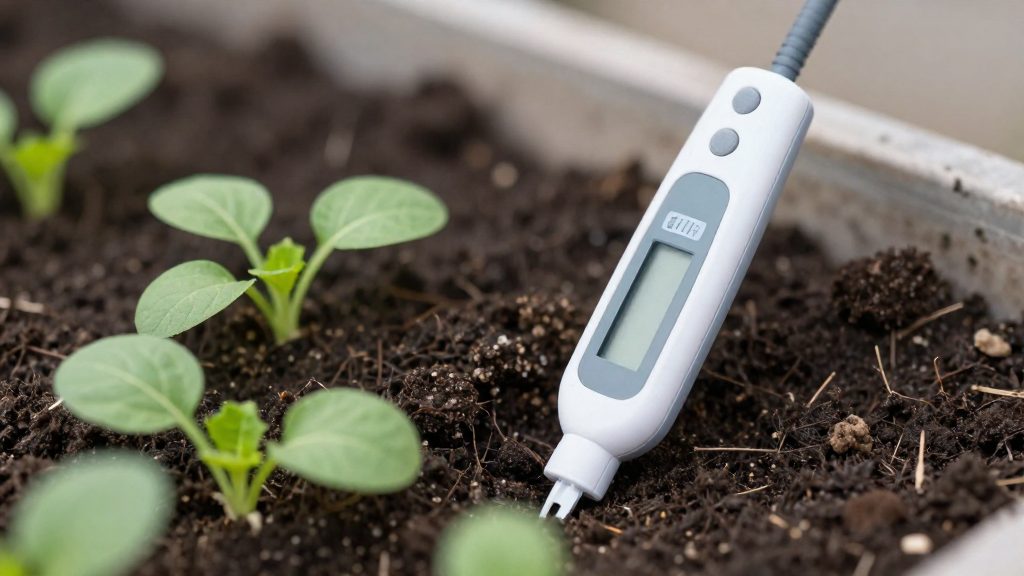
Soil pH measures how acidic or alkaline your soil is, and it determines how well plants can absorb nutrients from it. For most vegetables, a slightly acidic soil pH of 6.0 to 6.9 is recommended, according to Laidback Gardener (2022). Individual crops have their own ranges, so one target does not suit every bed. A soil test is the only reliable way to find out where your garden stands.
Why does soil pH matter in the vegetable garden?
Soil pH controls the nutrient availability of almost all essential plant nutrients. According to Savvy Gardening (2016), acidic soil reduces phosphorus availability and can make aluminum and manganese toxic. Alkaline soil limits iron, manganese, copper, zinc and phosphorus. A bed can therefore contain enough compost or fertilizer and still fail to supply those nutrients, because the pH controls whether the roots can take them up. Checking pH before adding amendments avoids spending money on nutrients the plants cannot use.
Target pH by crop
| Crop | Recommended soil pH |
|---|---|
| Most vegetables | 6.0 to 6.9 |
| Potatoes | 4.5 to 6.5 |
| Tomatoes | 5.5 to 7.5 |
Source for all three ranges: Laidback Gardener (2022).
Testing your soil
- Garden centres and big-box stores with plant nurseries often offer soil testing in Canada, according to Laidback Gardener (2022).
- Results usually take under two weeks.
- Early spring or fall is the best time to take samples.
Correcting pH with amendments
- Lime raises the pH of acidic soil. Calcitic lime suits soils high in magnesium, and dolomitic lime suits soils low in magnesium.
- Pelletized lime is about ten times more concentrated than crushed lime, so it needs careful dosing.
- Apply the amount recommended by your soil test to avoid overshooting the target pH.
- Elemental sulfur lowers the pH of alkaline soil. It is gentle and inexpensive, but it can take months to over a year to take effect.
- Aluminum sulfate acts faster than elemental sulfur but can burn roots, so use it with caution.
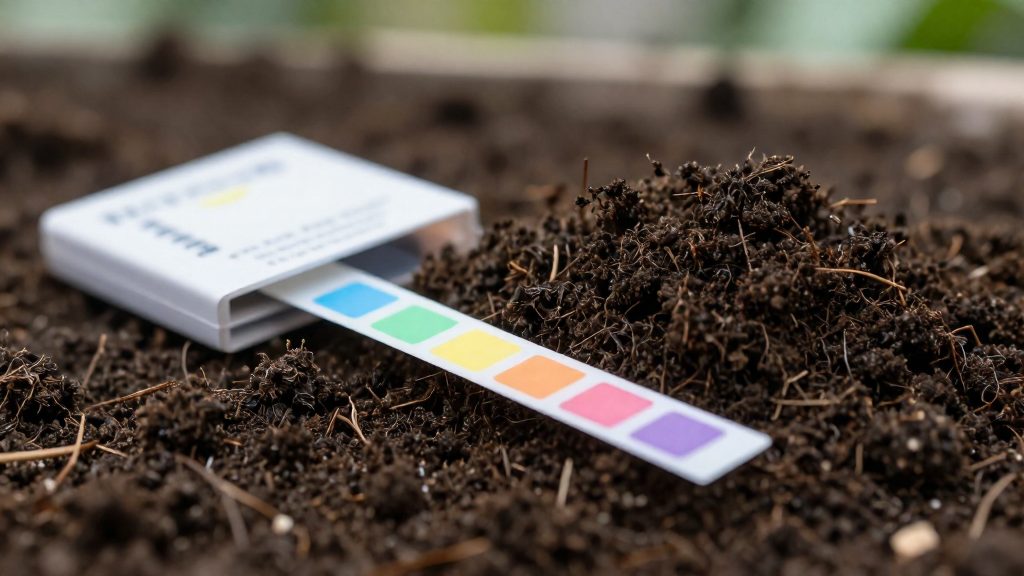
Which pH to target for vegetables?
For most vegetables, the recommended soil pH is 6.0 to 6.9, a slightly acidic range, according to Laidback Gardener (Larry Hodgson, Quebec) (2022). This band is a starting point, not a fixed goal, because individual crops have their own target ranges. The same source gives different figures for specific plants, so a single pH for the whole garden can suit some crops and leave others outside their preferred band.
| Crop | Recommended soil pH |
|---|---|
| Most vegetables | 6.0 to 6.9 |
| Potatoes | 4.5 to 6.5 |
| Tomatoes | 5.5 to 7.5 |
Potatoes tolerate a more acidic soil than the general range, while tomatoes accept values that extend above neutral. When two crops share a bed, the useful planning figure is the overlap of their ranges. For potatoes and tomatoes, that overlap is 5.5 to 6.5.
To apply this in practice:
- Plan by bed, not by garden. Assign crops to beds according to the pH each bed is likely to reach.
- Check the lowest upper limit first. Potatoes have the lowest upper limit in this list (6.5), so a bed intended for both potatoes and tomatoes must stay within 5.5 to 6.5.
- Record the target on your soil test report. Writing the crop ranges next to the measured value shows at a glance whether a bed is within its band.
- Compare each result with the target, not with a general ideal. A reading of 6.8 is within the general vegetable range, but it is too high for potatoes, whose recommended range tops out at 6.5.
Where to Get Your Soil Tested in Canada?
In Canada, garden centres and big-box stores with plant nurseries often offer soil pH testing. A soil test is the only reliable way to know your pH, so it is the right starting point before you add any lime or sulfur. Results usually come back in under two weeks, which leaves time to plan amendments before planting.
Where to Look
- Garden centres that offer testing services
- Big-box stores that operate plant nurseries
- Ask the store about its sampling instructions and turnaround time before you visit, since these details vary by location.
When to Sample
| Factor | Guidance |
|---|---|
| Best sampling time | Early spring or fall |
| Typical turnaround | Usually under two weeks |
| Retest interval | Every 4 to 5 years |
Source: Laidback Gardener (Larry Hodgson, Quebec), 2022-01-07.
How to Act on the Results
Most vegetables grow best in slightly acidic soil, between pH 6.0 and 6.9. Individual crops differ: potatoes prefer 4.5 to 6.5 and tomatoes 5.5 to 7.5. Because soil pH controls the availability of almost all essential nutrients, matching the pH to your crops affects how well they feed (Savvy Gardening, 2016-12-10).
- To raise pH: lime. Calcitic lime suits soils high in magnesium, and dolomitic lime suits soils low in magnesium. Pelletized lime is about ten times more concentrated than crushed lime.
- To lower pH: elemental sulfur is gentle and inexpensive, but it can take months to over a year to work. Aluminum sulfate acts faster but can burn roots.
- Apply the amount your soil test recommends, then retest every 4 to 5 years to track the drift back toward the original pH as lime and sulfur leach out.
Why a Soil Test Is Your Reference and How to Follow Up on Results
The sources consulted agree that a soil test is the only reliable way to know your soil pH. The sources do not specify how home kits compare with laboratory tests, so the most dependable approach is to use a professional test as your reference. In Canada, garden centres and big-box stores with plant nurseries often offer testing, and according to Laidback Gardener (2022), results usually take under two weeks.
Timing and Retesting
| Step | Recommendation | Source |
|---|---|---|
| Best sampling period | Early spring or fall | Laidback Gardener (2022) |
| Typical turnaround | Under two weeks | Laidback Gardener (2022) |
| Retest interval | Every 4 to 5 years | Laidback Gardener (2022) |
Retesting matters because lime and sulfur leach out of the soil over time, and the pH drifts back toward its original level. A test done once and forgotten can therefore give a misleading picture of your beds a few years later.
Interpreting Results
The sources give target ranges for most vegetables: a slightly acidic pH of 6.0 to 6.9, with crop-specific ranges such as 4.5 to 6.5 for potatoes and 5.5 to 7.5 for tomatoes (Laidback Gardener, 2022). Soil pH also controls nutrient availability. According to Savvy Gardening (2016), acidic soil reduces phosphorus availability and can make aluminum and manganese toxic, while alkaline soil limits iron, manganese, copper, zinc and phosphorus.
Correcting pH Organically
- Raising pH (acidic soil): Lime is the usual amendment. Calcitic lime suits soils high in magnesium, and dolomitic lime suits soils low in magnesium (Laidback Gardener, 2022).
- Lowering pH (alkaline soil): Elemental sulfur is gentle and inexpensive, but it can take months to over a year to work. Aluminum sulfate acts faster but can burn roots (Laidback Gardener, 2022).
- Check your standard: Confirm that any mineral amendment you choose is permitted under your organic certification rules before applying it.
When and how to collect the soil pH sample
A soil test is the only reliable way to know your soil pH, and the quality of the sample determines how useful the result will be. According to Laidback Gardener (Larry Hodgson, 2022), early spring or fall is the best time to sample. In Canada, garden centres and big-box stores with plant nurseries often offer testing, and results usually arrive in under two weeks.
Timing matters because the reading reflects the bed’s condition at the moment you sample. Test before adding any lime or sulfur, so the result shows the soil’s actual state rather than a recent amendment. Retest every 4 to 5 years, because lime and sulfur leach out and the pH drift gradually moves the soil back toward its original level.
Collecting the sample:
- Use a clean trowel and a clean container. Do not mix samples from different areas in the same bag.
- Divide the garden into zones by bed or crop. Soil pH can vary across a plot, so each zone with a different use deserves its own sample.
- In each zone, dig several small holes at different points and collect soil from the root zone of each one. The sources consulted do not specify a sampling depth, so follow the instructions from the testing service.
- Mix the portions in a clean bucket, remove stones and visible debris, and fill the sample bag with the amount the lab requests.
- Label each bag with its location and the crops planned there, so the recommendations match the right bed.
Target ranges from the same source:
| Crop group | Recommended soil pH |
|---|---|
| Most vegetables | 6.0 to 6.9 |
| Potatoes | 4.5 to 6.5 |
| Tomatoes | 5.5 to 7.5 |
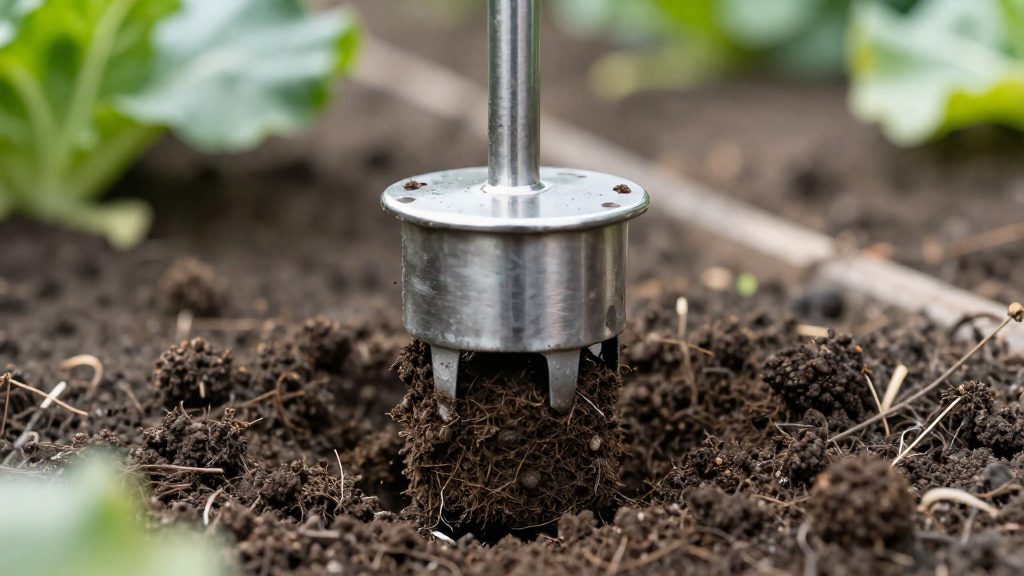
Correcting acidic soil with lime
Lime raises the pH of acidic soil. If you follow organic certification rules, confirm that the product you choose is permitted before applying it. According to Laidback Gardener (2022), a slightly acidic pH of 6.0 to 6.9 suits most vegetables. Potatoes tolerate 4.5 to 6.5, and tomatoes grow in 5.5 to 7.5. Soil pH controls the availability of almost all essential nutrients. According to Savvy Gardening (2016), acidic soil reduces phosphorus availability and can make aluminum and manganese toxic. Correcting pH therefore affects how well the plants can use the nutrients already in the soil.
Choosing the right lime
Two main forms of lime are sold, and the choice depends on the magnesium content of your soil:
| Lime type | Key point (Laidback Gardener, 2022) |
|---|---|
| Calcitic lime | Suits soils high in magnesium |
| Dolomitic lime | Suits soils low in magnesium |
| Pelletized lime | About ten times more concentrated than crushed lime |
Your soil test report indicates whether magnesium is high or low, which tells you which product to buy.
Applying lime step by step
- Test first. Sample in early spring or fall. According to Laidback Gardener (2022), results usually come back in under two weeks, and garden centres and big-box stores with plant nurseries in Canada often offer testing.
- Read the recommended amount. Apply the quantity the report recommends, not an estimate.
- Check the product concentration. Pelletized lime is far stronger than crushed lime, so the same weight gives a much larger effect. Confirm the form on the bag before spreading.
- Work the lime into the topsoil before planting, so it mixes with the root zone rather than sitting on the surface.
Timing and monitoring
Lime does not stay in the soil indefinitely. According to Laidback Gardener (2022), lime and sulfur leach out over time, and the pH drifts back toward its original level. Retest every 4 to 5 years to decide whether another application is needed.
Correcting alkaline soil with sulfur
Elemental sulfur is the gentlest tool for lowering the pH of alkaline soil. Before applying anything, confirm the reading with a soil test. According to Laidback Gardener (Larry Hodgson, 2022), a soil test is the only reliable way to know your pH. In Canada, garden centres and big-box stores with plant nurseries often offer testing, with results usually back in under two weeks. Early spring or fall is the best time to sample.
Alkaline soil matters for plant health because, according to Savvy Gardening (2016), it limits the availability of iron, manganese, copper, zinc and phosphorus. Plants can show deficiency symptoms even when these nutrients are present in the soil.
Choosing a sulfur product
The sources consulted describe two options:
| Product | Speed | Key characteristic |
|---|---|---|
| Elemental sulfur | Slow: can take months to over a year | Gentle and inexpensive |
| Aluminum sulfate | Faster than elemental sulfur | Can burn roots |
For an organic vegetable plot, elemental sulfur is the option to prefer. Its slow action gives you a gradual correction, while aluminum sulfate carries a risk of root damage.
Applying sulfur step by step
- Base the amount on your test. The sources consulted do not give a universal dose for elemental sulfur, so follow the recommendation printed on your soil test report.
- Spread it evenly over the bed or planting area.
- Work it into the topsoil so it contacts the root zone.
- Plan ahead. Because the effect can take months to over a year, apply it well before the season you want to plant.
Monitoring the result
Retest your soil every 4 to 5 years. According to Laidback Gardener (2022), sulfur leaches out over time and the pH drifts back toward its original level, so a single application does not fix the soil permanently.
Testing Frequency
According to Laidback Gardener (2022), garden soil pH should be retested every 4 to 5 years. Lime and sulfur leach out of the soil over time, so the pH drifts back toward its original level. A repeated test shows whether earlier corrections are still holding, and it tells the grower when a new amendment is needed.
Retest every 4 to 5 years as the baseline interval for most vegetable plots. This is a general guideline. A grower may choose to test sooner after adding lime or sulfur, or when crops show signs of nutrient problems, because soil pH controls the availability of almost all essential plant nutrients, according to Savvy Gardening (2016).
Keeping the timing consistent also makes results easier to compare:
| Testing point | Detail |
|---|---|
| Routine monitoring | Retest every 4 to 5 years (Laidback Gardener, 2022) |
| Best sampling window | Early spring or fall (Laidback Gardener, 2022) |
| Lab turnaround | Usually under two weeks (Laidback Gardener, 2022) |
| After elemental sulfur | Allow months, and sometimes more than a year, before judging the result (Laidback Gardener, 2022) |
The test result, not only the calendar, should decide the next amendment. Calcitic lime suits soils high in magnesium, and dolomitic lime suits soils low in magnesium (Laidback Gardener, 2022). To lower an alkaline pH, elemental sulfur is the gentler of the two sulfur options described by Laidback Gardener (2022). Aluminum sulfate acts faster but can burn roots, so it is the less cautious choice for a vegetable bed.
Garden centres and big-box stores with plant nurseries in Canada often offer soil testing, according to Laidback Gardener (2022). Requesting the test in the same season each cycle, early spring or fall, creates a comparable record across several years.
Frequently asked questions
How often should I test my soil pH in Canada?
Retest your soil pH every 4 to 5 years, according to Laidback Gardener (2022). Lime and sulfur gradually leave the soil, so the pH slowly drifts back toward its original level.
Which lime should I choose if my soil is too acidic?
The choice depends on your soil’s magnesium level: calcitic lime suits soils high in magnesium, while dolomitic lime suits soils low in magnesium, according to Laidback Gardener (2022). Pelletized lime is about ten times more concentrated than crushed lime, so follow the rate your soil test recommends to avoid overshooting.
Why aren’t my plants growing well even though I added compost?
Compost can only feed plants if they can absorb its nutrients, and soil pH controls that nutrient availability. According to Savvy Gardening (2016), acidic soil reduces phosphorus availability and can make aluminum and manganese toxic. Testing pH before adding amendments shows whether the problem is the soil’s chemistry rather than a shortage of nutrients.